Trademark vs Copyright Logo: A Guide for Practice Owners
You approve the logo. The designer sends over the files. Your website team uploads it. Your signage vendor asks for vector art. Then the question hits: is this logo protected, or do I just have a folder full of files? That question comes up all the time with practice owners. A dental office launches a […]
LElemurMay 30, 202616 min read
In this piece
You approve the logo. The designer sends over the files. Your website team uploads it. Your signage vendor asks for vector art. Then the question hits: is this logo protected, or do I just have a folder full of files?
That question comes up all the time with practice owners. A dental office launches a polished new wordmark. A medspa commissions a more artistic emblem. An optometry practice refreshes an old brand and starts using it everywhere from the website to patient forms. The logo feels like a finished asset, but legally, it's usually the start of a process.
Most of the confusion comes from mixing up two different kinds of protection. One protects the artwork. The other protects the brand function. If you're comparing styles before you even finalize the design, a good logo design style comparison can help you think through whether you're building around a symbol, a wordmark, or a hybrid. That decision affects not just aesthetics, but how your brand shows up in the market.
A strong logo also sits inside a larger brand system. That's why practice owners often benefit from looking at brand positioning and identity work at the same time they think about legal protection. The logo isn't the whole brand, but it is one of the most exposed pieces of it.
The first mistake most owners make is assuming the design phase and the protection phase are the same thing. They aren't.
A practice might spend weeks choosing colors, refining typography, and testing whether the mark feels premium, clinical, modern, or approachable. Then launch day arrives, and everyone treats the logo like a finished legal asset. In reality, what you have at that moment depends on two separate questions: what was created, and how are you using it?
If the logo includes original visual expression, the artwork may already have copyright protection once it's fixed in a tangible form. If you're using that logo to identify your practice in the marketplace, you're entering trademark territory. Those are different rights with different purposes.
Practical rule: If your logo is going on your website header, office signage, appointment cards, and ads, don't treat it like a design file. Treat it like a business asset that needs a protection plan.
For practice owners, the goal isn't memorizing legal vocabulary. It's making sure four things are true:
You own the logo files and rights.
You aren't stepping on someone else's mark.
You've chosen the right protection strategy.
You can enforce your rights if a competitor gets too close.
That's the difference between having a logo and having a defensible brand.
The Core Legal Distinction for Your Logo
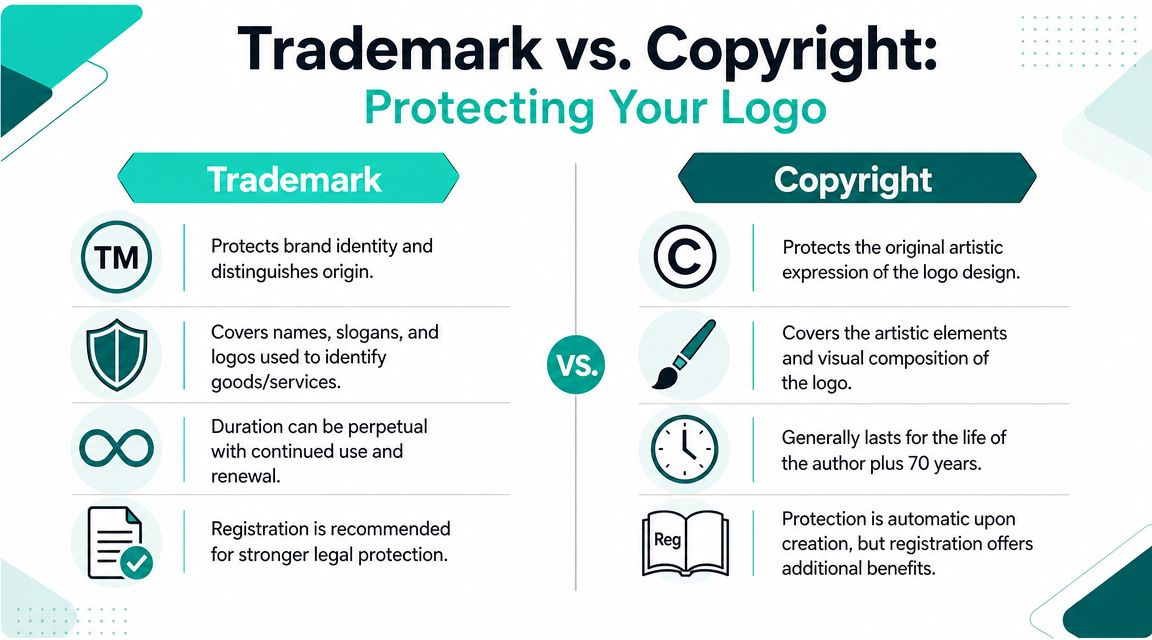
A logo can be protected in two different ways, and the right test depends on what the logo is doing. Copyright protects the original artistic expression in the logo artwork, while trademark protects the logo as a source identifier for goods or services, as explained by the USPTO's trademark, patent, and copyright overview. That same USPTO reference notes measurable business value tied to trademark activity: an American Economic Association study found that a one-standard-deviation increase in trademark output was associated with an immediate 0.98% increase in market share, rising to 3.82% in the fifth year.
Think of trademark as the name badge your practice wears in public. Its job is to tell patients, clients, and referral partners, "this comes from us."
If another clinic uses a confusingly similar logo in the same or related field, trademark law is the framework that addresses that problem. The focus isn't whether they copied every line or curve. The focus is whether their branding is likely to confuse the market about source.
That matters for practice owners because your logo often does more than decorate. It identifies your business on storefronts, Google Business profiles, social media, uniforms, packaging, and intake materials.
Copyright protects the artwork
Copyright looks at the logo differently. It asks whether the design contains original artistic expression.
That means copyright can protect the visual composition of a logo as creative work. It doesn't exist to solve marketplace confusion. It exists to protect the expression embodied in the artwork itself.
A simple way to remember it: trademark protects what the logo means in the market. Copyright protects what the logo is as art.
This is why both rights can matter at the same time. A clean wordmark may be more important as a trademark than as a copyright asset. A custom illustrated medspa mark may have meaningful value under both.
Trademark vs Copyright A Deeper Comparison
If you're trying to decide what to file, definitions alone won't get you there. The useful question is how these rights behave in practice.
What each right is really covering
Trademark protects the logo as part of your commercial identity. It's concerned with how the mark functions when patients or buyers encounter it in connection with your services.
Copyright protects the visual expression inside the logo design. That could include the layout, illustration, stylization, and graphic treatment, assuming the work is original enough to qualify.
For a practice owner, the easiest way to think about this is simple:
Trademark asks: does this logo identify my business in the market?
Copyright asks: is this logo original artwork?
A logo can satisfy both questions. It can also satisfy only one well.
How protection starts
These rights don't begin the same way.
Copyright protection is generally automatic once the work is created and fixed in a tangible form. Trademark protection is tied to use as a source identifier in commerce. That difference changes how owners should prioritize their next steps.
A designer can finish a logo today and the artwork may already carry copyright significance. But if the logo hasn't yet been used to identify your practice publicly, it hasn't yet done the core job trademark law cares about.
How long protection lasts
Duration is one of the biggest practical differences. In the United States, copyright generally lasts for the creator's life plus 70 years, while trademark rights can last indefinitely if the mark continues to be used and maintained, as summarized in this trademark vs. copyright explanation.
That difference drives strategy.
If your logo is central to a long-term brand, trademark is usually the more durable business asset because the brand can stay active as long as the practice keeps using and maintaining it. Copyright still matters, but it isn't designed around brand continuity in the same way.
What enforcement looks like in practice
Enforcement is where owners often realize they protected the wrong thing, or only half-protected it.
If a competitor uses a lookalike logo that confuses consumers, trademark law is usually the more natural path because the problem is marketplace confusion. If someone copies your exact artwork or reproduces your custom design, copyright may be the more direct fit.
This is also why filing strategy shouldn't be based on abstract legal categories alone. It should follow the actual risk.
If the main threat is "someone copied my design," copyright may matter more. If the main threat is "someone launched a confusingly similar brand," trademark usually carries more weight.
A practice logo used across signage, ads, and patient touchpoints is usually functioning first as a brand identifier. That's why many business owners find trademark to be the priority right, even when copyright exists in the background.
When to Use Trademark Copyright or Both
The right answer depends less on theory and more on the kind of logo you have and how your practice uses it.
Use trademark when brand confusion is the real risk
Start here if your logo is mostly a business identifier.
A dental practice with a clean text-based logo, a stylized practice name, or a simple icon next to a wordmark usually cares most about stopping another local or regional business from adopting something too similar. The business problem isn't art theft. It's confusion.
In that situation, trademark tends to be the practical priority.
Use copyright when the artwork itself has value
Some logos carry more artistic weight. A medspa may commission a custom illustrated mark with hand-drawn line work, decorative flourishes, or a distinctive composition. In that case, the logo isn't just a market identifier. It's also a creative work.
If someone lifts that artwork for promotional use, merchandise, or derivative design work, copyright concerns become much more relevant.
Use both when the logo is both art and identity
Many practice logos fall into this middle category. They serve as brand identifiers and also contain enough original visual expression to justify copyright attention.
That often includes:
Custom illustrated emblems used on websites, packaging, and print materials
Stylized marks with distinctive graphic treatment beyond plain text
Hybrid logos that combine a symbol with a refined wordmark
If your logo appears everywhere the public interacts with your brand, both forms of protection may be worth considering. One protects the logo's role in the market. The other protects the creative design itself.
The more central the logo is to patient recognition and brand consistency, the less sense it makes to rely on only one lens.
Understanding Your Rights Without Registration
A lot of practice owners have some protection already. They just shouldn't overestimate it.
What you already have
A logo's copyright protection is triggered automatically once the artwork is fixed in a tangible medium, and that protection is limited to the logo's creative expression. It does not stop another party from using a similar logo as a brand identifier in commerce. Trademark protection, by contrast, is tied to source-identifying use in commerce, as explained in this logo protection summary.
That means two things can be true at once. You may own the artwork rights in your logo, and you may also have some unregistered trademark rights if you've been using the logo publicly to identify your services.
In the U.S., ™ and ℠ can be used for unregistered common-law claims, while ® is reserved for federally registered marks, according to the USPTO guidance cited earlier.
Where unregistered rights fall short
The problem with relying only on unregistered rights is that they're harder to prove and harder to enforce cleanly.
You may need to document when you first used the logo, where you used it, what services it identified, and how the public has encountered it. That can become messy fast, especially if your files are scattered across an old Dropbox folder, a former web developer's account, and a print vendor's archive.
Common-law trademark rights can also be narrower in practice than owners expect. If another business appears in a different market or expands aggressively, the lack of formal registration can make your position weaker.
Unregistered rights are better than no rights. They are not a substitute for a deliberate protection strategy.
This is the point where many owners realize they don't have a branding problem. They have a documentation problem.
A Step-by-Step Guide to Protecting Your Logo
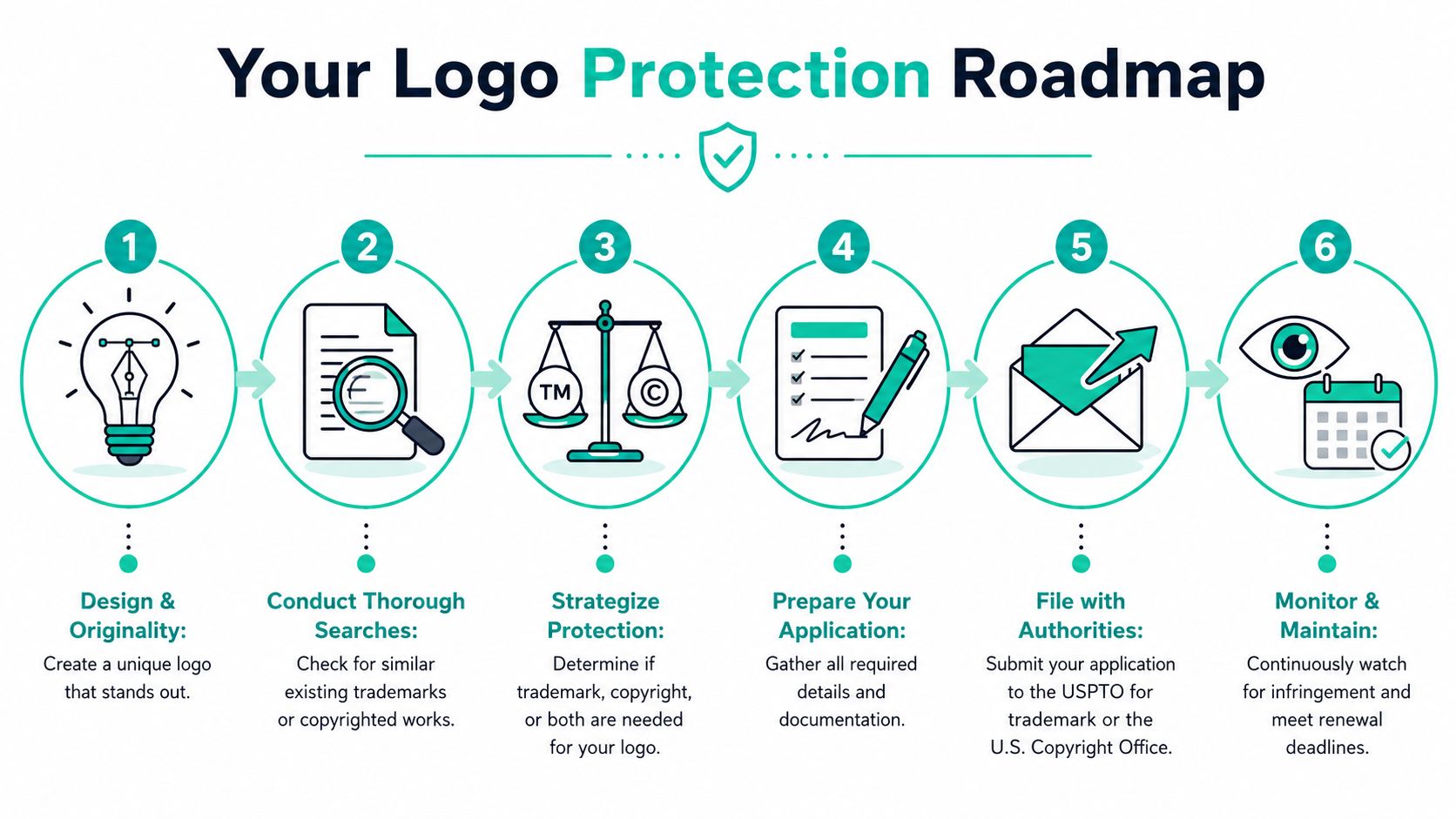
Protection works best when you treat it like a sequence, not a one-time form submission.
From a practical enforcement standpoint, the protection models have different strength profiles: copyright is automatic but usually narrower for logos, while trademark rights are built through use and become materially stronger with registration, as noted in this practical overview of logo protection.
Step 1 search before you launch
Don't fall in love with a logo before you check whether it's too close to an existing mark.
Start with a broad screening search. Look at search engines, map listings, social platforms, and the USPTO database. Search the exact practice name, close spelling variations, phonetic matches, and logos that create a similar commercial impression.
This isn't just a legal exercise. It's a branding sanity check. If a patient could confuse your logo with another provider's identity, that's a problem even before a lawyer gets involved.
Step 2 secure ownership from the designer
A shocking number of businesses pay for design work but never get a clean written transfer of rights.
Make sure your contract covers ownership, deliverables, and assignment of rights. If a freelancer, agency, or in-house contractor created the logo, confirm in writing who owns the final asset and any underlying source files. Get the editable files too.
If your team is still refining assets and systems, a practical content and identity workflow can live alongside broader brand and marketing resources so your legal and brand operations aren't happening in separate silos.
Step 3 choose the right filing path
At this point, decide whether the logo needs trademark protection, copyright registration, or both.
A straightforward clinic wordmark may push trademark to the top of the list. A heavily artistic logo may justify pursuing both. If your services are state-specific, a regional strategy can matter too. For owners operating in California, this comprehensive guide on California trademarks is a useful starting point for understanding local and broader filing considerations.
One practical note: if your logo changes every few months, don't rush to file the version you're already planning to redesign.
Step 4 file and use the mark correctly
Once you know the strategy, file with the appropriate authority and keep your usage consistent.
Use the same version of the logo across your website, signage, social profiles, patient documents, and advertising. Don't keep introducing slightly altered versions unless you have a strong reason. Consistency helps your mark function clearly as an identifier.
Use ™ or ℠ for unregistered claims where appropriate. Reserve ® for federally registered marks.
Step 5 monitor maintain and document
Protection doesn't stop after filing.
Create a simple system for documenting first use, saving specimens, archiving approved logo files, and tracking where the logo appears. Monitor competitors and new entrants in your market. If something looks confusingly close, don't wait until patients start mentioning it.
Good enforcement starts with good records. Most logo disputes get harder, not easier, when the owner waits.
Common Mistakes Practice Owners Make with Logos
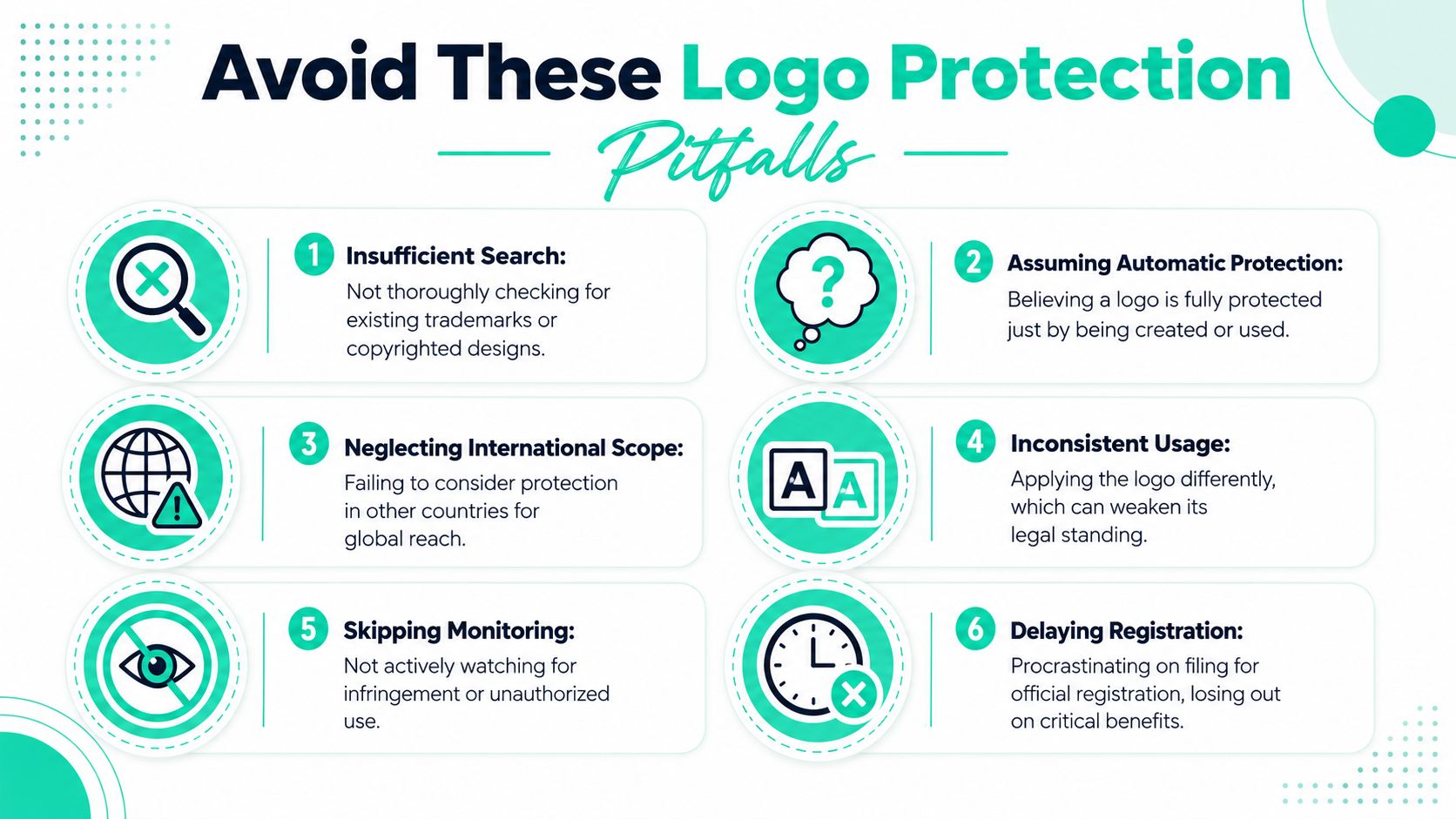
The expensive problems usually start with assumptions.
Mistakes that create expensive cleanup work
Assuming payment equals ownership Paying a designer doesn't automatically mean every right transferred cleanly. If the contract is vague, ownership can stay muddy. Fix this with a written assignment and complete deliverables package.
Skipping the search because the logo feels original Many logos are "original" in the everyday sense but still too close to marks already in use. Search first, then launch.
Choosing something too generic to protect well A plain tooth icon, an eye outline, or a leaf above a spa name may look polished, but weak distinctiveness can make trademark protection harder and enforcement less effective.
Confusing business registration with trademark rights Registering an LLC or reserving a domain name doesn't solve trademark issues. Those systems serve different purposes.
Using inconsistent logo versions If your website uses one logo, your signage another, and your Instagram profile a third variation, you weaken clarity. Keep a controlled brand file library. Teams that need help creating one usually benefit from tighter design system support.
Waiting until a conflict appears Once another business is already in the market with a similar look, your options get narrower and more expensive.
The cheapest time to solve a logo problem is before the logo goes live.
Frequently Asked Questions
Can I trademark a logo I created with an AI generator
Maybe, but don't assume the answer is automatic. The practical issue is ownership, originality, and whether the final logo is distinctive enough to function as a trademark. If AI played a role, review the platform terms carefully and make sure a human directed, refined, and approved the final asset. If the result is generic, trademark protection can be harder.
What if I find someone using a similar logo in another state
Start by looking at what they're offering, where they're operating, and whether the similarity creates likely confusion. Similarity alone isn't the full test. Market overlap matters. If you've relied only on unregistered rights, your position may be narrower than you think. This is usually the point to gather evidence and get legal guidance.
Do I need a lawyer to file a trademark
Not always. Some owners handle straightforward filings themselves. But if the logo is central to your practice, if search results show possible conflicts, or if your mark is stylized in a way that raises classification questions, legal review can save time and avoid avoidable errors.
Roughly how much does it cost to trademark a logo
Costs vary depending on the filing path, the number of classes, whether you use counsel, and whether the application runs into objections. Because those details change case by case, it's smarter to budget for both filing and follow-up rather than focusing on a single number.
Should I register the name and the logo separately
Often, yes. The name and the graphic logo can raise different issues and offer different strategic benefits. A name can survive a visual rebrand. A logo filing protects the specific design in use.
If your practice is refining its identity and wants the marketing side of branding to stay aligned with the legal side, Leaping Lemur Media helps practices develop brand strategy, messaging, and visual consistency so their logo functions as part of a clear, usable brand system.