Social Media Marketing for Dentists: Attract Patients
LE
lemur May 8, 202616 min read
You know your practice should be showing up on social media. You also know you don't have time to turn into a full-time content creator between patients, staffing, insurance issues, and the rest of the day-to-day reality of running a dental office.
That's where most dentists get stuck. They see another local practice posting smile transformations, team videos, and community updates. They wonder if social media marketing for dentists is driving appointments or just creating more work. The answer depends on how you use it.
Done well, social media isn't about posting everywhere or chasing trends. It's about helping the right patients feel comfortable with your practice before they ever call the front desk. That matters because dental practices that stay active on social media see 67% more patient inquiries, 35% higher patient retention, and 2.3 times more referrals according to Dominate Dental's analysis. If you want a broader local-business framework behind that idea, this ultimate guide for local social media is also useful.
Most dental practices don't need more content. They need a clearer reason to post.
That shift changes everything. Social media marketing for dentists works when it reflects the practice patients will experience. If your office is calm, family-focused, and strong with anxious patients, your content should feel that way. If your practice is known for cosmetic work, efficiency, and modern technology, that should show up too.
Start with identity before activity
A lot of social media frustration comes from skipping the brand question. Dentists often ask, “What should we post?” before asking, “What do we want to be known for locally?” The second question is the useful one.
A strong social presence usually grows from a few simple decisions:
Define your ideal patient: Families, cosmetic patients, emergency patients, implant cases, or nervous adults all respond to different messages.
Choose your voice: Warm and reassuring works differently than polished and upscale.
Pick proof points: Team personality, treatment philosophy, convenience, comfort, or results.
Practical rule: If a post could belong to any dental office in your city, it won't do much for your practice.
Keep the system light enough to survive real life
The best plan is the one your team can keep doing. That usually means one or two platforms, a repeatable content rhythm, and simple capture habits inside the office. A smartphone, a shared content folder, and Meta Business Suite are often enough to get moving.
You don't need a perfect grid. You need recognizable consistency. Patients should be able to visit your profile and quickly understand three things: who you help, what it feels like to come in, and why they should trust you.
Beyond Likes What Social Media Really Does for Your Practice
A website is your brochure. An active social profile is your conversation.
That distinction matters because patients don't choose a dentist based on credentials alone. They're also looking for cues. Is this office friendly? Do these people explain things clearly? Will I feel judged? Social media answers those questions in a way a service page can't.
According to Diamond Group's write-up on what works in 2025, over 70% of patients research dental practices online through platforms like Facebook, Instagram, and TikTok before booking. That means your profile often shapes first impressions before your website or front desk ever gets a chance.
Your profile works like a digital front desk
Patients use social media to pre-screen practices. They look for signs of competence, but they also look for signs of comfort.
A weak profile creates friction:
Old posts: Patients wonder if the practice is still active.
Stock imagery: The page feels generic and forgettable.
No human presence: Nothing reduces anxiety or builds familiarity.
No comments or messaging plan: Questions sit unanswered.
A useful profile does the opposite. It gives people a feel for the office before they arrive. That matters a lot for patients who delay care because they're nervous, embarrassed, or unsure what to expect.
Trust grows when patients see people, not just services
The practices that get value from social media usually stop thinking like advertisers and start thinking like hosts. They welcome people into the story of the office.
That can look like:
a hygienist answering a common question in a short video
a quick office tour
a front desk team member explaining how new patient paperwork works
a post about sedation options for anxious patients
a community event your staff supported over the weekend
A calm, useful post often does more for a hesitant patient than a polished sales pitch.
Social media also strengthens retention. Existing patients follow along between visits, stay connected to the practice, and remember your team more vividly. When someone needs to refer a friend or family member, your office is already top of mind.
Here's the trade-off. Social media can absolutely become a time drain if you treat it like endless content production. It becomes a growth channel when you treat it like local trust-building with a purpose.
Choosing Your Stage Where to Connect with Your Ideal Patients
Most dentists don't need to be everywhere. They need to show up where their likely patients already spend time and where the content format matches the way the practice communicates best.
A focused decision beats a scattered presence every time.
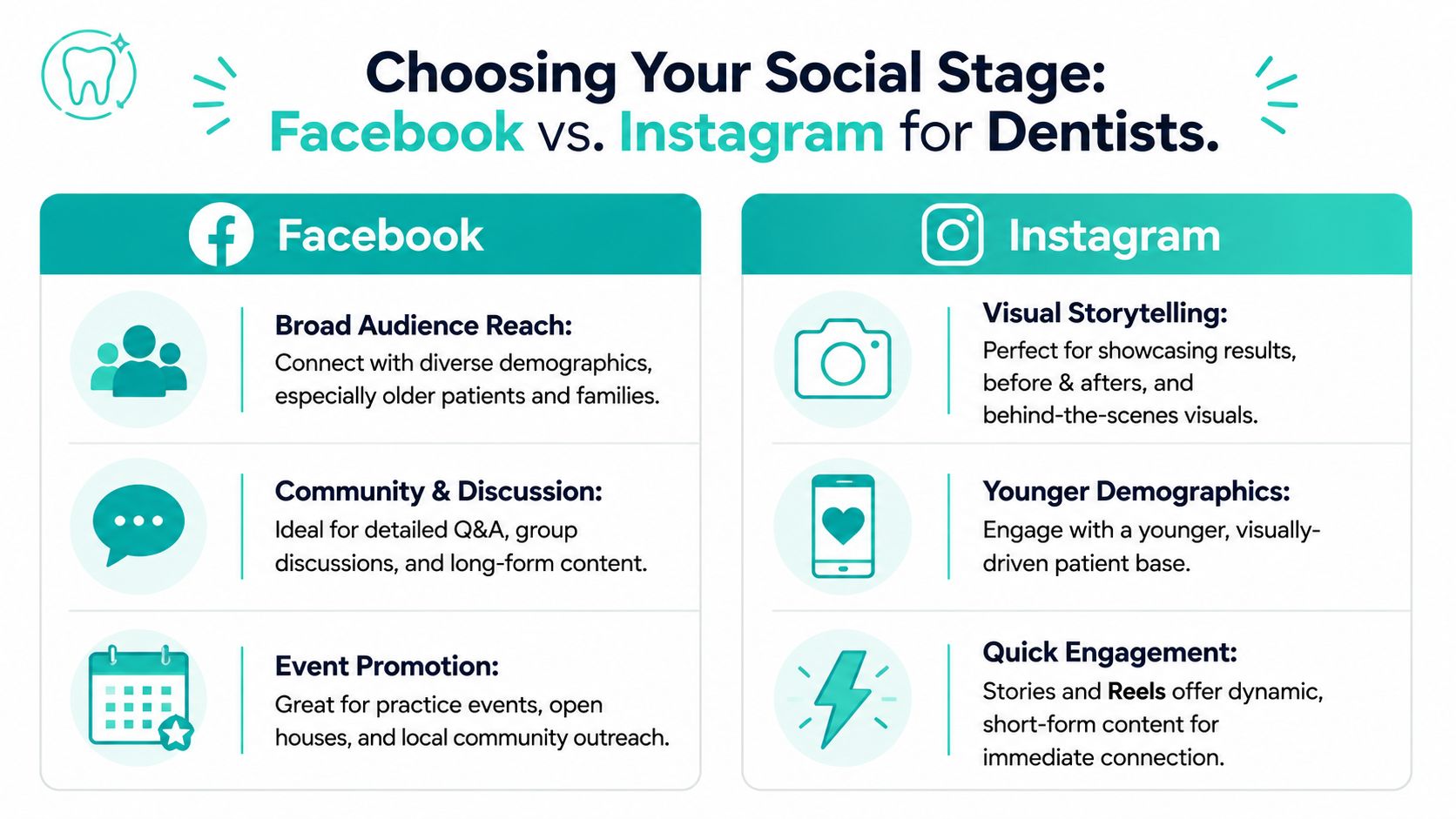
Facebook fits community-driven practices
Facebook still works well for many dental offices because it supports a broader range of communication. You can post longer captions, event updates, team milestones, patient education, and community involvement without the content feeling out of place.
It's often a practical starting point for practices that serve:
families
established local households
general dentistry patients
patients who respond well to community-centered messaging
A Facebook presence also pairs naturally with local ads, reviews, and direct messaging. If your office runs seasonal promotions, sponsors school events, or wants to stay visible in neighborhood conversations, Facebook is usually a comfortable fit.
Instagram fits visually led practices
Instagram works best when the practice has something visual and personable to show. Cosmetic dentistry, smile makeovers, Invisalign discussions, team culture, and short educational videos tend to land well there.
The platform also rewards movement and personality. If your team is willing to record quick Reels, office moments, or myth-busting clips, Instagram becomes much easier to sustain.
For practices trying to reach younger adults, Instagram often gives you more room to make the brand feel modern, approachable, and current.
According to Whitehat SEO's dental social media overview, in the UK, Facebook ad targeting is highly effective for the 30 to 65 demographic, while Instagram's visual format and Reels boost reach by 67% for the 18 to 45 age group. The useful takeaway isn't that one platform is universally better. It's that platform choice should match the patients you want more of.
A simple way to choose where to start
If you only have time for one platform, use this decision table.
Practice situation
Better place to start
Why
Family and general dentistry
Facebook
Easier for community updates, local trust, and broader age groups
Cosmetic and smile-focused services
Instagram
Visual content supports transformations and short-form video
Nervous patients need reassurance
Facebook
Longer posts and educational explanations work well
Strong team culture and behind-the-scenes moments
Instagram
Reels and Stories help personality come through quickly
Choose the platform your team can actually maintain. The “best” platform on paper won't help if nobody posts.
If resources allow, many practices eventually use both. But the smart move is to earn consistency on one channel first, then expand after your team has a repeatable process.
The Content Blueprint What to Post to Build Trust
The hardest part of social media marketing for dentists usually isn't the platform. It's staring at a blank screen and trying to come up with something worth posting.
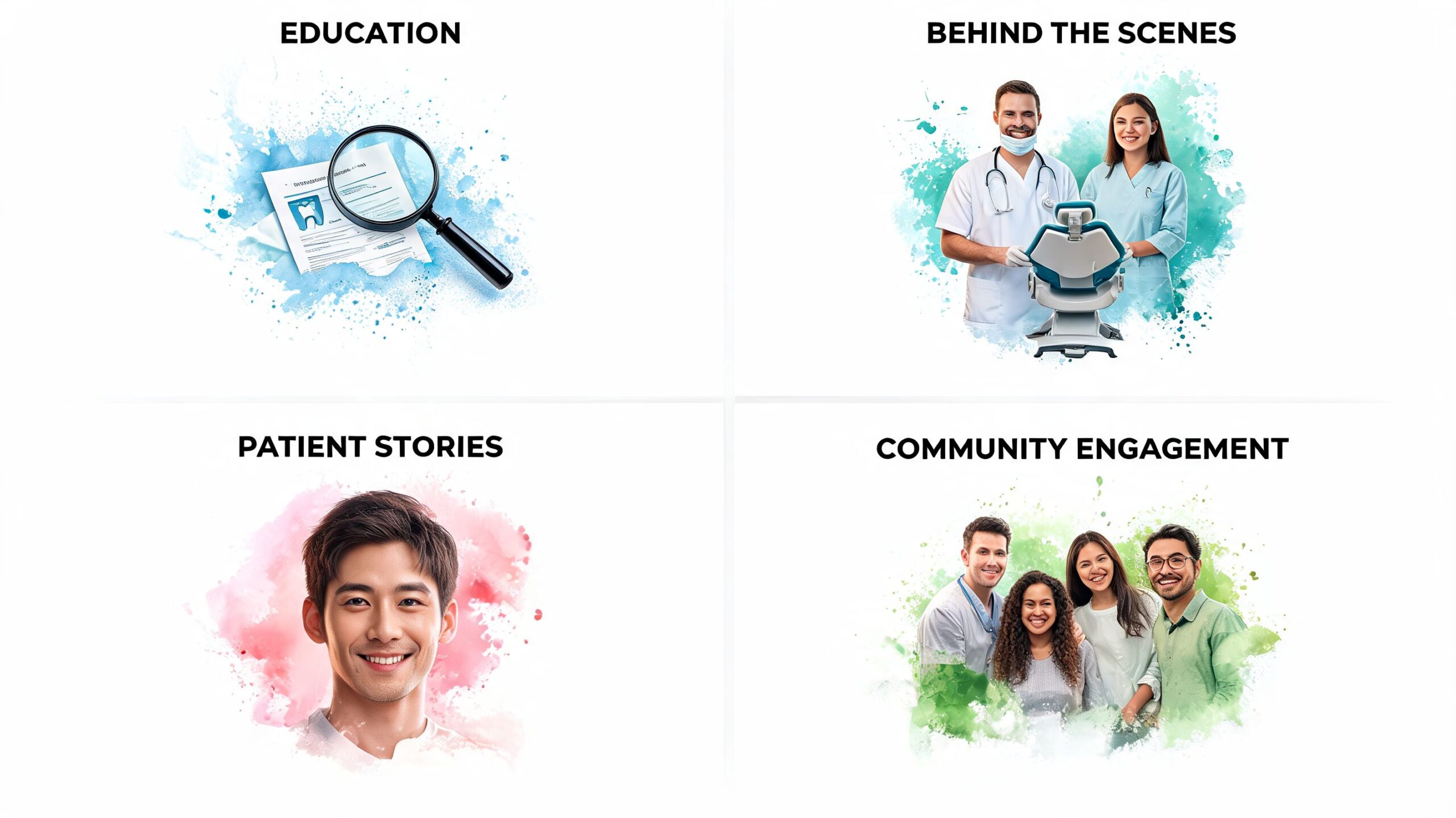
A simple content structure fixes that. The easiest way to stay consistent is to rotate through four categories: education, team culture, patient stories, and community connection.
A clear brand helps all four categories feel cohesive. If you're refining how the practice looks and sounds across channels, this guide to practice branding fundamentals can help tighten the message.
Education posts reduce fear before the first visit
Educational content works because patients are already asking questions. Social media lets you answer them before they pick up the phone.
Try posts like:
Myth vs fact: “Does whitening damage enamel?”
Procedure overview: “What happens during a crown appointment?”
Quick tip: “Why bleeding gums shouldn't be ignored.”
Short video: “What to do if your child chips a tooth.”
These don't need heavy production. A dentist speaking clearly into a phone camera often outperforms a highly designed graphic because it feels personal and believable.
Example caption:
“A lot of patients ask if a root canal hurts. In most cases, the procedure is more comfortable than the pain that brought them in. Here's what we do to keep you comfortable.”
Team and culture posts make your office feel familiar
People don't only choose a practice. They choose an environment.
That's why culture posts matter. They make your office feel known before the appointment. For anxious patients, familiarity lowers the emotional barrier to booking.
Useful team content includes:
a staff introduction with a fun personal detail
a day-in-the-office Reel
a birthday or work anniversary post
a short clip of how your sterilization or check-in process works
a dentist sharing why they love treating families or nervous patients
These posts don't need to be clever. They need to be real.
Patient stories and community posts create proof
Patient story content can be powerful, but only when handled carefully and ethically. Use written consent first. Keep the tone respectful. Focus on the patient's experience, not just the visual result.
A few strong options:
Smile transformation with context: What bothered the patient, what treatment was chosen, and how they felt after.
Testimonial graphic or video: Keep it short and easy to read.
“Why they came to us” story: This works especially well for patients who mention anxiety, convenience, or trust.
Then balance those posts with local relevance:
school supply drives
local sports sponsorships
charity involvement
holiday events
team participation in community activities
Authentic content beats polished content when the goal is trust.
That's especially true in healthcare. Patients don't expect your social feed to look like a luxury fashion brand. They want reassurance, clarity, and a glimpse of the people caring for them.
Staying Safe and Building Trust HIPAA and Reputation Management
For most dentists, the primary hesitation around social media isn't creativity. It's risk.
That concern is valid. One careless post can create a privacy problem, and one defensive reply to a negative review can make a bad situation worse. The good news is that both issues become much easier when the practice uses simple guardrails.
The safest approach is straightforward. If content could identify a patient or reveal treatment details, don't post it without explicit written permission.
Use this as a working standard:
Safe content: Team photos, office tours, educational graphics, general treatment explanations, community events, and non-patient behind-the-scenes content.
Needs written consent: Patient photos, videos, testimonials, smile transformations, quoted experiences, and anything tied to a real treatment story.
Don't post: Screens that show patient names, charts in the background, casual photos where records are visible, or responses that confirm someone is a patient.
A lot of HIPAA mistakes happen in the background of a photo, not in the caption. Train whoever takes pictures to check computer monitors, schedules, forms, and treatment notes before anything gets posted.
Get consent before content. That habit prevents most avoidable problems.
When asking for permission, keep the language plain. Tell the patient what you want to share, where it may appear, and that saying no won't affect their care in any way.
How to respond to reviews without creating risk
Reviews are public proof of your patient experience. Positive reviews help, but negative reviews matter too because they show how your practice handles criticism.
The wrong response is emotional, detailed, or defensive. The right response is short, calm, and careful.
A compliant response framework:
Acknowledge the concern without confirming the reviewer is a patient.
Avoid treatment details or any correction that exposes private information.
Invite an offline conversation with a phone number or office email.
Example:
“We're sorry to hear about your experience. Our team works hard to provide thoughtful care and clear communication. Please contact our office directly so we can learn more and address your concerns.”
That kind of response protects privacy and still shows professionalism to everyone reading.
You should also have a review routine:
assign one person to monitor reviews
respond promptly
flag anything that could create legal or compliance issues
save screenshots of serious complaints for internal follow-up
A reputation is built in public, but it's protected through process.
From Engagement to Appointments A Guide to Paid Ads and ROI
Organic posting builds trust. Paid social helps you put the right offer in front of the right local audience.
That doesn't mean boosting random posts and hoping for the best. The best dental ads are usually narrow, local, and tied to one clear next step. Think new patient exams, whitening, Invisalign consults, implants, or another service with a clear reason to book now.
Paid social works best with a narrow offer
A common mistake is trying to advertise the whole practice at once. That creates vague ads and weak response.
A better setup looks like this:
Audience: People within your service area
Offer: One service or one patient type
Creative: A clear image or short video
Landing point: A booking page, form, or call action
Follow-up: Front desk knows the offer and can track leads
Authentic video often works especially well. According to Zircon Lab's discussion of social media tracking and watch-time changes, post-2025 algorithm changes prioritize watch time, and authentic video testimonials can lift conversions by 67% when paired with UTM tracking and pixel retargeting. The important part for a practice owner is less about the algorithm language and more about the practical implication. Simple, believable video can outperform overproduced creative.
Likes, reach, and follower count are easy to see. They're also incomplete.
The numbers that matter inside a dental practice are closer to the schedule:
phone calls from ad traffic
appointment form submissions
consult requests
actual booked visits
treatment starts tied back to campaign source
Meta Business Suite helps with campaign setup and reporting, but it shouldn't be your only reference point. Add UTM-tagged links to booking pages. Use the Meta Pixel if your site supports it. Ask the front desk to log “found us on Instagram” or “clicked Facebook ad” in a consistent place. If your team uses call tracking or appointment software, make social a visible source field instead of a guess.
If a campaign brings in attention but no appointments, it's not working hard enough.
Budget matters, but measurement matters more. A modest ad budget with tight tracking usually beats a bigger budget with weak follow-through.
Your Tactical Playbook for Getting Started This Week
Most practices don't need a grand launch. They need momentum.
The easiest way to get there is to make social media small enough to start and structured enough to continue. One week of focused setup can take you from “we should post more” to a working system your team can maintain.
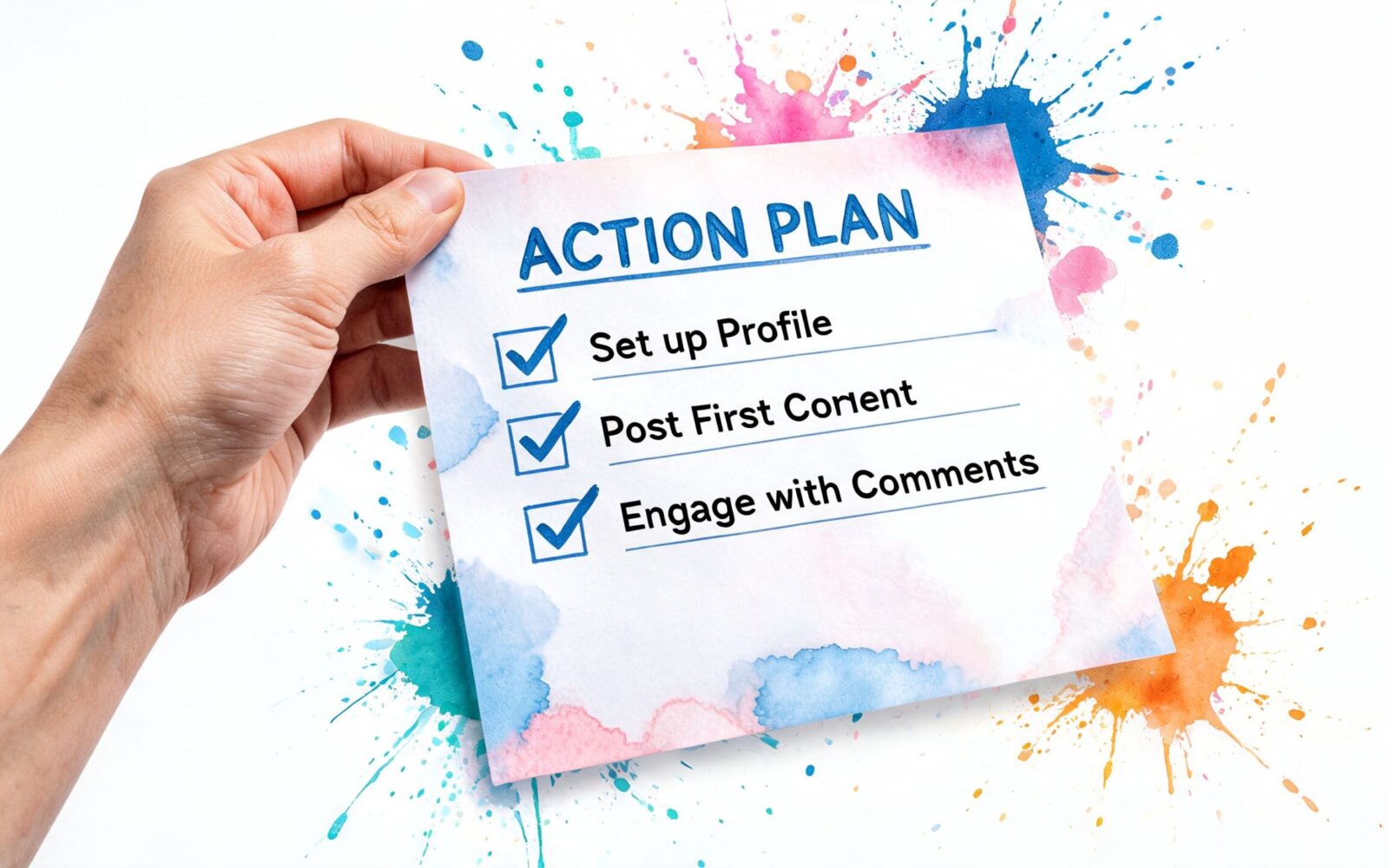
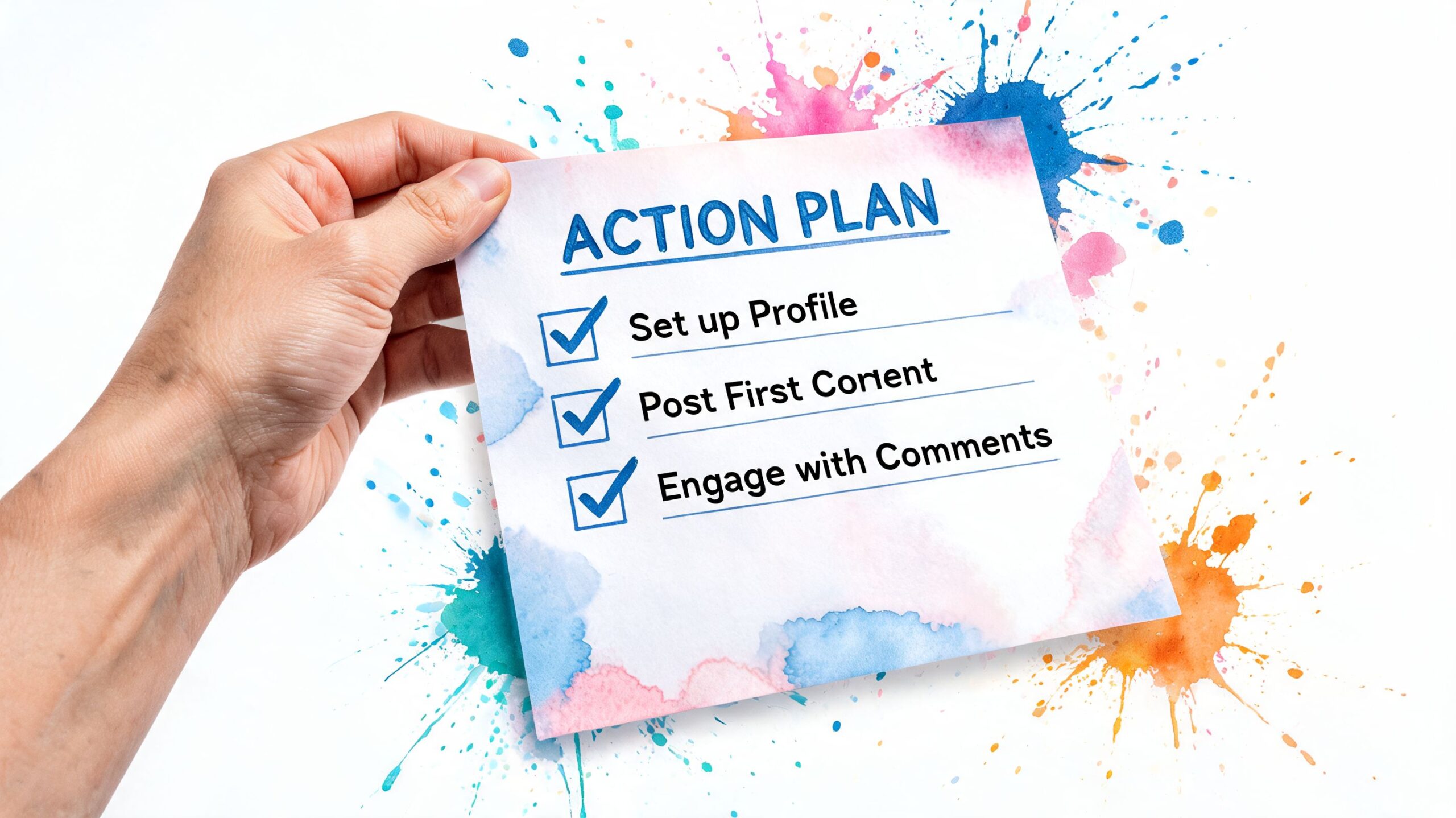
Your first week checklist
Use this as a practical starting list:
Choose one primary platform Pick Facebook or Instagram based on your audience and content comfort level.
Tighten your profile basics Update your logo, bio, address, phone, booking link, office hours, and profile description. Make sure the practice name is consistent with your website and Google Business Profile.
Write down four content pillars Education, team culture, patient stories, and community involvement are enough to begin.
Brainstorm your first five posts Keep them simple:
a team welcome post
one FAQ answer
one office photo
one community or culture post
one service explainer
Create a consent process Put a written release form in place before any patient-facing content goes live.
Assign ownership Someone has to gather photos, someone has to approve captions, and someone has to publish. If that's all one person, keep the schedule light.
A simple monthly rhythm your team can maintain
You don't need novelty every day. You need a pattern.
A workable monthly rhythm might look like this:
Week
Post 1
Post 2
Optional Post 3
Week 1
Team intro
FAQ video
Story poll
Week 2
Treatment myth-buster
Behind-the-scenes office moment
Community update
Week 3
Patient testimonial with consent
Oral health tip
Short Reel
Week 4
Local event or staff spotlight
Service reminder or booking prompt
Q&A box
This kind of schedule reduces decision fatigue. It also makes delegation easier because your team knows what sort of content belongs each week.
A final note on execution. Don't wait until everything feels polished. Social media marketing for dentists works best when the practice shows up consistently, sounds human, and gives patients a reason to trust what they see.
If you want a marketing partner that helps your practice show up with clarity, consistency, and a brand that feels like you, Leaping Lemur Media is built for that kind of growth. They focus on intentional strategy, authentic messaging, and long-term partnership so your marketing supports the kind of practice you're building.