Medspa Social Media Marketing: The 2026 Patient Playbook
You're probably doing what most medspa owners do at first. You post polished before-and-afters, share the occasional promo, maybe boost a post, and then wait for bookings that don't come fast enough. The feed looks good, but it doesn't feel like it's pulling its weight. That gap usually isn't about effort. It's about trust. In […]
LElemurJune 24, 202617 min read
In this piece
You're probably doing what most medspa owners do at first. You post polished before-and-afters, share the occasional promo, maybe boost a post, and then wait for bookings that don't come fast enough. The feed looks good, but it doesn't feel like it's pulling its weight.
That gap usually isn't about effort. It's about trust.
In medspa social media marketing, patients aren't buying a T-shirt or a candle. They're making a high-trust, high-consideration decision about their face, skin, or body. In a category where the average revenue per patient visit ranges from $450 to $700 and content marketing can produce 2x to 4x ROI over time, the practices that win aren't just visible. They feel credible before the consultation ever happens, according to Kovly Studio's med spa marketing analysis.
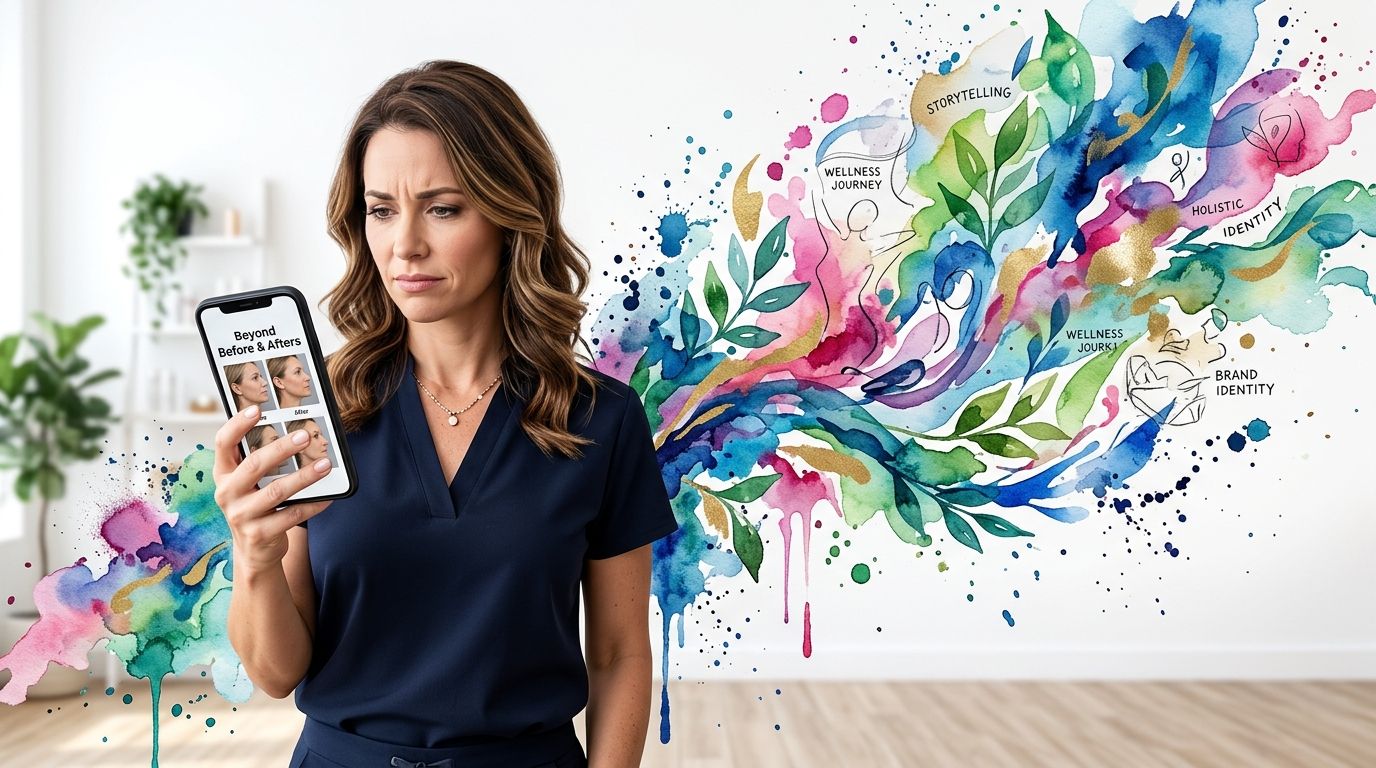
Beyond Before and Afters The New Rules of Medspa Marketing
A polished feed used to be enough to get attention. It isn't enough anymore.
Patients have seen the perfect lighting, the stock-model skin, and the vague “glow-up” captions. What they want now is proof that your practice is safe, skilled, and consistent. That's the trust receipt. It's the content equivalent of showing your work.
The trust receipt gap is a real hurdle. Many guides tell medspas to “be authentic,” but stop there. Data from 2026 industry reports shows that short-form user-generated content and unscripted testimonials outperform static images by 300% in the medspa sector because they act as verifiable receipts of a positive patient experience, as noted by Leaping Lemur Media.
Practical rule: If a post looks polished but doesn't answer “Why should I trust you with my face?”, it's branding, not conversion content.
That doesn't mean before-and-afters are dead. It means they need context. A result photo with no explanation leaves too much room for doubt. A short patient clip, a provider walkthrough, a time-stamped treatment journey, or a calm explanation of downtime gives the patient something to believe.
This shift isn't unique to medspas. If you want a useful parallel from another beauty category, PostClaw's guide to mastering salon social media shows the same pattern. Audiences respond to proof, personality, and repeatable trust signals more than generic beauty content.
Laying Your Strategic Foundation Before You Post
A weak strategy creates a content treadmill. You post often, but every post feels disconnected from the one before it. The result is activity without momentum.
Strong medspa social media marketing starts before Canva, before captions, and before you assign someone on your front desk team to “just keep the account active.” You need a clear picture of who you want, what they care about, and why your practice fits them.
Define the patient you actually want more of
Most practices begin with broad demographics. Women in a certain age range. Local professionals. Patients interested in injectables or skin treatments. That's a start, but it won't sharpen your messaging enough.
Go further and document the emotional reality of the patient.
What are they worried about: Looking overdone, wasting money, booking the wrong provider, or not knowing what to ask at a consultation.
What are they hoping for: Natural results, a better first experience, a provider who explains things clearly, or a long-term treatment plan instead of a hard sell.
What do they search privately: “Botox near me,” “how long does filler swelling last,” “best medspa for first time Botox,” “laser treatment downtime,” or “is this provider qualified?”
That last category matters because your best content usually answers the questions patients don't say out loud until they trust you.
A useful exercise is to build three patient profiles based on real patterns inside your practice management system or consult notes. One might be a first-time injectable patient who needs reassurance. Another might be a skincare-focused patient who values education. A third might be a busy repeat patient who wants expertise and efficiency. Once you know who they are, your content stops sounding generic.
If you want a sense of how a strategy-first agency frames positioning and partnership, the Leaping Lemur Media team page reflects that idea well. The point isn't to copy someone else's voice. It's to understand your own clearly enough that patients can recognize it.
Position your practice so patients can choose quickly
You don't need to be everything to everyone. In fact, that usually weakens conversion.
Your positioning should answer three questions fast:
Who is this practice for
What kind of outcome does it prioritize
Why does it feel safer or clearer than the alternative
Here's where medspas often get stuck. They describe themselves with empty labels such as luxurious, personalized, or cutting-edge. Every competitor says the same thing.
Try positioning statements built on specifics instead:
Natural-looking injectable plans for first-time patients
Advanced skin treatment education for patients who want to understand the why
Efficient aesthetic care for busy professionals who want a clear plan and consistent follow-up
Conservative treatment philosophy led by a medically grounded team
Patients don't compare your intentions. They compare what they can understand in seconds.
Write your positioning down. Put it in a one-page brand brief. Add preferred phrases, topics you will discuss often, topics you won't touch casually, and the emotional tone patients should feel from your content. That document becomes the filter for every Reel, testimonial, offer, and story.
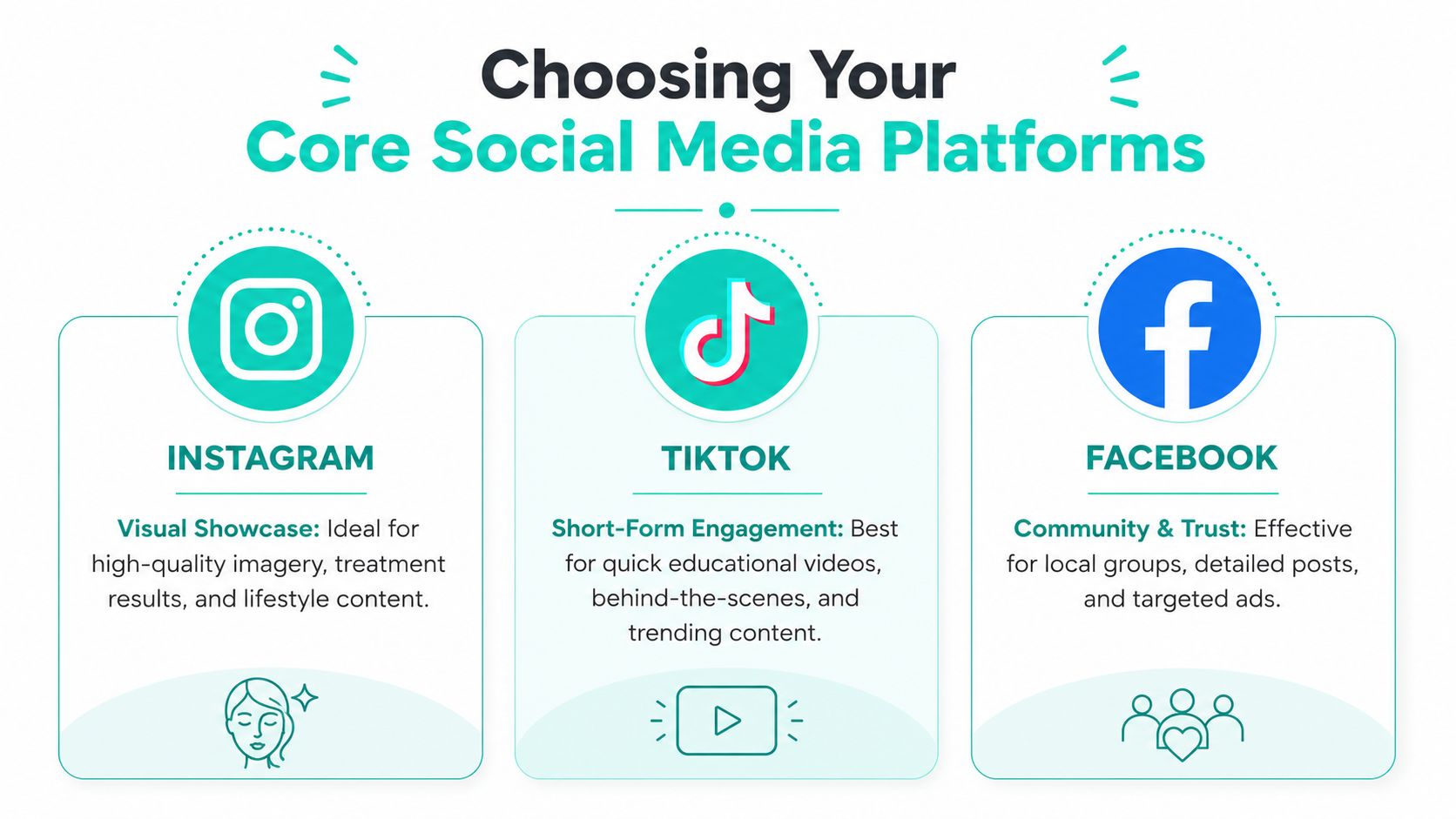
Choosing Your Core Social Media Platforms
Spreading effort across every platform usually creates mediocre results everywhere. Medspas do better when each platform has a job.
The category is growing fast. The global medspa market is projected to grow from USD 24.25 billion in 2025 to USD 78.23 billion by 2033, and social media visibility is a major part of that growth. The same market outlook notes that Facebook and Instagram remain the dominant platforms for reaching high-value demographics, and success hinges on posting 3 to 5 times per week with a mix of video, testimonials, and behind-the-scenes content, according to Grand View Research's medical spa market report.
Short educational clips, myth-busting, behind-the-scenes, provider perspective
Trend-chasing that feels disconnected from your brand
Facebook
Local trust and community targeting
Local offers, retargeting ads, detailed service explanations, community presence
Treating it like a copy-paste version of Instagram
Google Business Profile
High-intent local discovery
Updated photos, review generation, FAQs, service details, booking path clarity
Neglecting updates and expecting social alone to carry local search
Instagram is still the strongest daily trust-building channel for most medspas. It gives you the best mix of visual proof, stories, comments, DMs, and repeat visibility. TikTok can open new discovery, but not every audience converts there with the same intent. Facebook remains useful because local targeting and retargeting still matter, especially for a treatment people don't buy impulsively.
Where local discovery really happens
A lot of owners separate social media from local SEO. Patients don't.
When someone sees your Instagram Reel, then searches your name, checks your reviews, taps your map listing, and scans photos on Google, that's one decision journey. Treat it that way. Your social content should make your Google presence stronger, not operate in a silo.
That's also why local influencer partnerships need tighter direction than most medspas give them. Don't just ask a local creator to post a facial. Ask for geo-specific language, location tagging, and content that shows the actual experience in your clinic. That gives the partnership a better chance of driving nearby, high-intent traffic instead of broad vanity reach.
For more examples of how service businesses approach platform selection and channel planning, the Leaping Lemur Media blog offers useful reference points.
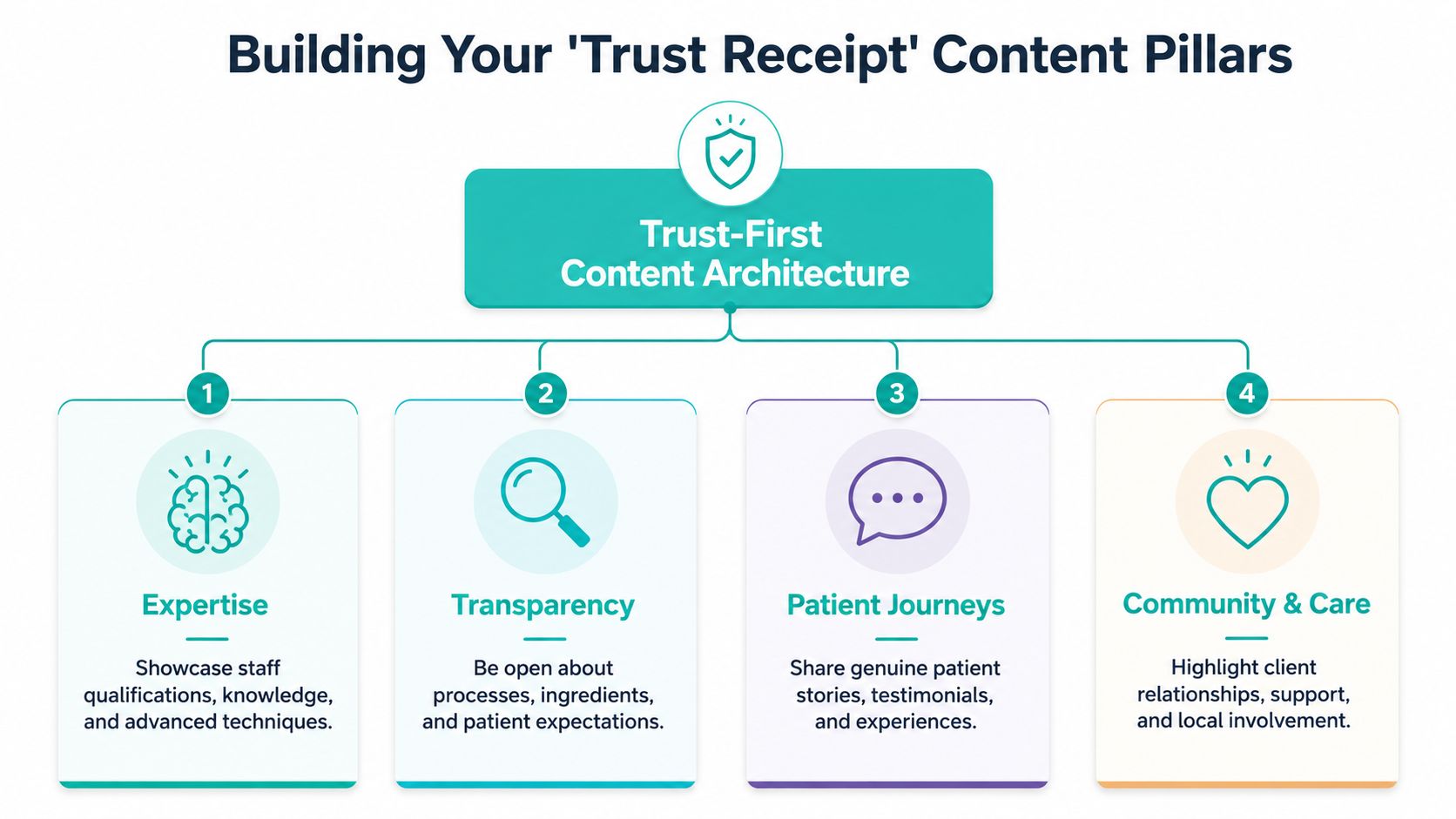
Building Your Trust Receipt Content Pillars
Without content pillars, most medspa feeds swing between two extremes. They either become a nonstop promo board or an unstructured mix of posts that don't reinforce each other. A trust-first architecture fixes that.
A documented Trust-First content architecture can increase booking conversions by 35% to 45%, and the model works best with a 4:1 ratio of educational and testimonial content to promotional posts. It also helps that short-form video testimonials outperform static images by 2.5x in engagement for medspa decisions that require strong safety and trust cues, as outlined earlier in the reporting cited from Leaping Lemur Media.
A good way to think about this is the same way SEO teams think about topic authority. If you've ever studied how pillar systems work, EvergreenFeed's breakdown of content strategy for SEO is a useful comparison. Your social content pillars should do the same thing. Create repetition with purpose.
Four pillars that create proof
Educate
Education lowers fear. It helps the first-time patient feel less exposed and helps the experienced patient feel respected.
Use content such as:
Treatment explainers: What happens during a lip filler appointment, what a laser consult includes, or what recovery really looks like.
Myth correction: Clarify what Botox can and can't do, what “natural” results mean, or when a treatment isn't the right fit.
Expectation setting: Healing timelines, number of sessions, aftercare basics, or who may need a different option.
This pillar works because it shifts your role from seller to guide.
Showcase
Most medspas rely too heavily on still images. The better version is proof with context.
Use:
Time-stamped patient journey clips
Unscripted testimonial videos
Before-and-after galleries in Highlights with explanation
Provider voiceover over a real case walk-through
The difference is simple. A static result says “look.” A trust receipt says “here's what happened, why it worked, and what this patient experienced.”
Connect
People book people. Even in medically guided aesthetics, they want to know who they'll meet, how they'll be treated, and whether the practice feels calm, kind, and competent.
Strong connection content includes:
Staff introductions: Credentials, specialties, communication style
Front desk moments: What check-in feels like, what new patients should expect
Clinic culture: Clean rooms, careful setup, thoughtful process, local community presence
A polished brand gets attention. A recognizable team gets bookings.
Convert
Promotional content still matters. It just can't dominate your feed.
This pillar includes launch posts, specials, consultations, memberships, seasonal treatment reminders, and direct calls to book. Keep these ethical and clear. Patients respond better when the offer sits inside a pattern of ongoing trust, not random urgency.
What trust receipt content looks like in practice
Here's a simple distribution model you can apply:
Pillar
Purpose
Example
Educate
Reduce uncertainty
“What to expect at your first Botox consult” Reel
Showcase
Prove outcomes
Unscripted testimonial plus provider commentary
Connect
Humanize the team
Injector intro with treatment philosophy
Convert
Prompt action
Limited consultation opening with booking link
If your content starts to feel repetitive, don't abandon the pillars. Change the angle. One week, education can be downtime. The next, candidacy. The next, cost framing or treatment sequencing.
Designing a High-Converting Content Calendar
A content calendar should reduce decision fatigue, not create more of it. The easiest mistake is planning by format instead of by purpose. You end up saying, “We need a Reel for Thursday,” instead of asking, “What does our patient need to see before they feel ready to book?”
The current benchmark for medspa social media marketing is 3 to 5 posts per week on Facebook and daily posting on Instagram, using a mix of 60% short-form video, 20% educational snippets, and 20% promotions. That mix has been associated with a 28% higher lead conversion rate than generic strategies because it aligns with platform preference for authentic, video-led content, according to the earlier industry reporting already referenced.
A sample week that stays useful and sellable
Here's a calendar structure that gives your team rhythm without making every day feel like production day.
Sample Weekly Medspa Content Calendar
Day
Pillar
Format
Content Idea
Monday
Educate
Reel
“What happens at a first-time injectable consult”
Tuesday
Connect
Story sequence
Introduce your injector and front desk workflow
Wednesday
Showcase
Testimonial video
Patient describing why they chose your practice
Thursday
Educate
Carousel
Downtime expectations for a popular treatment
Friday
Convert
Feed post or Reel
Consultation opening or limited seasonal offer
Saturday
Showcase
Story Highlight update
Real treatment room walkthrough
Sunday
Connect
Story or short video
Skincare shelf, aftercare setup, team prep for the week
That's enough variety to stay interesting while still reinforcing the same core message: this practice is safe, clear, and worth contacting.
How to keep the calendar from becoming a burden
Teams often don't fail because they lack ideas. They fail because their workflow is unrealistic.
Use a batching system:
Film once or twice per month during designated content windows.
Capture in clusters while patients are already in clinic, with proper consent and a clear shot list.
Repurpose one core asset into multiple formats. A testimonial clip can become a Reel, Story cutdown, caption quote, and Highlight update.
Assign approvals early so medical review doesn't stall posting.
A few operational habits help a lot:
Keep a standing notes app: Front desk staff hear patient questions all day. Those are future captions.
Build a caption bank: Start with consult FAQs, aftercare reminders, and treatment comparisons.
Use simple tools well: Meta Business Suite, Later, or Planoly can handle scheduling. Canva can handle design. A shared Google Drive folder can hold approved footage.
The best calendar is the one your team can maintain when the schedule gets busy.
Launching Your Paid Social Ad Funnel
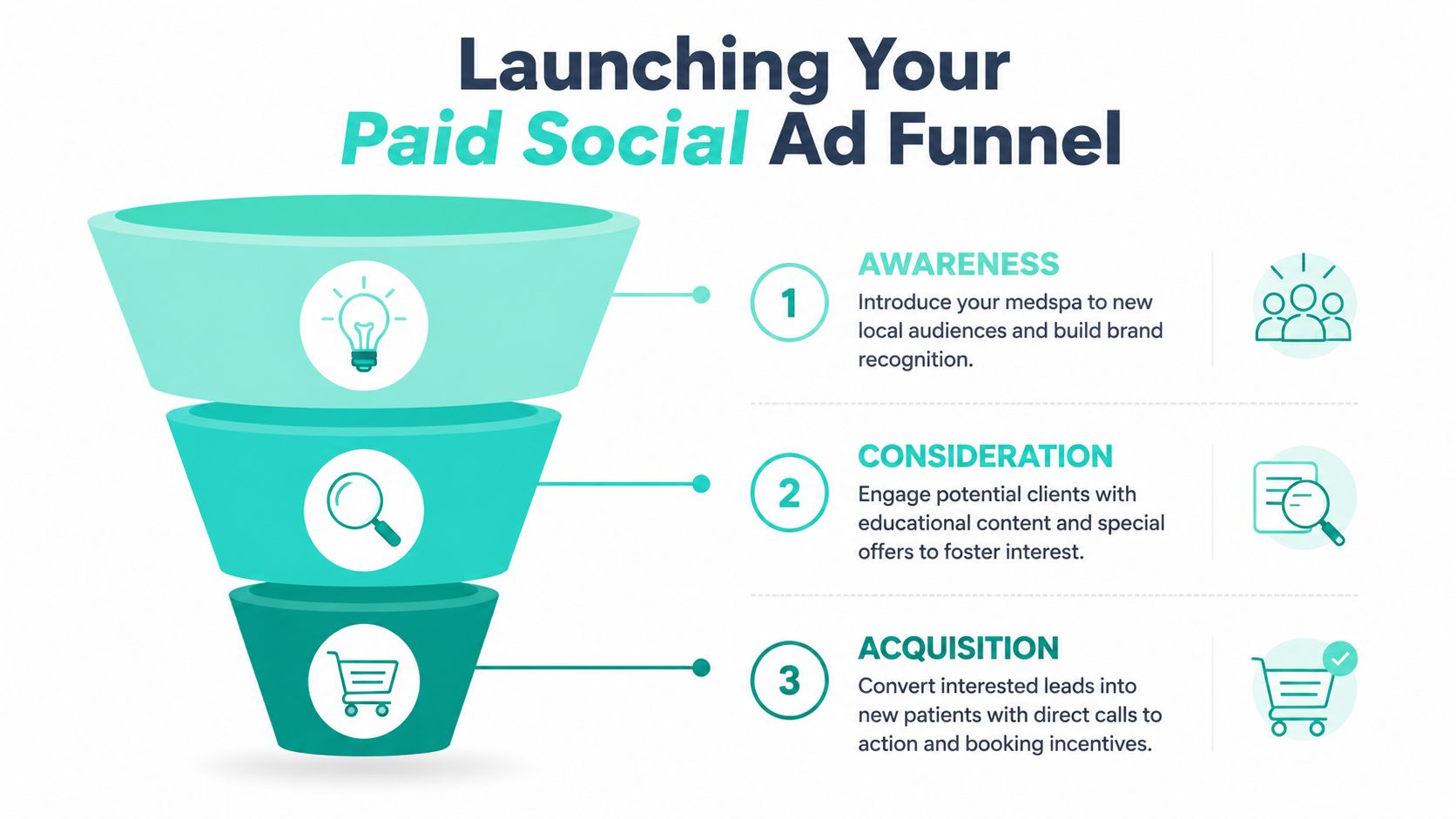
Organic content builds familiarity. Paid social shortens the path to visibility, especially when your market is crowded or your account is still small. The mistake is boosting random posts and hoping the algorithm figures it out.
A better approach is a simple funnel. Show the right creative to the right audience at the right level of intent.
Awareness to consideration to booking
At the top of the funnel, introduce the practice to local people who fit your ideal patient profile. Use broad but relevant creative. Short treatment education clips, provider introductions, and calm behind-the-scenes footage work better here than hard offers. The goal is recognition.
In the middle, retarget people who watched your videos, engaged with your profile, or visited key pages on your site. For these individuals, testimonials, FAQs, and trust receipt content matter most. Patients who are interested but cautious need a reason to keep moving.
At the bottom, ask for action. That could be a consultation request, a treatment-specific landing page, or a direct booking path. Keep the copy clear. Avoid overcomplicating the decision.
A practical three-stage setup looks like this:
Awareness: Educational video introducing treatment categories and your team
Consideration: Retargeting ad featuring patient experience, process clarity, or common objections
Acquisition: Direct-response ad with a clear booking CTA
Budget and creative trade-offs
Early growth medspas should budget $1,000 to $3,000 per month for paid social advertising on Facebook and Instagram to penetrate local markets and target high-income demographics, based on Aesthetic Marketing's medical spa marketing statistics.
That doesn't mean you need a giant creative machine. In most cases, the better ad isn't the one with the biggest production budget. It's the one with the clearest proof.
Here's the trade-off I see often:
Choice
Usually better for
Risk
Highly polished ad creative
Brand perception
Can feel generic or overly salesy
In-clinic testimonial or provider video
Trust and conversion
Needs clear structure and clean sound
Promotional graphic
Fast offer communication
Weak if the audience doesn't trust you yet
If you need outside help, agencies that handle medical service marketing, including Leaping Lemur Media services, can manage ad strategy and creative execution. That only works well when the practice already knows its positioning, offers, and patient profile.
Measuring What Matters and Staying Compliant
A medspa can post consistently, gain followers, and still have a weak pipeline. The core question is simpler. Does your social presence produce enough trust for a cautious, high-value patient to book?
That is the trust receipt gap.
Patients in 2026 are not looking for louder branding. They are looking for proof they can verify. On the measurement side, that means tracking signs of intent, not applause. On the compliance side, it means protecting the trust you worked to earn in the first place.
Track signals tied to revenue
Start with the actions that show a patient is moving closer to a consultation:
Profile-to-site clicks: Watch how often social visitors move into your website, treatment pages, or booking flow.
High-intent direct messages: Questions about price range, downtime, candidacy, treatment plans, and appointment timing usually signal real consideration.
Consult requests: Track form fills, calls, and online bookings that happen after someone engages with your content.
Review growth and review quality: Reviews support credibility across search, social, and your website. They are one of the clearest trust receipts you can collect.
Saves and shares: These often matter more than likes because they show the content was useful enough to keep or pass along.
A simple spreadsheet is enough if your attribution process is clean. Ask every new patient how they found the practice. Then log the answer the same way every time.
I also recommend looking at content through a stricter lens. A post that brings in a few serious consultation questions can outperform a post with broad reach and weak buyer intent. Vanity metrics make the team feel busy. Intent signals help you decide what to repeat.
A required compliance checklist
Medspa social media marketing only works long term when the proof is handled carefully. Before-and-afters, testimonials, provider commentary, and patient stories can build trust fast. They can also create legal and reputational problems fast if the review process is loose.
Use a standing checklist:
Written patient consent: Secure clear permission before publishing photos, videos, testimonials, or treatment details.
Internal approval flow: Assign who reviews claims, captions, disclaimers, and clinical language before anything goes live.
No public discussion of protected information: Never confirm someone is a patient or discuss case details in public comments or replies.
Careful testimonial handling: Keep patient language truthful and specific. Avoid wording that suggests guaranteed outcomes.
Staff training: Front desk staff, coordinators, providers, and whoever touches social need clear posting and response rules.
Secure media organization: Store approved assets separately from unapproved patient content so nobody posts the wrong file by accident.
Negative comments need the same discipline. Respond calmly, acknowledge the concern, and move the conversation to a private channel without revealing private information. The goal is not to win in public. The goal is to show that your practice is careful, respectful, and safe.
That is what strong medspa marketing looks like at the measurement stage. You are not just asking whether content performed. You are asking whether it produced trust receipts your next patient could believe.
If you want help turning this into a system your team can run, Leaping Lemur Media works with practices that need clearer positioning, stronger content strategy, and social marketing that feels like them on purpose.