Healthcare Content Marketing: Build Trust & Grow Your
LE
lemur June 22, 202614 min read
You're running a practice, managing staff, handling patient expectations, and trying to protect the quality of care that built your reputation in the first place. Then marketing lands on your desk and suddenly you're expected to think about blogs, social posts, search rankings, reviews, email campaigns, and content calendars like that's a normal side job.
It isn't.
Most practice owners don't need more noise. They need a marketing approach that feels honest, manageable, and aligned with the way they already serve patients. That's where healthcare content marketing earns its place. Done right, it doesn't feel like advertising. It feels like patient education with a purpose.
A dentist answering common questions about Invisalign. An eye doctor explaining digital eye strain in plain English. A medspa owner walking patients through what recovery feels like after a treatment. That's not fluff. That's trust-building before the first call, the first form fill, or the first appointment request.
The practices that grow steadily usually aren't the loudest. They're the clearest, the most helpful, and the easiest to trust. Content gives you a way to show people how you think, how you care, and what they can expect from your team before they ever walk through the door.
A lot of practice owners start marketing from a defensive position. Referrals feel less predictable. A competitor is posting constantly. Your website looks dated. Someone on your team says you need SEO, video, social media, email, and “content,” and now it feels like you're behind before you've even started.
That pressure pushes people into bad decisions. They hire the cheapest vendor, approve generic posts they'd never say out loud, or disappear from marketing altogether because the whole process feels disconnected from patient care.
There's a better way to handle it.
Healthcare content marketing works when you treat it like an extension of the patient experience. You already answer the same questions every week. You already explain procedures, calm fears, correct misconceptions, and guide people toward informed decisions. Content turns that work into assets your community can find before they contact you.
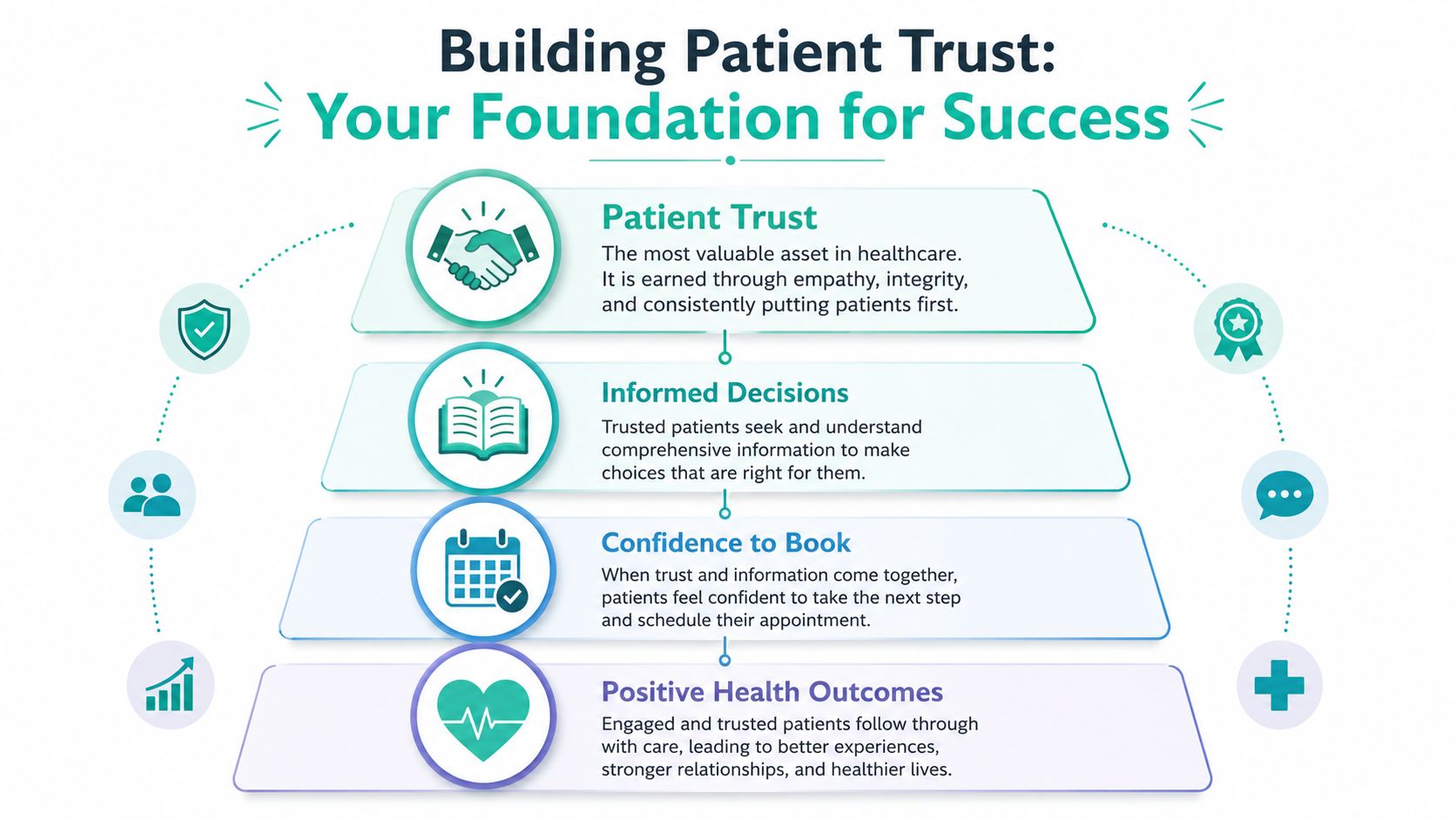
Trust drives the appointment decision
A patient doesn't choose a provider the same way they choose a coffee shop. They're asking bigger questions. Can I trust this doctor? Will this office listen to me? Will someone explain this clearly? Will I feel rushed, judged, or confused?
That's why I push practice owners to stop chasing attention for its own sake. Visibility matters, but trust is the thing that converts visibility into appointments.
At this point, healthcare organizations already know content matters. Ninety-five percent of healthcare organizations in the United States use or plan to use content marketing, and 74% of healthcare marketers actively use blogs according to healthcare content marketing statistics compiled by WebFX. That matters for one reason. Your competitors are already trying to become the helpful answer patients find first.
Here's the useful reframing. Marketing is not the act of persuading strangers to care about your practice. Marketing in healthcare is the act of making it easier for people to trust your care.
Your content is your digital bedside manner
Think about a local health fair. The provider who earns attention isn't the one with the loudest banner. It's the one answering questions patiently, speaking clearly, and making people feel respected.
Your website and content should do the same job.
A strong article, FAQ page, or short video can answer the question someone is too embarrassed to ask on the phone. It can reduce uncertainty before a consultation. It can show that your team understands both the clinical issue and the human side of it.
Practical rule: If a piece of content sounds like an ad, rewrite it until it sounds like guidance.
That's also why your marketing partner matters. If you work with outside help, they should understand your voice and your standards, not just your service list. That partnership mindset is the difference between generic output and content that sounds like your practice. You can see what that looks like in a more relationship-driven approach on the Leaping Lemur Media about page.
Patients remember how you made them feel long before they remember your tagline. Helpful content lets you create that feeling early.
Building Your Patient-Centric Content Strategy
Most content problems start before anyone writes a headline. The practice has no clear audience, no editorial rules, and no process for clinical review. Then everyone wonders why the blog feels random and the social posts don't sound right.
Fix the foundation first.
Start with patient questions, not marketing ideas
Don't begin with “we need more content.” Begin with the questions your team already hears every day.
Ask your front desk what callers want clarified before booking. Ask providers which misunderstandings slow down consultations. Ask coordinators what anxious patients repeat after treatment. Those are your topics.
A useful planning sheet can be simple:
Top concerns: Fear, confusion, timing, cost sensitivity, recovery expectations
Patient language: The words patients use, not only clinical terminology
Decision stage: Curious, comparing options, ready to book
Next step: Call, request consultation, download prep instructions, reply to email
That list will give you better topics than any generic brainstorming session.
The best healthcare content answers the question behind the question.
A patient asking about veneers may really be asking whether they'll look fake. A patient asking about dry eye treatment may really be asking whether relief is possible after trying several things already. Good strategy accounts for that emotional layer.
Define a voice your team can actually maintain
Your content should sound like your practice on a good day. Calm. Clear. Competent. Maybe warm and family-oriented. Maybe more clinical and precision-focused. Both can work. What fails is inconsistency.
Set a few voice rules your team can follow:
Use plain English first. Explain the medical term if you need it, but don't hide behind it.
Lead with reassurance, then detail. Patients need both.
Avoid hype. Healthcare content loses credibility fast when it sounds inflated.
Write the way your best provider explains things in the room.
If you want help building those systems, a structured partner can support strategy, messaging, and execution through services like those outlined on the Leaping Lemur Media services page.
Build review into the process from day one
This aspect is critical. In healthcare, content has to be accurate.
The strongest healthcare content is expert-reviewed and evidence-based, using clinician interviews, author credentials, and credible citations to strengthen trust signals for patients and search engines, as explained in Kanopi's guidance on healthcare content marketing.
That means your process should include:
A subject matter source: A doctor, provider, or clinician interview
Named authorship or review: So readers know who informed the content
Credible references: Peer-reviewed journals, government agencies, or accredited health organizations when appropriate
A final compliance pass: Before anything goes live
Don't hand this entirely to AI and hope for the best. AI can help organize ideas or speed up drafts, but it should never act as your medical reviewer.
Compliant and Compelling Content Formats
Practice owners often ask which format they should focus on first. The honest answer is this: choose formats based on patient need, staff capacity, and compliance risk. Not trends.
What each format does well
Blog posts still do heavy lifting in healthcare because they give you room to answer real questions with nuance. That matters for conditions, treatments, aftercare, and “what to expect” topics. In 2025, blog posts were used by 38% of marketers, making them one of the most used content formats, according to CallRail's healthcare marketing statistics. In healthcare, that staying power makes sense. Patients often need detail, not just a quick clip.
Short-form video works well when you want to humanize the practice. A physician introduction, a quick explanation of a treatment, or a behind-the-scenes look at your office can reduce anxiety fast. But video is a poor substitute for detailed education on its own.
Patient stories can be powerful, but they're also where practices get sloppy. If you use testimonials, get proper authorization, define exactly what can be shared, and never improvise with protected patient details.
Social posts are useful for visibility and community presence. They are not your whole strategy. If your team is spending all its time posting and none of its time building website content, priorities are off.
Choosing the right content format for your practice
Content Format
Best For
Compliance Note
Resource Level
Blog posts
Explaining procedures, symptoms, FAQs, aftercare, local search visibility
Avoid discussing identifiable patient details without authorization
Moderate
Patient testimonials
Building confidence and relatability
Use written authorization and stay within approved use
Moderate to high
Email newsletters
Re-engaging current patients, seasonal reminders, educational updates
Keep educational and operational boundaries clear
Low to moderate
Social media updates
Community engagement, awareness, light education, event promotion
Avoid discussing patient-specific situations in comments or DMs
Low to moderate
One strong blog post can fuel a week or two of supporting content. Turn the main article into a short Reel, a few Instagram captions, a newsletter blurb, and a front-desk talking point. That's efficient. Random posting is not.
If you want examples of how practices turn one idea into multiple assets, reviewing a dedicated healthcare marketing blog can help your team see the difference between disconnected posting and actual strategy.
Compliance mistakes to avoid
Here are the mistakes I see most often:
Blurred patient privacy lines: Staff share a success story that sounds harmless but reveals more than they realize.
Unreviewed educational claims: A post overstates outcomes or simplifies risks too aggressively.
Copycat content: The team borrows language from another practice and ends up with messaging that feels generic and risky.
Comment section drift: A well-meaning social response turns into advice for an individual situation.
If your content process doesn't include review, it's not a process. It's a liability.
Choosing Your Channels for Maximum Reach
A lot of practices spread themselves thin because they confuse presence with effectiveness. You do not need to be everywhere. You need a system.
Your website is the hub
Your practice website should hold the most useful version of your content. That's where your blog lives, where service pages support decisions, and where appointment actions happen.
If someone searches for a local provider, lands on a strong educational page, and sees clear next steps, your website is doing its job. Social platforms don't replace that. They rent you attention. Your website keeps the asset.
Use your blog for topics with lasting value:
Procedure explainers: What happens, who it's for, how to prepare
Condition education: Symptoms, common causes, treatment pathways
Expectation-setting content: First visit, consultation, recovery, follow-up
Local intent pages: Content tied to the services you want to be known for in your community
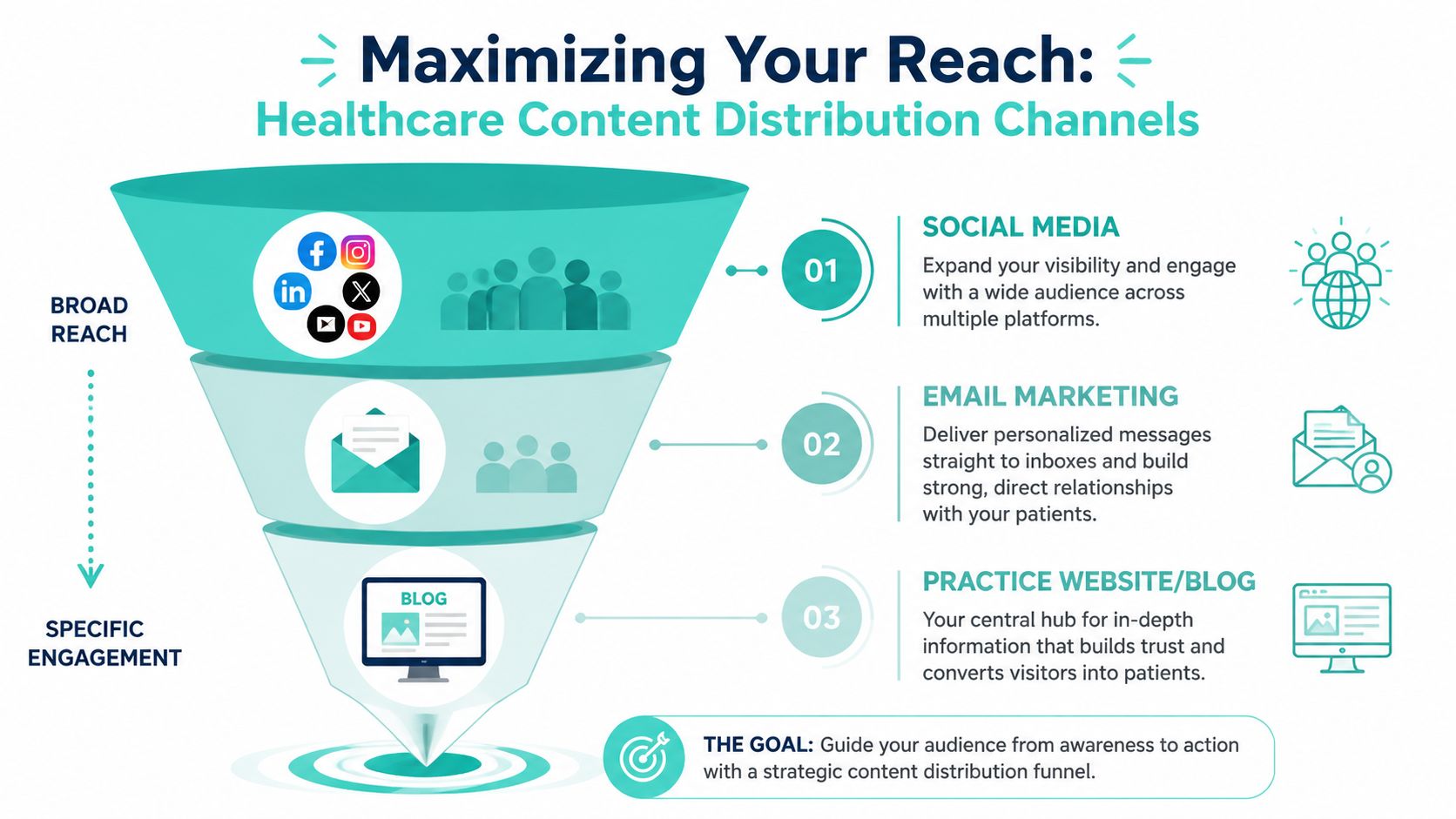
Email and social should support, not compete
Email works best when it nurtures existing attention. Someone visited your site, became a patient, or joined your list at an event. Now you have a direct channel to stay useful without relying on an algorithm.
Social media has a different job. It creates familiarity and keeps your practice visible in day-to-day life. A good social post can point people back to a deeper blog article, reinforce a seasonal message, or show the human side of your team.
That relationship should be simple:
Publish a substantial article on your site.
Send it to your email list with a short, helpful introduction.
Pull one or two key ideas into social posts.
Direct people back to the full resource on your website.
That sequence respects your time and protects consistency.
Don't ask your team to maintain five channels badly. Pick the channels your patients favor, then show up there with discipline.
Measuring What Matters for Practice Growth
Plenty of practices think their marketing is working because a post got likes. That's weak thinking.
Likes are fine. New patient inquiries are better.
Stop obsessing over vanity metrics
If your content looks busy but doesn't help generate appointment requests, phone calls, or qualified interest, it's not pulling its weight. A polished Instagram grid can hide a weak strategy for months.
Measure outcomes that connect to patient acquisition:
Appointment requests from content pages
Phone calls after visitors read a specific article
Contact form submissions tied to a service page or blog
Growth in your email list from educational resources
Questions at intake that mention a blog, email, or video
A good intake form can help here. Add a simple “How did you hear about us?” field. Train staff to note when patients mention an article, a video, or a newsletter. That information is messy, but it's valuable.
Use simple tracking your front desk can support
You don't need a complicated reporting stack to make smarter decisions. You need consistency.
Create a basic monthly review:
What to review
What you're looking for
Top blog pages
Which topics attract real patient interest
Appointment request pages
Which content paths lead people to book
Phone call notes
Which questions repeat before scheduling
Email clicks
Which topics current patients care about
Front desk feedback
Which objections or concerns content could answer
If you want a practical reminder of what real-world growth stories can look like, browse these Healthcare consulting program results. Not for borrowed claims, but to study how clear positioning, repeatable systems, and accountability show up when service businesses scale.
Reality check: If you can't explain how your content supports practice growth, you don't have a strategy. You have activity.
Putting It All Together Examples and Workflows
Most practices stall here. They understand the idea, but they don't know what to publish next Monday. Keep it practical.
Three practical content ideas
For a dentist Write: “What to Expect During Your First Invisalign Consultation” Include who it's for, what happens at the visit, common questions about comfort and timing, and how patients can prepare. Then pull one short video from it where the doctor explains what makes someone a good candidate.
For an eye doctor Send an email newsletter on digital eye strain. Keep it useful. What symptoms matter, what habits help, when to schedule an exam, and what patients shouldn't ignore. Link to a fuller blog post on your website for people who want more detail.
For a medspa owner Create a short video that walks through a treatment experience from arrival to aftercare. Keep the tone calm and educational. Patients often want to know what the room feels like, how long the visit takes, and what recovery looks like more than they want polished sales copy.
A simple monthly workflow
A small practice does not need a huge editorial machine. It needs rhythm.
Try this:
Week one Pick one topic based on repeated patient questions. Assign a provider interview and gather the core talking points.
Week two Draft one blog post. Add one clear next step, such as booking a consultation or reading a related FAQ.
Week three Turn that post into one email and two or three social assets. Keep the messaging aligned.
Week four Review what happened. Did patients mention it? Did the page get visits? Did anyone book after reading it? Use that feedback to choose next month's topic.
This approach works because it's sustainable. It respects your team's time and keeps the content connected to real patient conversations.
You don't need to publish constantly. You need to publish intentionally.
If your practice needs a clearer system for content, messaging, and patient-focused marketing, Leaping Lemur Media is one option to consider. They work with practices on strategy and execution built around authentic positioning, so your marketing sounds like your team and supports the way you care for people.