Your schedule is full, your team wants to share more, and your practice feed still hasn't moved since spring. A staff member suggests posting a team photo, someone else mentions a whitening promotion, and then the week disappears under clinical work, patient calls, and insurance questions.
That reality defines dentist social media marketing. The problem usually isn't a lack of ideas. It's the absence of a repeatable system that connects a platform, a useful format, a safe approval process, and a measurable business outcome. The seven options below pair each agency or model with a practical implementation step, a compliance caution, and a KPI worth tracking. The aim is simple: turn social media from an abandoned profile into a steady part of your patient-acquisition process.
Table of Contents
- 1. Leaping Lemur Media
- 2. My Social Practice
- 3. Wonderist Agency
- 4. Pain-Free Dental Marketing
- 5. Golden Proportions Marketing
- 6. HIP Creative
- 7. Scorpion Dental
- Top 7 Dental Social Media Agencies Comparison
- Turning Seven Ideas Into a Steady Patient Pipeline
1. Leaping Lemur Media
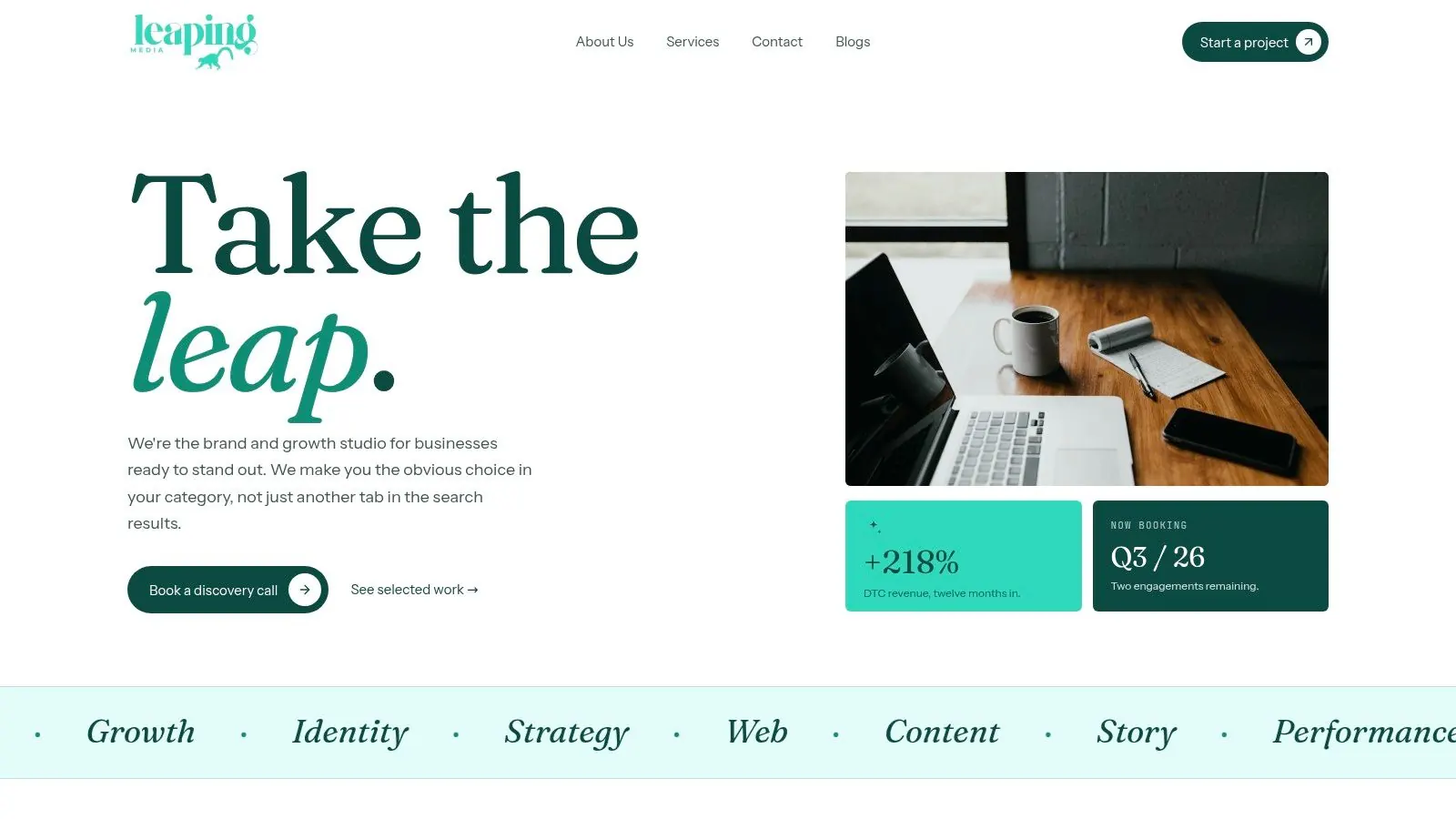
A practice promoting emergency dentistry may attract clicks from patients who need help now, yet lose them on a generic homepage. Leaping Lemur Media helps practices connect that first social impression with positioning, visual identity, websites, paid growth, SEO, creative production, and programmatic channels. This broader scope suits dental teams that need a clear service message and a defined next action, not a queue of disconnected posts. Explore Leaping Lemur Media services for its wider approach to positioning, websites, and growth.
Use a procedure-intent campaign built around one service, such as emergency dentistry, cosmetic consultations, or family care. Start with a real patient question, turn the answer into a Reel or carousel, send viewers to the matching service page, and retarget visitors with a direct booking path. The format gives the creative team a practical boundary and gives the practice a clear place to measure results.
Practical rule: Give every campaign one patient action, one landing destination, and one follow-up owner.
Consent needs a defined checkpoint. Obtain written authorization before publishing a patient's image, testimonial, radiograph, name, or treatment story. A designated reviewer should approve the final caption, creative, and call to action. The American Dental Association's social-media policy recommends written consent and final practice approval, including when an employee manages the account.
Track booked consultations attributed to the campaign, rather than reach alone. Leaping Lemur fits practices seeking a senior-led strategic relationship, not a low-cost content package. Its higher-touch, selective-capacity model may require more coordination, but it can address revenue, retention, brand equity, and patient experience within one engagement.
2. My Social Practice
My Social Practice is built specifically for dentistry, which is useful when your team wants content that sounds familiar to patients rather than adapted from a general small-business template. Its work spans Facebook, Instagram, TikTok, and Google, with social content connected to reputation growth and practice websites.
Use a weekly patient-question Reel series as the implementation format. Ask the front desk to keep a running list of questions patients repeat, then turn each question into a short clinician-led explanation. Topics might include what happens during a first visit, how to prepare for a procedure, or when a patient should call the office. A dental-specific content calendar makes this easier to sustain, while the firm's educational resources can help a team learn formats such as Reels and TikTok videos.
The consent caution applies even when a post feels informal. Team members need permission before appearing in branded content if the practice's policy requires it, and patient comments or direct messages shouldn't become a place for diagnosis, treatment details, or appointment-specific discussion. The ADA warns that confirming someone is a patient or revealing information while responding to a review can create a privacy problem. Track profile actions and direct-message inquiries from the series.
My Social Practice's advantage is niche depth and a practical onramp for dental teams. The limitation is that full-service pricing generally requires a quote, and pricing mentioned through partner programs may not represent every engagement. It's a sensible choice when the practice wants dental-specific management without building a strategy from scratch.
3. Wonderist Agency
A busy practice often has enough material for excellent content but no reliable way to capture it. Wonderist Agency addresses that problem with managed social media and concentrated on-site content days. One well-planned session can produce staff introductions, office footage, procedure explanations, community clips, and assets that can later support ads and SEO.
The best format here is a content-day capture plan. Before filming, choose several patient questions, two or three team stories, office details that reduce anxiety, and the procedures the practice wants to explain more clearly. Record vertical video in batches, then approve a library of clips for scheduled posts, paid campaigns, and website content.
Authenticity comes from showing the real team with a clear plan, not from asking clinicians to improvise between appointments.
Privacy review should happen before filming, not after an editor has built the campaign. A waiting-room video can still show identifiable people, and the ADA's marketing and advertising guidance explains that a photograph or video of a patient, including someone sitting in a waiting area, may qualify as protected health information under HIPAA. Keep patient areas clear unless the practice has the right authorization.
Track usable content assets published and the profile actions generated by them. Wonderist is compelling for practices that want one production session to feed several channels. The trade-off is logistics. On-site availability depends on location and scheduling, and social pricing isn't published as a standard line item. Practices seeking only light posting may find the production model broader than they need.
4. Pain-Free Dental Marketing
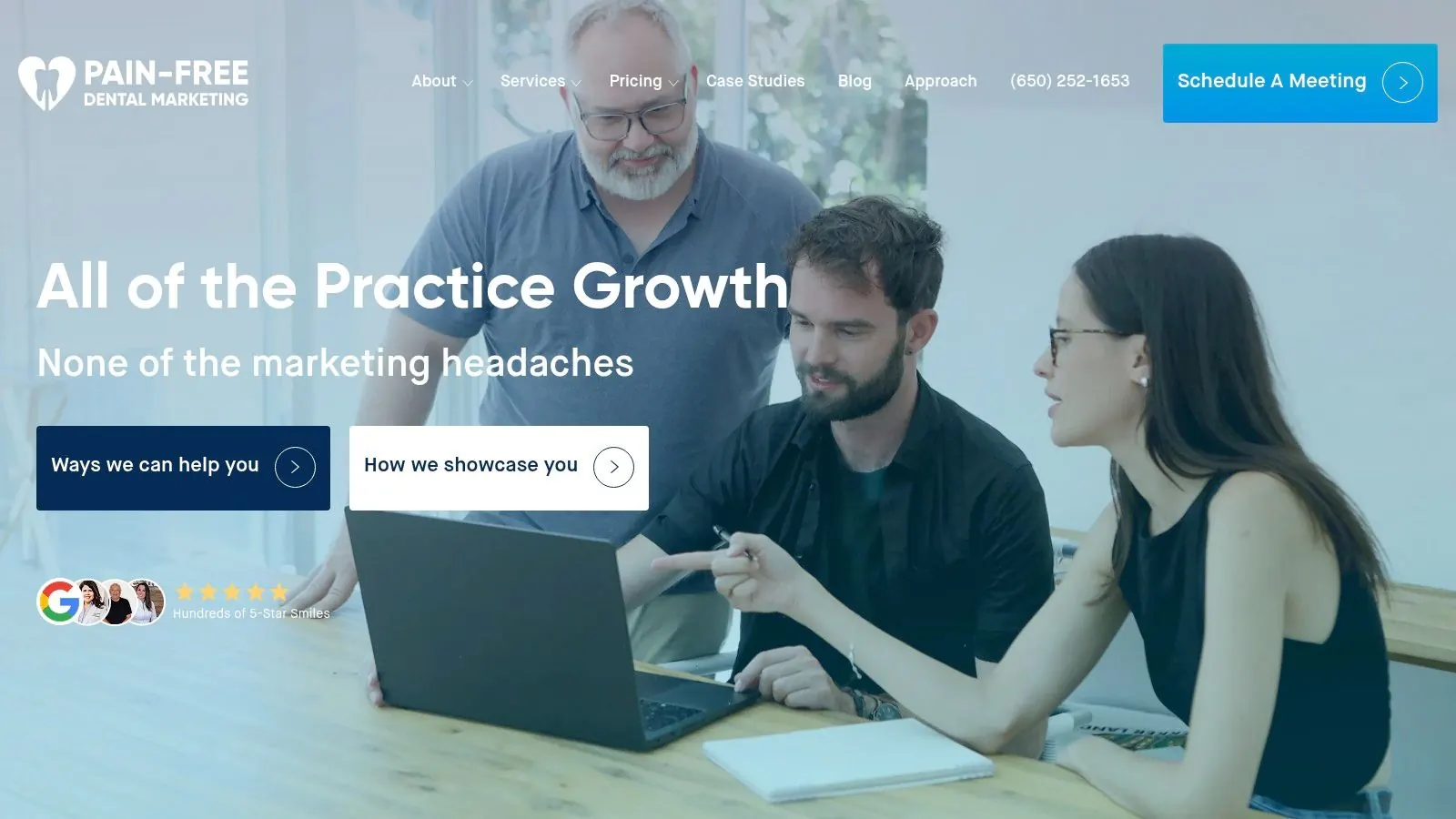
Pain-Free Dental Marketing positions social media within a CMO-style growth relationship. That model suits practices that need social activity coordinated with paid ads, SEO, video, website improvements, and Google Business Profile management.
Use a staged campaign ladder to put the model into practice. Begin with one clear message and a small group of recurring content themes. After the practice has a defined offer, dependable creative, and a follow-up process, add managed organic social and paid campaigns. This sequence prevents an advanced program from outrunning the team's ability to answer enquiries or convert website visitors.
A practical safeguard is a claim-review checkpoint before publication. Dental posts should separate education from promotion, avoid guaranteed outcomes, and support measurable claims with suitable evidence. The Federal Trade Commission's health-products guidance states that advertisers need a reasonable basis for health-related claims before sharing them.
Track consultation requests by campaign stage. Pain-Free distinguishes a foundational plan from a fuller CMO retainer. Its Essentials approach does not include full social management, while the broader retainer uses a custom proposal. That suits operators who want sequencing and guidance, but may not suit a practice seeking low-cost, standalone posting.
The firm's dental marketing approach reinforces the need to connect social activity with the patient journey. A post can create interest, while the website, booking process, and front desk determine whether that interest becomes an appointment. Review those handoffs alongside campaign results, not after performance stalls.
5. Golden Proportions Marketing
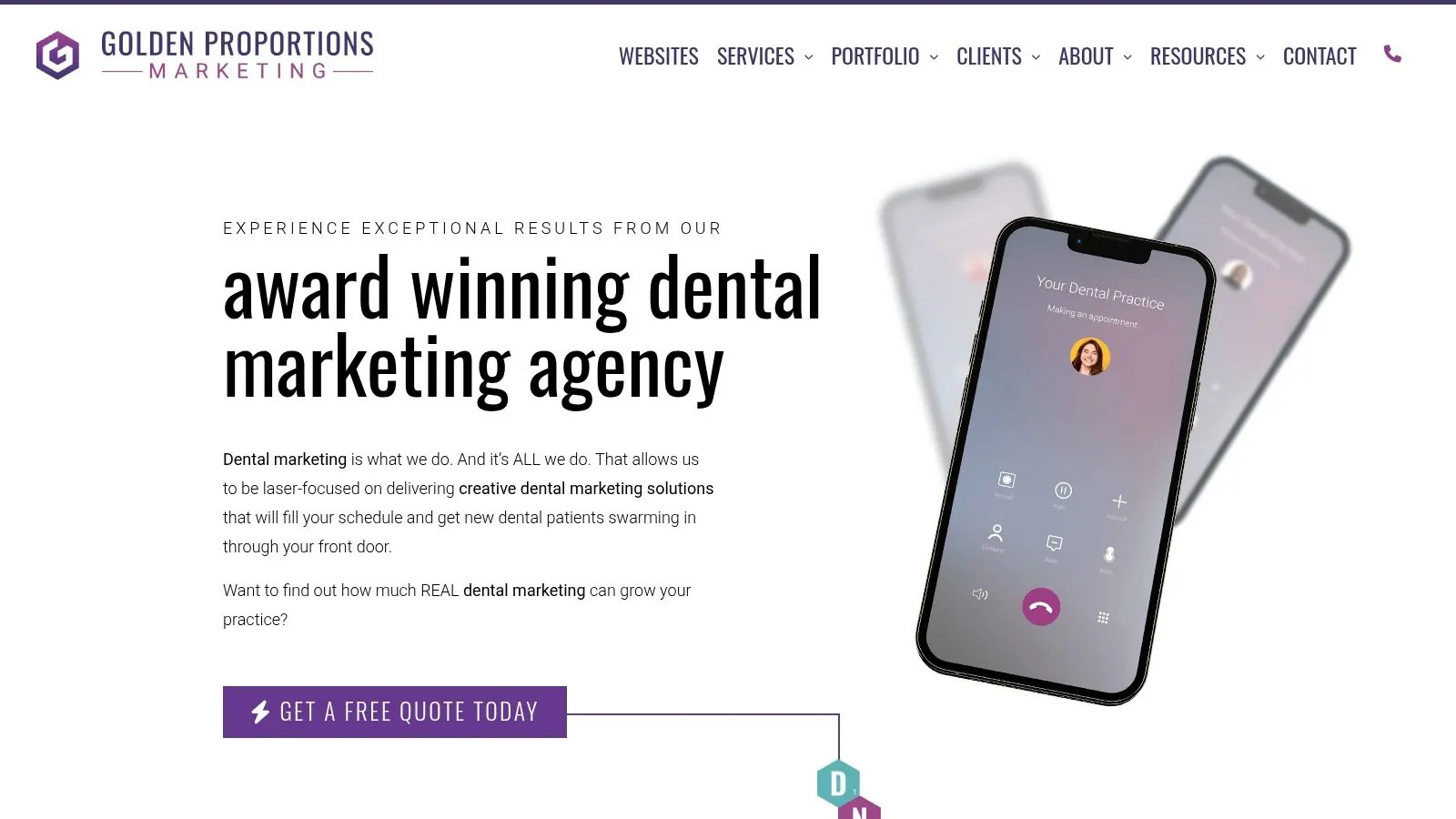
Golden Proportions Marketing takes a strategy-first approach to dental marketing. Its social work sits inside broader positioning, branding, web, SEO, and content programs, making it a strong option for practices that need to clarify their identity before increasing publishing volume.
Use a patient-persona carousel as the working format. Build one carousel for each audience the practice serves, such as parents choosing a family dentist, adults researching cosmetic treatment, or anxious patients looking for a calmer experience. Each carousel should answer a specific concern, explain the practice's approach, and end with a low-friction next step.
The compliance caution is to avoid turning personas into assumptions about health conditions or personal characteristics. Educational content can describe common concerns, but it shouldn't imply that the practice knows an individual's diagnosis, eligibility, or treatment need from their online behavior. Keep clinical statements accurate, review them internally, and direct personal questions to a private, appropriate care channel.
Track saves and qualified profile visits. Saves indicate that educational content may be useful later, while profile visits show whether the post creates enough interest to investigate the practice. Golden Proportions' long dental focus is valuable for practices that want content aligned with case mix and brand positioning. The trade-off is participation. Strategy and content programs can require access to clinicians, staff stories, and internal decision-makers, and public social pricing isn't standardized.
This model works poorly when a practice expects an agency to invent its personality without access to the people who deliver care. It works well when the team is prepared to define what makes the practice different and support that position consistently.
6. HIP Creative
HIP Creative is oriented toward growth campaigns, particularly for orthodontic and cosmetic-focused practices. It combines paid social, organic content, landing pages, CRM follow-up, and training for front-desk and treatment-coordination teams. That combination matters because a lead is only useful when someone responds, qualifies it appropriately, and helps the patient take the next step.
The most practical format is a geo-targeted treatment campaign built around a short video or before-and-after story. Use separate landing pages for different treatment interests, connect form submissions to the CRM, and give the front desk a response script that answers common questions without making clinical promises. Keep paid and organic tracking separate so the practice can see whether inquiries came from an advertisement, a profile visit, or an existing follower.
Before-and-after material needs extra care. Obtain written authorization for the intended content and platform, check that the patient understands what will be published, and avoid implying that every patient will receive the same result. Sponsored patient stories and creator posts also need clear disclosure when there's a material relationship. The FTC's endorsement guidance explains that paid or otherwise connected endorsements should disclose that relationship clearly and conspicuously.
Track qualified leads that receive a completed follow-up, not merely form submissions. HIP Creative is a strong match for practices that want measurable acquisition and have the operational capacity to handle demand. It may be excessive for a practice seeking occasional organic posts, and pricing is customized rather than publicly listed.
7. Scorpion Dental
Scorpion's dental marketing platform combines social content, paid social, websites, reputation management, analytics, and AI-assisted media tools. That end-to-end structure can help multi-location practices or offices competing in busy metropolitan markets, where disconnected vendors make attribution and budget decisions difficult.
A useful implementation format is a campaign-to-landing-page funnel. Create a social ad for one service, send it to a matching page, record the source in the scheduling workflow, and review the resulting inquiries with the ad and website data. Don't send every campaign to the homepage. A patient who clicks an orthodontic ad should land on an orthodontic page with a clear next action.
Compliance still belongs to the practice, even when software supports targeting or testing. Establish who approves claims, images, patient stories, comments, and review responses. A social manager should never confirm treatment details publicly, and automated responses should route personal health questions away from public threads.
Track cost per booked appointment by location and service. Scorpion's strength is scale and integration. Its limitation is that larger providers may feel less personal to a practice that wants a boutique partner with close founder access. Pricing varies by scope and requires a quote, so the right comparison is the full operating model, not a single social-media line item.
For practices also comparing specialist agencies outside dentistry, Leaping Lemur's optometry marketing services show how a broader growth partner can adapt positioning and acquisition systems to another regulated, appointment-based field.
Top 7 Dental Social Media Agencies Comparison
| Vendor | Implementation complexity 🔄 | Resource requirements ⚡ | Expected outcomes 📊 | Ideal use cases 💡 | Key advantages ⭐ |
|---|---|---|---|---|---|
| Leaping Lemur Media | High 🔄, senior-led workshops, iterative 90-day builds | High ⚡, premium fees, executive involvement, limited capacity | High 📊, measurable revenue + retention (case studies: +218% DTC; 3.4× yr1) | Growth-stage clinics, medspas, founder-led practices wanting revenue + brand lift | Full-stack strategic partner, transparent month-to-month model, senior team ⭐ |
| My Social Practice | Low–Moderate 🔄, done-for-you social cadence and toolkits | Moderate ⚡, subscription/management costs; practice coordination | Moderate 📊, improved social presence and Google reviews | Dental practices needing niche social content and patient-engagement channels | Dental-exclusive templates, large library, practice-focused training ⭐ |
| Wonderist Agency | Moderate 🔄, managed posting + on-site content days | Moderate ⚡, scheduling content days, in-house production time | Strong 📊, abundant on-brand content for months, repurposed assets | Busy practices that want bulk authentic content without frequent filming | Efficient content-day capture, multi-channel repurposing, in-house creative ⭐ |
| Pain-Free Dental Marketing | Moderate–High 🔄, CMO-style retainer and staged growth plans | Moderate ⚡, retainer models, operator involvement; stepped pricing | Long-term 📊, steady growth via integrated strategy, ads, video | Practices seeking staged, operator-focused marketing roadmaps | Transparent stage-based offerings, operator guidance, integrated services ⭐ |
| Golden Proportions Marketing | Moderate 🔄, strategy-first, persona-aligned planning | Moderate ⚡, requires practice input for content and case mix alignment | Strategic 📊, brand-aligned social that supports case mix goals | Practices prioritizing brand strategy and patient-persona targeting | Long track record, strategy-led approach, educational resources ⭐ |
| HIP Creative (HIP.agency) | Moderate 🔄, ad-driven programs + landing/CRM integration | Moderate–High ⚡, ad budgets, CRM setup, creative production | High 📊, lead-focused campaigns, strong conversion pipelines | Orthodontic and cosmetic-focused practices needing lead gen | Conversion-focused creative, CRM follow-up, role-specific playbooks ⭐ |
| Scorpion (Dental) | Moderate 🔄, platform + agency with AI-assisted workflows | Variable ⚡, scalable platform fees, suitable for multi-location budgets | Scalable 📊, analytics-driven optimization and AI media allocation | Multi-location or competitive-market practices needing full-stack scale | End-to-end stack, AI/media testing, reputation & analytics integration ⭐ |
Turning Seven Ideas Into a Steady Patient Pipeline
The best choice depends on the gap inside your practice. If the team has no time to create content, a managed dental-social provider may be the practical answer. If the brand feels unclear, a strategy-led partner can help define the message before increasing output. If the practice already has strong creative but weak follow-up, a paid-social and CRM model may produce more value than another calendar of organic posts.
Start with one platform and one patient journey. Instagram may suit a visually led cosmetic campaign, while Facebook can support community updates, reputation activity, and local education. The platform matters less than the connection between the post, the landing destination, the booking process, and the person responsible for responding.
Map four weeks of posts around procedures and team members you already have. A workable month might include clinician explanations, a team introduction, a procedure walkthrough, a community post, and one clearly identified promotional message. Reuse a strong question in a Reel, carousel, website article, and front-desk conversation instead of demanding a completely new idea every time.
Add one consent check to every patient-photo workflow. Written authorization should cover the content and intended use, and a designated person should approve the final post. The practice should also train staff not to confirm patient status or discuss treatment details in comments, direct messages, or review responses.
Review reach, profile actions, inquiries, booked appointments, and review requests each month. Don't let follower growth become the only scoreboard. A smaller audience that asks relevant questions and books appropriate care is more valuable than a large audience that never reaches the scheduling process.
Social media works when the practice can keep the system alive. Small, consistent steps beat a burst of posts that fades by Friday.
Leaping Lemur Media can connect dental social media marketing with positioning, compliant content, websites, SEO, and paid campaigns built around real patient-acquisition goals. Visit Leaping Lemur Media to explore a strategic partner that builds marketing with your practice, not just for it.