You're probably looking at a Meta Ads account that should be working and isn't. The leads are coming in, but they're from the wrong zip code, the wrong service line, or the wrong intent level, and the cost per lead keeps creeping up while the front desk keeps saying the same thing, “These people aren't booking.”
That's the reality of facebook ads for healthcare. The platform can still drive patients, but only if you treat compliance, funnel design, and landing page structure as part of performance, not as paperwork you deal with after launch. When a practice gets that wrong, the ad account becomes an expensive guessing machine.
Table of Contents
- Why Healthcare Advertising on Facebook Looks Different
- Setting Goals and Structuring Your Funnel
- Targeting Audiences Without Crossing Compliance Lines
- Writing Compliant Creative and Copy That Still Converts
- Tracking Conversions and Building a Clean Pixel Setup
- Budgeting, Testing, and Optimization Rhythms
- Sample Campaign Templates and Common Pitfalls to Avoid
Why Healthcare Advertising on Facebook Looks Different
A dentist came into a Monday review with $2,800 in monthly spend and a $180 CPL, and the leads were scattered. Half were outside the service area, a few wanted emergency pricing the practice did not offer, and none booked. That usually looks like a media problem, but the actual issue is often the account structure.
Healthcare is not a plug-and-play vertical on Meta. The platform rewards reach, trust, and tight message matching, and the benchmark data shows why. In one medical marketing benchmark set, Facebook campaigns posted a 0.83% CTR, $1.32 CPC, 11% conversion rate, and $12.31 CPA, which beat the all-industry $18.68 CPA in the same set, while Facebook's 1.86 billion monthly active users worldwide in Q4 2016 gave healthcare advertisers a large top-of-funnel pool to work with. Those figures are from MD Connect's medical marketing benchmark summary.
Compliance changes the game
Meta classifies many healthcare campaigns under Special Ad Categories, and that changes what you can target, how you write, and where you send traffic. It also changes performance. When targeting gets narrower and message rules get tighter, the creative and the landing page have to carry more of the qualification work. That is why generic Facebook advice falls apart in this niche. If you try to force broad consumer tactics onto a regulated service line, you usually get weaker lead quality, more rejections, and more wasted impressions.
Practical rule: In healthcare, compliance is a performance lever. The tighter the policy constraints, the more your creative, offer, and landing page have to do the heavy lifting.
The account structure also has to fit the service line. A dental practice, a medspa, and an eye-care clinic can all use Facebook profitably, but they should not be run with the same assumptions. A dental offer may need location-first messaging and fast booking, while an eye-care campaign often performs better when the ad builds comfort and credibility before asking for an appointment.
Leaping Lemur Media's about page reflects the same kind of approach. The work starts with compliance, then the message, then the conversion path, because each layer affects cost per lead.
Facebook does not reward the loudest claim in healthcare. It rewards the clearest promise, the cleanest compliance, and the most believable next step. The account has to be built for the way patients decide.
Setting Goals and Structuring Your Funnel
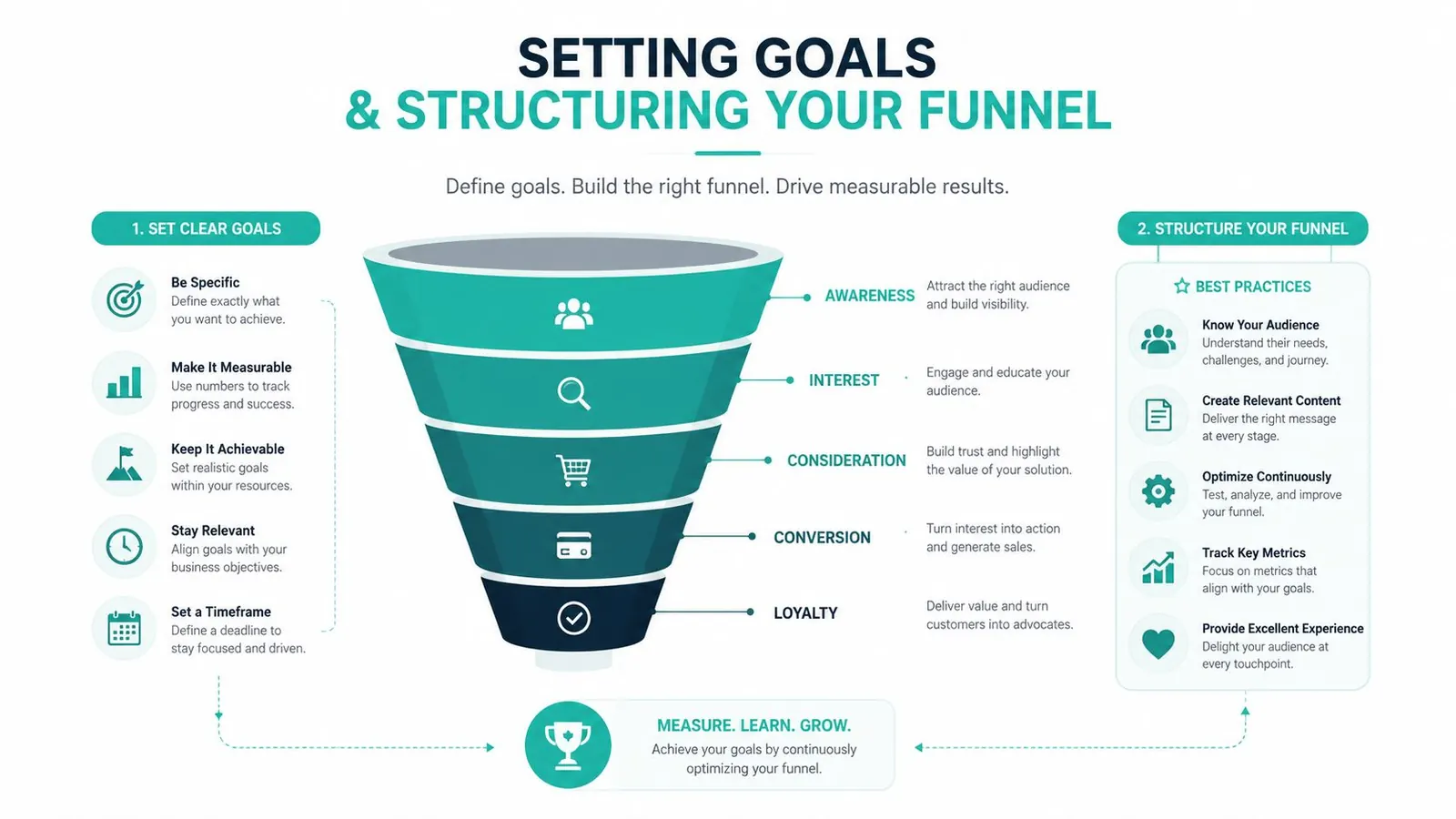
A healthcare Facebook campaign usually fails when one ad is expected to do three jobs at once. It's asked to build awareness, qualify the patient, and close the booking, all in one click. That's too much for a cold audience, especially in regulated categories where trust is still being established.
Use three stages, not one
A practical workflow is to split spend across Awareness, Consideration, and Conversion. In the healthcare benchmark brief, that structure is paired with a 14-day test window at about $30 to $50 per day per service line, with Awareness using Reach or Video Views and taking 20% to 30% of spend. The same workflow recommends building lookalikes from general visitors only and excluding condition-specific pages from Pixel tracking to reduce compliance risk and improve signal quality, which is consistent with ScaleGrowth's healthcare Facebook Ads workflow.
Here's how that looks in practice:
- Awareness: Introduce the practice, the clinician, or the service category.
- Consideration: Educate, answer objections, and move people toward a conversation.
- Conversion: Push for booking, consultation, call, or completed lead form.
A medspa can run awareness around Botox education while reserving conversion ads for laser hair removal, where the offer is more direct and the booking path is simpler. A dental office might use awareness to introduce cosmetic dentistry and conversion to push emergency or implant consults. The point is to match intent to the stage.
Budget by maturity and service line
For a sub-$5K monthly spend, keep the account narrow. Put most of the budget into one or two service lines, keep awareness lean, and reserve a smaller test bucket for conversion once the creative is stable. For a $5K to $15K monthly spend, you can support multiple service lines, but each should still have its own landing page and its own ad set logic.
Cold traffic rarely books on the first touch in healthcare. If you want booked appointments, the campaign has to earn attention before it asks for action.
A clean documentation habit helps here. Write down which service sits in which funnel stage, what the conversion event is, and what the success metric is for that stage. Don't mix lead capture for education with appointment booking in the same ad set unless you enjoy muddy reporting and unstable optimization.
Targeting Audiences Without Crossing Compliance Lines
A clinic can have a strong offer and still waste spend if the audience setup ignores compliance. I see this most often when teams try to target healthcare the way they would a consumer brand, stacking interests, behaviors, and conditions until the account becomes fragile. Meta's healthcare rules push the work in a different direction, so the better approach is to build audiences from geography, general engagement signals, and consented first-party data, then let those inputs shape the rest of the campaign.
A practical starting point is to define the boundaries you can control. A medical clinic guide recommends a 5 to 15 km radius around the clinic, retargeting site visitors with Meta Pixel, and building lookalike audiences from past patients or leads with consent. That setup is useful because it keeps the audience tied to people who can realistically convert, and it also keeps the targeting logic aligned with the message and the landing page in Leadenforce's clinic advertising guide.
The audience structure I use most often is simple, but each segment has a job:
- Local prospecting: A tight geo radius around the practice.
- Warm visitors: People who hit service pages or booked pages.
- Engaged viewers: Video viewers or message starters.
- Consent-based lookalikes: Built from prior patients or leads with documented permission.
- Exclusions: Current patients, existing leads, and irrelevant service audiences.
For a dental office, that geo-first structure usually outperforms broad interest stacking because proximity is part of the conversion path. For a medspa, it helps separate casual cosmetic interest from real treatment intent. For eye care, it keeps the account from paying for people who are too far away to book or who are only browsing for information.
Use special category logic, not wishful targeting
Meta's Special Ad Category rules reduce the level of precision many advertisers expect, and that changes how you build the account. In practice, the safest path is to keep the base audience clean, then use Advantage+ audience expansion only after the landing page and conversion event are already doing their job. If the audience is too broad before the campaign has signal, you end up buying reach that does not help the cost per lead.
Practical rule: Start with geography, then layer in behavior. Do not start with behavior and hope geography fixes it later.
The trade-off matters because compliance affects performance, not just approval. A tighter, well-documented audience often gives you better lead quality and less wasted spend, while an overbroad setup can drive cheap clicks that never turn into booked appointments. If you want a useful internal reference while you sort through campaign logic, keep one open like this journal resource, since healthcare audience setup changes more from policy boundaries than from trend chasing.
The teams that do this well are usually not the ones using the most targeting options. They are the ones using the right few options consistently, and they know why each audience exists before they press publish.
Writing Compliant Creative and Copy That Still Converts
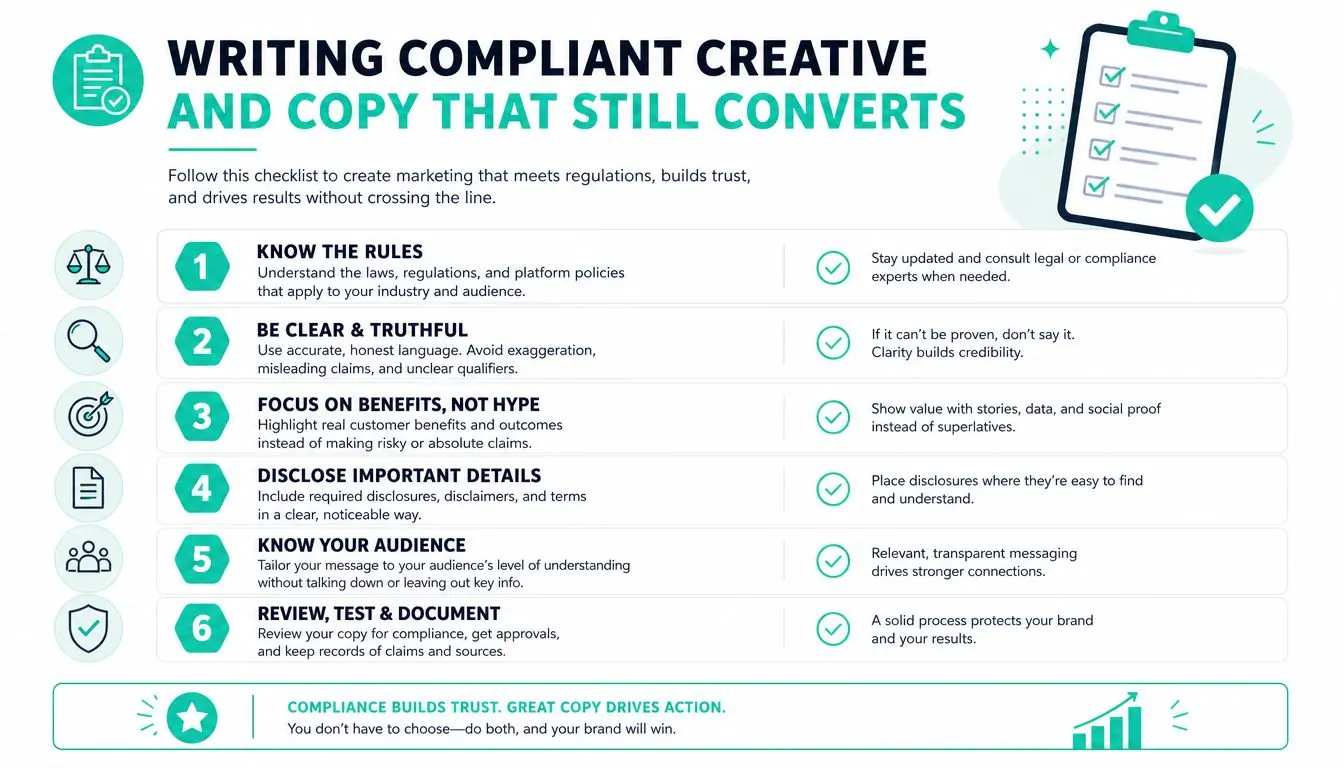
A lot of healthcare ads fail for the same simple reason. The offer may be fine, but the copy pushes too hard, sounds generic, or trips Meta's policy filters before a patient ever sees the call to action. In practice, compliance changes performance. It shapes which claims you can make, how specific your language can be, and whether the creative pushes people toward a lead or toward distrust.
Meta's healthcare guidance is strict enough to affect day-to-day writing. It rejects diagnostic statements, exaggerated promises, and guaranteed results, and it works better with educational language plus visible disclaimers such as “Results may vary; consult your provider” when you mention outcomes. Testimonials also need to stay factual and not misleading, which matters any time a team wants to use patient stories as proof points. Those rules are summarized in Baker Labs' compliance guide.
A compliant brief starts with a clear set of limits. Skip before-and-after photos, avoid direct references to personal health needs, and do not describe a condition in a way that sounds like you are diagnosing the viewer. That approach lines up with Tebra's doctor ad guidance and Leadenforce's clinic guidance.
Use the language that keeps the ad useful without making claims you cannot support.
- Dental: “Book a consultation for a brighter smile” instead of a cosmetic transformation claim.
- Medspa: “Learn how our team approaches skin rejuvenation” instead of a guaranteed result.
- Eye care: “Explore a vision assessment with a local clinician” instead of a fear-based health claim.
The best ads in this category sound like education first. They explain, clarify, and invite the next step without sounding like a hard sell. That tone matters because it reduces friction before the click, especially in markets where patients are already cautious about spending on care.
Video beats polished hype
A practical guide for doctors recommends video ads around 15 seconds, with short copy and audience sizes between 20,000 and 100,000 people to balance relevance and delivery, which is one of the few planning rules that keeps a local practice from drifting into overproduction. If your team is shooting the content in-house, keep the message direct. A clinician can introduce the service in plain language, a front-desk member can explain how booking works, and both can feel more credible than a glossy promo that looks staged. That approach also fits the guide to Facebook video formats when you are deciding how to crop, edit, and deliver the asset.
Authenticity usually outperforms polish in healthcare ads because patients are deciding whether to trust you, not whether to admire the production value.
Keep the landing page aligned with the ad. If the ad promises a consultation, the page should open on that consultation. If the ad uses education-first language, the page should continue the explanation instead of jumping straight to form pressure. That match between ad and page is one of the easiest ways to improve lead quality without fighting the platform.
Tracking Conversions and Building a Clean Pixel Setup
If your tracking is dirty, Meta can't optimize well and your reporting becomes a mess. In healthcare, the problem is bigger than attribution. A sloppy setup can also create privacy risk if you're passing the wrong event data or tying conversions too closely to protected details.
Track actions, not sensitive details
The practical events to watch are Lead, Schedule, Contact, booked appointments through the CRM, phone calls, form completions, and message starts. Those are the signals that matter for patient acquisition. Clicks are useful as a diagnostic, but they're not the business outcome.
A clean setup should also avoid passing treatment codes or value data tied to specific care decisions. Server-side Conversions API tracking can improve signal quality without sending protected health information, especially when it's paired with the right event filtering and a disciplined CRM handoff. If your team is connecting the ad account to a healthcare workflow tool, a resource like Exerta's Facebook integration page can help frame how the systems should talk to each other without overcomplicating the setup.
Keep the pixel away from sensitive pages
One of the most practical tactics in the healthcare workflow brief is excluding condition-specific pages from Pixel tracking and building lookalikes only from general visitors. That keeps the signal cleaner and reduces compliance exposure, especially when the site has service pages that are highly specific or medically sensitive. It's a simple move, but it changes the quality of the optimization data.
A weekly dashboard for a practice should include:
- Booked appointments
- Phone calls from ads
- Lead form completions
- Message starts
- CPL by service line
- Cost per booked appointment
- Show rate
That last point matters. A campaign that produces cheap leads but poor show rates isn't really cheap.
Practical rule: Optimize toward booked patients, not platform clicks. If the front desk can't confirm that an ad-driven lead was real, the metric is too shallow.
Budgeting, Testing, and Optimization Rhythms
A healthcare Facebook account rarely settles quickly. The decision window is longer, compliance review slows down creative turnover, and a small policy mistake can distort the numbers before the campaign has enough data to judge it fairly. That makes pacing a performance decision, not just an operational one.
The best accounts I have managed treat compliance as part of the budget plan. Special Ad Categories limit some targeting choices, conditional messaging rules shape the offer, and dedicated landing pages keep the traffic path cleaner. Those constraints can raise or lower CPL depending on how tightly the campaign is built, so the budget has to support the structure the platform allows.
Run tests in clear blocks, not in constant motion
A 14-day test window is the cleanest rhythm for most meaningful changes, whether you are testing audience, creative, or landing page. Hold the variables steady long enough to read the result. If you change the offer, the image, and the audience at the same time, the account gives you noise, not direction.
A simple cadence works well in practice:
- First block: Launch, verify tracking, watch for rejection risk, and check whether the traffic is relevant.
- Second block: Compare cost per lead, landing page behavior, and booking volume.
- Third block: Pause weak variants and keep the strongest message and audience pairs.
- Fourth block: Refresh creative if fatigue starts to show, or scale the stable winners.
That rhythm is especially useful in healthcare because a campaign can look fine on surface metrics while still producing poor patient quality. A lower CPL does not help if the front desk is cleaning up bad leads all day. The true test is whether the campaign produces leads that convert into booked appointments without creating avoidable friction in the intake process.
For published healthcare benchmark context, remember that the 2026 data showed a healthcare CTR range of 0.6% to 1.4%, CPC of $2.80 to $12, CPM of $18 to $45, and CPL of $30 to $200, with dental, hospital, and telehealth sub-verticals sitting at different points in that range, according to AdLibrary's healthcare Facebook metrics. Those ranges are useful as a reference point, but they do not override service line differences, local competition, or how strict the compliance review is on the offer itself.
Use the metric that matches the business goal
CTR can help diagnose creative, but it should not drive budget decisions by itself. A practice should scale when booked appointments are rising at a tolerable cost and the show rate is holding up. If leads are cheap and unqualified, tighten the geography, adjust the offer, or move the audience deeper into the funnel.
The strongest accounts keep a weekly dashboard tied to patient outcomes, not platform vanity. Track booked appointments, phone calls from ads, lead form completions, message starts, CPL by service line, cost per booked appointment, and show rate. When those numbers move together, budget decisions get easier. When they do not, the issue is usually somewhere in the handoff, the landing page, or the message itself.
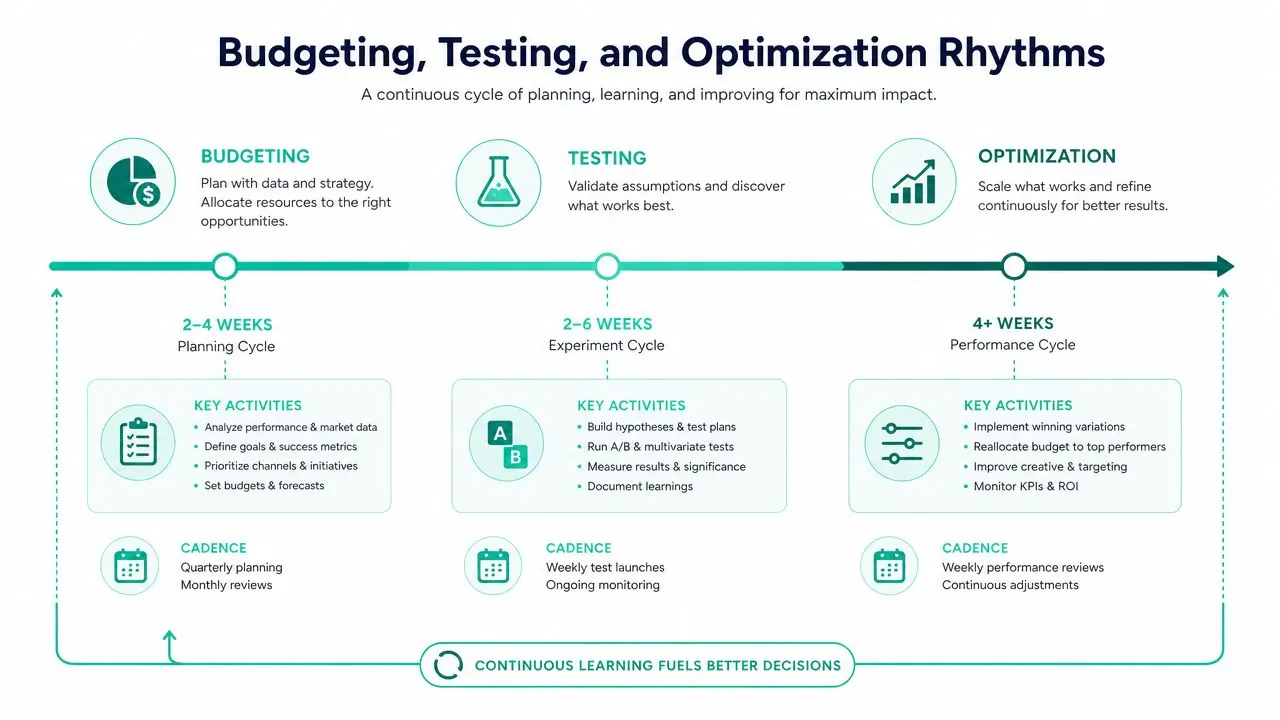
The cycle is simple. Test, learn, refresh, repeat. In healthcare, that rhythm keeps a campaign from stalling because the market changed, the audience fatigued, or the creative drifted away from the compliant message that got the account approved in the first place.
One more practical point. Budget flexibility matters, but compliance discipline matters more. A campaign that looks efficient on paper and keeps triggering review issues will cost more to run than its CPL suggests, because the team spends time repairing ads, rebuilding pages, and reworking copy instead of improving the offer. That is where a steady testing rhythm pays off, it keeps the account usable long enough for the good data to show up.
Sample Campaign Templates and Common Pitfalls to Avoid
Theory gets useful when you can copy it into an account and launch. The best healthcare Facebook campaigns are rarely complicated. They're specific, compliant, and built around one clear outcome.
Two starter templates
A new dental service launch can use a local awareness ad with a clinician video, a service-specific landing page, and a conversion ad for consultation requests. The audience should stay tight to the practice radius, and the KPI should be booked consults, not just leads. That template works because it moves from trust to action without forcing the patient to decode the offer.
A medspa evergreen lead capture campaign usually works better with an educational video, an instant form or message CTA, and a landing page that explains the treatment in plain language before asking for contact details. The creative should feel calm and informative, not salesy. If the service is more sensitive, the page has to do even more of the reassuring.
You can keep the offer and follow-up logic organized by service line with a page like Leaping Lemur Media's services overview, but the campaign itself still needs a dedicated landing page and a single conversion path.
The mistakes that cost money
- Mixing awareness and conversion in one ad set: Split them or the reporting gets muddy.
- Sending traffic to the homepage: Use a dedicated service page that matches the ad.
- Ignoring mobile speed: Slow pages kill momentum before the form load.
- Treating a rejection as final: Fix the copy or visual, then resubmit.
- Using one creative forever: Refresh before fatigue drags down delivery.
- Measuring clicks instead of bookings: Track actual patient actions.
If an ad gets approved but the leads are weak, the issue is usually message match or audience quality, not the approval itself.
The strongest launch checklist is short. Confirm the Special Ad Category, verify the Pixel and conversion events, write compliant copy, send traffic to a dedicated page, and know exactly which booked action you're optimizing for. If those pieces are in place, facebook ads for healthcare can become a dependable source of patient demand instead of a noisy line item.
Leaping Lemur Media helps practices build marketing that feels clear, compliant, and true to the way they serve patients. If you want a partner to tighten your Facebook strategy, improve your message match, and turn ad spend into better-quality leads, visit Leaping Lemur Media and start the conversation.