Your practice's Facebook page still shows an old cover photo, the last post announced a holiday closure, and someone's appointment question has gone unanswered. Meanwhile, you're being offered an ad campaign that promises more leads, even though your front desk already struggles to turn inquiries into scheduled visits.
Facebook marketing for dentists should connect local familiarity with attended appointments. That means making the practice easy to evaluate, giving people useful reasons to remember your team, and measuring what happens after they click. It also means protecting patient privacy before anyone starts filming, posting, or installing tracking tools.
Table of Contents
- Why Facebook Still Matters for Dental Practices
- Setting Up and Optimizing Your Practice Page
- Building a Content Calendar That Builds Trust
- Running Paid Facebook Ads That Book Appointments
- Measuring What Actually Matters at the Front Desk
- Staying Compliant Without Killing the Strategy
- Ready-to-Use Templates and a 30-Day Launch Checklist
Why Facebook Still Matters for Dental Practices
A neglected page raises a reasonable question: is Facebook still worth your team's time? The useful answer starts with your community, not the platform's global audience.
A prospective patient might hear your name from a neighbor, check the practice page, and look for signs that your office feels approachable. Someone else might recognize your dentist from a community event before they need care. Treat Facebook as a place where people can become familiar with your practice, rather than expecting every post to produce an immediate booking.
Define Facebook's job in your marketing mix
Start by deciding whom you can realistically serve. Consider travel time, parking, appointment availability, and the services your clinicians want to grow. A nearby family seeking ongoing care needs different information from an adult comparing elective treatment options.
Then give each channel a distinct responsibility:
- Referrals: Help satisfied patients confidently recommend a practice they know.
- Search and your website: Answer service, location, and appointment questions when someone actively looks for care.
- Facebook: Introduce the people behind the practice and maintain visibility within your service area.
This is why Facebook belongs within a coordinated dental marketing strategy, not in a separate reporting silo.
The audience remains substantial. DataReportal's January 2025 Facebook figures reported at least 2.28 billion users worldwide, equivalent to 35.3% of the global population aged 13 and older, including 197 million users in the United States. Those figures establish scale, not a guarantee that your local campaign will work.
Practical rule: Reach people who can reasonably become patients, then give them reasons to trust the practice before asking them to book.
Choose a clear role for organic posts and paid campaigns. Organic content can explain your approach and introduce clinicians; advertising can extend relevant messages beyond current followers. Neither substitutes for available appointments or a responsive intake team.
A busy-looking page isn't the objective. A recognizable, credible practice with an understandable next step is.
Setting Up and Optimizing Your Practice Page
Your Facebook Business Page should help a visitor answer practical questions without searching through old posts. Can this practice provide the service they need? Where is it? How can they request an appointment?
A 2018 peer-reviewed study involving 588 patients found that 36% of respondents to the relevant question had searched for their dentist on social media, while 44% were comfortable establishing contact through social platforms. These are findings from a specific sample, not universal patient behavior, but they make page accuracy worth taking seriously.

Build around the booking decision
Use this checklist for a new page or an existing-page audit:
- Name and category: Use the practice's recognizable name and the most accurate available dental category. Don't add promotional phrases to the business name.
- About section: Describe actual services, the address, opening hours, parking information, and how new patients can contact the office.
- Insurance notes: Explain how patients can verify coverage. Avoid language that could make participation or benefits sound guaranteed.
- Profile and cover images: Use a legible logo and a current view of the actual practice or team, with appropriate permissions.
- Action button: Select the available booking or contact action that matches your workflow. Test the destination on a phone.
- Username: Choose a memorable handle consistent with your other business profiles where possible.
Don't send a booking button to a generic homepage if visitors must hunt for scheduling. If online requests require staff confirmation, say so clearly. An appointment request shouldn't look like a confirmed appointment.
Audit access as well as appearance
For first-time setup, establish business-controlled access before publishing. For an existing page, check who still has permissions, whether former employees retain access, and who receives notifications.
Assign responsibility for hours, service changes, messages, and final approvals. A polished page can still create confusion if nobody updates it when the practice's schedule changes.
Finally, view the page as a prospective patient would. Follow the booking path, call the displayed number, and check whether the address matches your website. Fix friction before buying traffic.
Building a Content Calendar That Builds Trust
A useful calendar starts with patient questions, not empty posting slots. Each planned post should explain something, introduce someone, or show a genuine connection to the community.
If your team needs a shared definition before building the workflow, SleekPost's resource on what is a content calendar is a useful starting point. For a dental practice, add fields for the clinician reviewer, asset permissions, response owner, and booking destination.
Rotate themes with a purpose
Use these themes as an editorial starting point, then adjust the rhythm to what your team can maintain.
| Content Pillar | Sample Post Format | Suggested Rhythm | Patient Question |
|---|---|---|---|
| Clinician introductions | A hygienist explains their role in a short video | Rotate regularly as team members participate | Who will look after me? |
| Patient education | A clinician-led explanation of a consultation process | Make this a recurring weekly anchor | What should I expect? |
| Practice life | A reception-to-treatment-room walkthrough without patients or records | Alternate with team introductions | What does the office feel like? |
| Community involvement | A verified update about a local partnership or event | Publish when there's genuine activity | Is this practice part of my community? |
| Patient stories | An authorized account in the patient's own words | Use only when permissions and review are complete | What was another person's experience? |
For an education post, try a hook such as What happens during an orthodontic consultation? Explain the process without suggesting that every viewer needs treatment. For practice-life content, show where visitors check in rather than filming a busy clinical area.
Batch the work by gathering approved assets, drafting captions, and scheduling them together. Planning becomes easier when clinicians answer recurring front-desk questions instead of trying to invent social-media ideas from scratch.
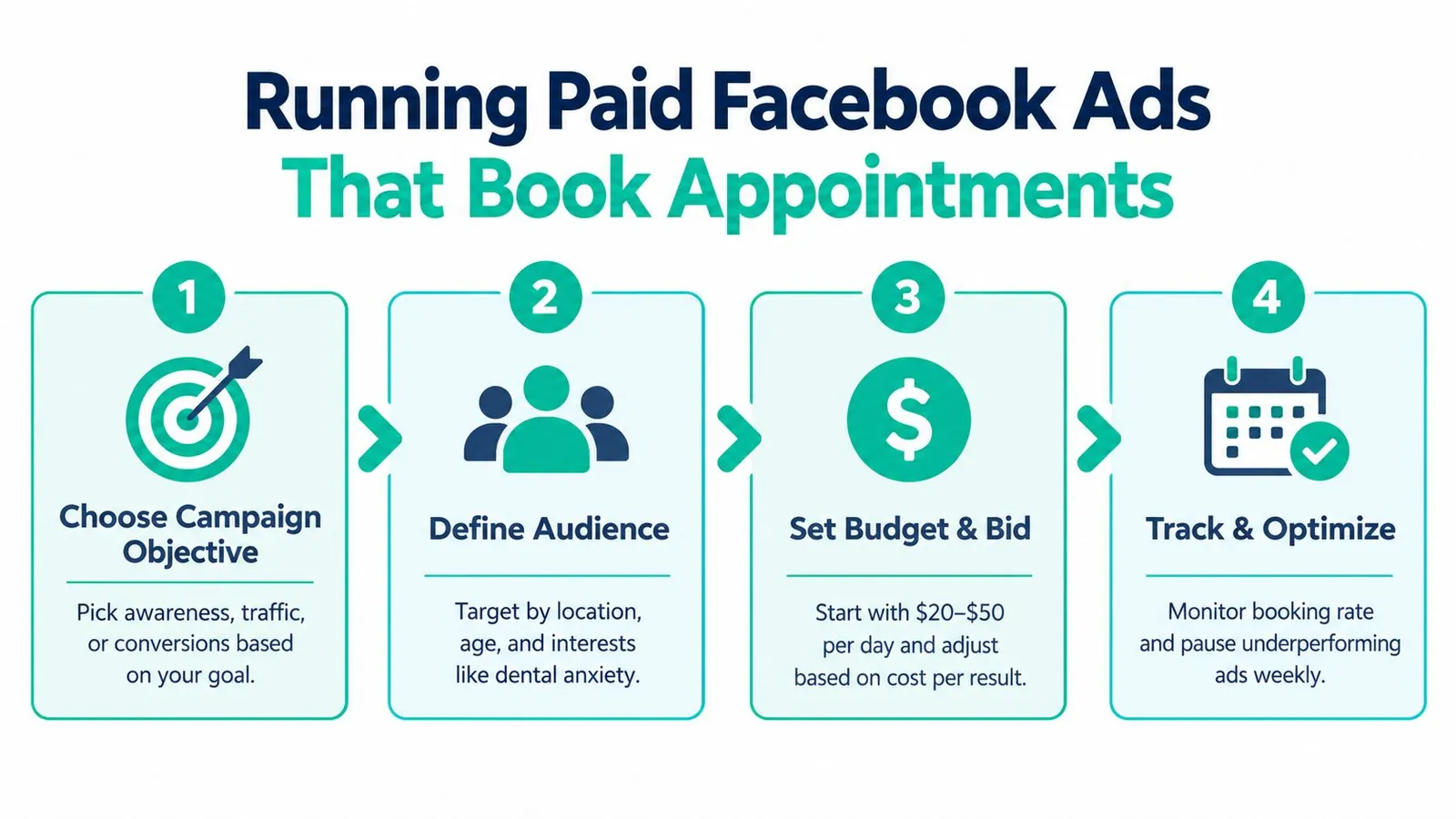
Treat any suggested budget or audience setting in a workflow graphic as illustrative, not a practice-specific prescription. Your approved strategy should determine both.
Make monitoring part of publishing
The American Dental Association's social-media guidance recommends regular posting, timely responses, and active monitoring, while warning that exchanges can implicate privacy law or inadvertently establish a doctor-patient relationship.
Assign someone to review notifications during office operations, with backup coverage for absences. Administrative questions can receive administrative answers; clinical questions need a standardized, non-diagnostic response directing the person to the practice's appropriate care channel.
Publishing creates a responsibility to monitor the conversation. A scheduled post isn't a completed task if its questions sit unanswered.
Running Paid Facebook Ads That Book Appointments
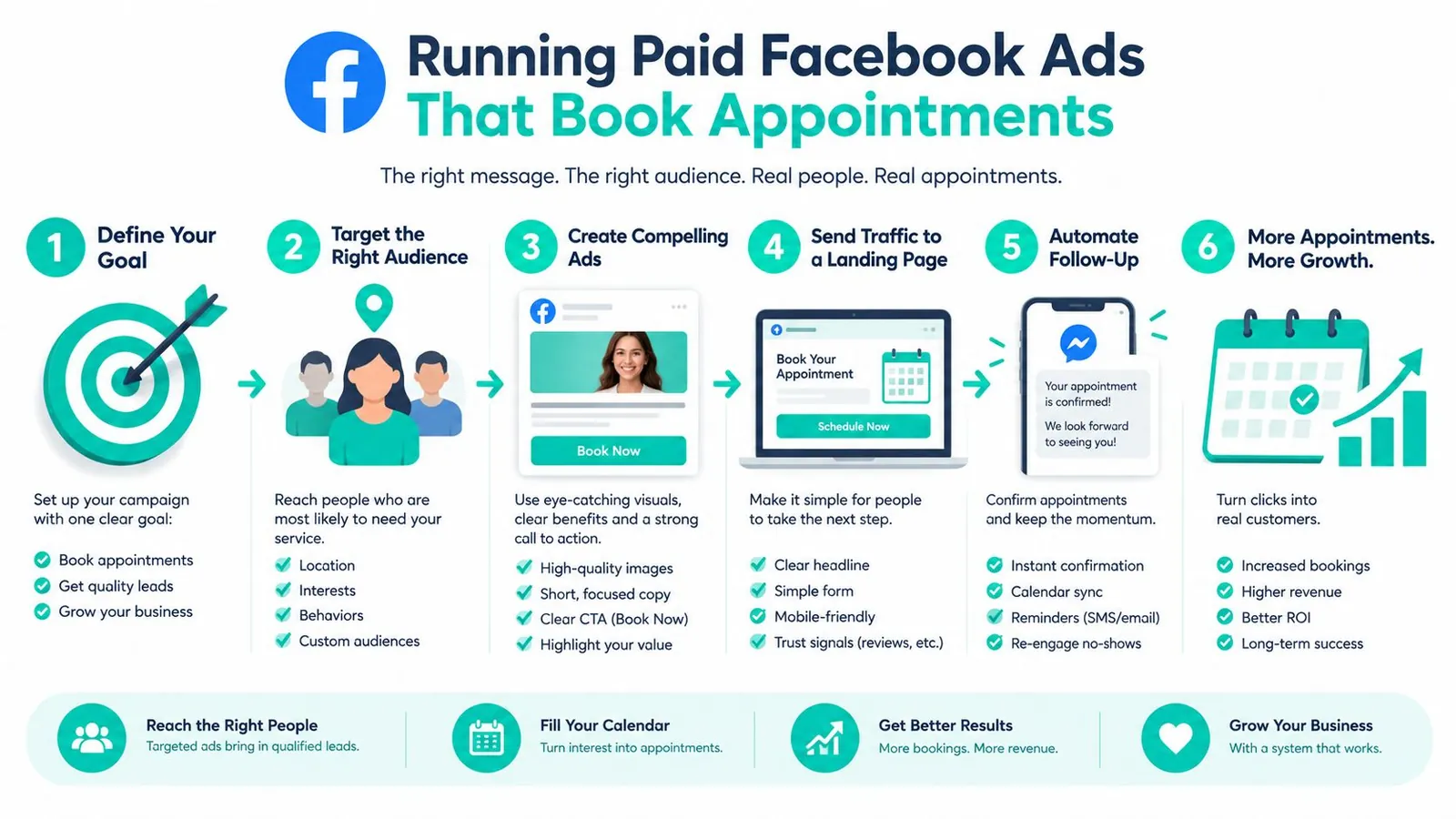
Don't open Ads Manager until the practice has decided which appointments it can accommodate. Advertising emergency availability that the office can't support, or elective consultations without a follow-up owner, creates an operational problem rather than growth.
Campaign structure comes before creative. Give each service a clear objective, message, destination, and intake path.
Match the objective to the next step
An awareness campaign suits clinician introductions and local recognition. A lead-generation campaign suits an inquiry that staff will qualify and schedule. A conversion-focused campaign makes sense when there's a working booking journey and an approved way to measure the relevant action.
Traffic can help test whether people visit a destination, but clicks alone don't establish appointment demand. Likewise, an instant form reduces submission effort without proving that the person will answer the phone.
Keep distinct service journeys separate:
- Emergency dentistry: Emphasize verified availability and a clear contact route. Match delivery to times when the office can respond.
- Family dentistry: Explain routine access, household scheduling, and the new-patient process.
- Cosmetic dentistry: Offer an informative consultation rather than implying a guaranteed transformation.
- Orthodontics: Explain assessment, available options, and how to request a consultation.
These can be separate campaigns or clearly separated campaign components. Don't fragment a limited budget across every service just because the practice offers them.
For another local-business perspective, consider Rapid Ads conversion-focused approach alongside your dental intake requirements. The relevant decision is whether the campaign supports a meaningful next action, not whether its dashboard looks active.
Choose audiences and formats deliberately
Start with a service area based on practical travel patterns. Apply age settings appropriate to the offer, and treat available interest filters as optional tests rather than proof of clinical need. Don't assume that a health-related interest is available, suitable, or necessary.
Use a clinician-led short video when the message needs explanation. Test a carousel when visitors benefit from seeing separate consultation stages or service options. A single image can work for a straightforward introduction or appointment invitation; it doesn't need a dense collection of claims.
Elective dental advertising shares some consultation-marketing considerations with med spa marketing, but dental suitability and treatment decisions remain clinical matters.
Set a test ceiling and stop conditions
There's no defensible universal daily budget for every dental practice. Set a test amount the practice can afford to lose, linked to appointment capacity and an acceptable acquisition cost.
Pause immediately for broken destinations, inaccurate offers, privacy concerns, or an intake team that can't respond. Evaluate performance after sufficient activity, not after a disappointing afternoon.
If people inquire but don't schedule, inspect staff follow-up and offer clarity before replacing the ad. If booked patients don't attend, investigate the appointment journey. Buying more of the same traffic won't resolve those problems.
Measuring What Actually Matters at the Front Desk
A low cost per lead can conceal an expensive acquisition process. The practice still has to contact the person, schedule an appropriate visit, and have that patient attend.
Cost per attended new-patient appointment is a more useful acquisition metric than cost per form submission. Divide campaign spending by attributed new patients who completed their initial visit, and keep treatment outcomes in a separate downstream view.
A 2025 dental-care survey reported that personal recommendations accounted for 70% of care discovery, compared with 20% for social media, while 62% of respondents had visited a clinic influenced by digital advertising. These sample findings shouldn't become universal benchmarks; they illustrate why discovery and influence aren't necessarily the same thing.
Facebook Metrics Worth Tracking for a Dental Practice
| Metric | What It Tells You | Where to Find It |
|---|---|---|
| Reach and video completion | Whether people encounter and consume the message | Meta reporting |
| Landing-page sessions | Whether visitors reach the intended destination | Approved website analytics |
| Calls and form submissions | Whether the campaign generates inquiries | Call tracking and intake records |
| Booked appointments | Whether staff convert inquiries into scheduled visits | Practice management software or CRM |
| Attended new-patient visits | Whether acquisition produces completed initial visits | Appointment-status records |
| Show rate | How attended visits compare with booked visits | Internal appointment reporting |
| Treatment-start revenue | Downstream value associated with the acquired cohort | Internal financial reporting |
| Cost per attended appointment | Acquisition efficiency after scheduling and attendance | Combined spending and attendance report |
Use unique campaign URLs with neutral UTM labels, approved call-tracking arrangements, and consistent CRM source fields. Keep clinical and financial details inside appropriate internal systems rather than sending them back to advertising tools.
Record uncertainty rather than hiding it
Ask patients how they first heard about the practice and what prompted them to contact it. Those answers may differ, and both can be useful.
Attribution reality: A patient can see a Facebook post, ask a friend, search the practice name, and call. That journey doesn't fit neatly into a single-source box.
Separate directly attributed patients from people who mention Facebook as an influence. Don't count the same patient repeatedly across channels.
Compare Facebook-attributed and referral cohorts by attended visits, cancellations, service mix, and treatment starts. For profitability decisions, account for delivery costs as well as marketing spend. Gross treatment revenue alone isn't profit, and projected lifetime value shouldn't replace observed results.
Staying Compliant Without Killing the Strategy
Privacy problems can arise from an enthusiastic testimonial post or a defensive review response, not just a deliberately aggressive campaign. Clinical boundaries need to be part of the production workflow.
In a 2019 HHS Office for Civil Rights settlement, Elite Dental Associates in Dallas agreed to pay $10,000 and adopt a corrective action plan after allegedly disclosing patients' protected health information on social media. Deleting content doesn't erase potential exposure.
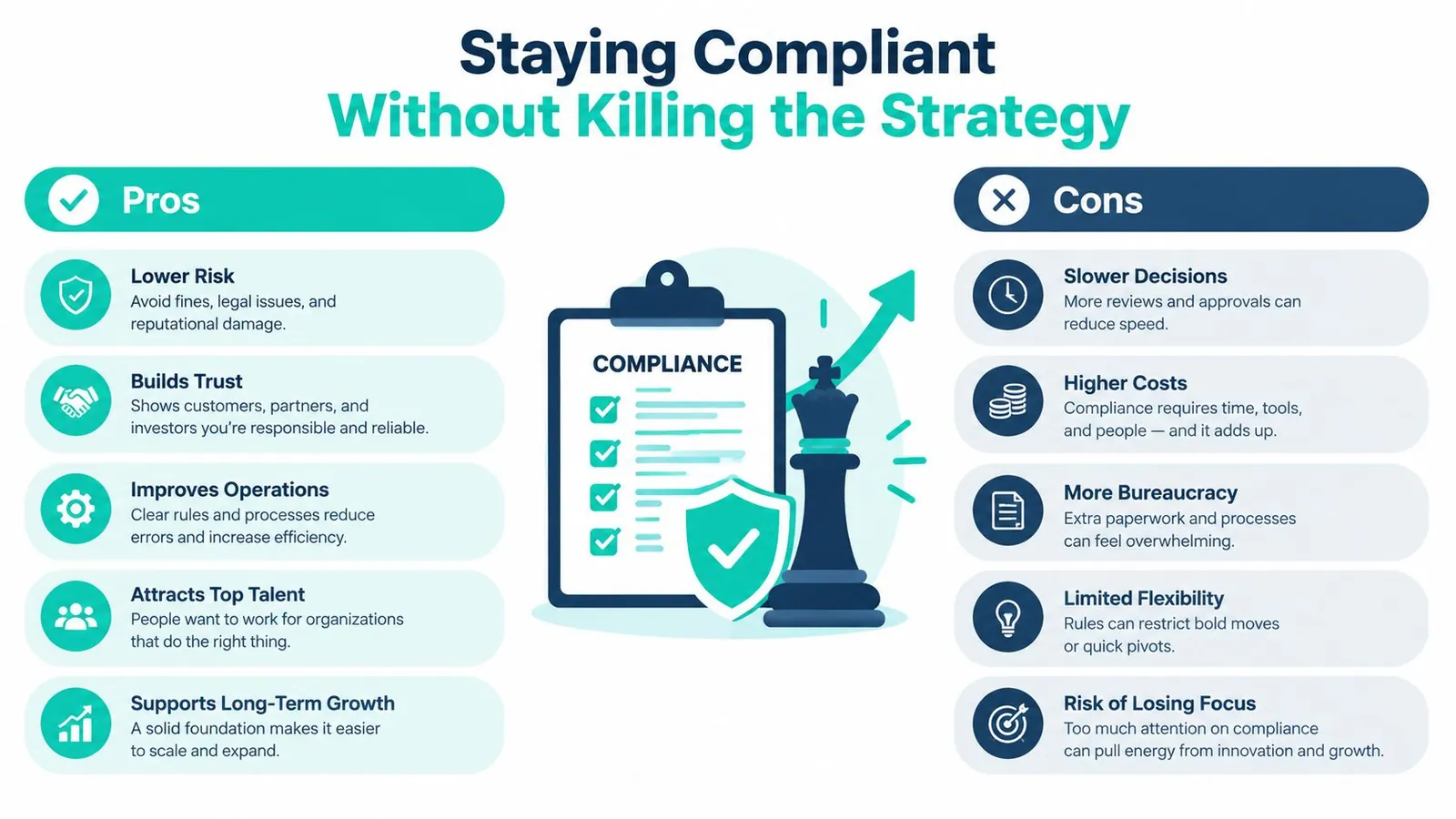
Apply guardrails to actual creative
- Patient-identifiable content: The ADA's patient-privacy guidance calls for written authorization and staff controls. Replace an unapproved patient image with clinician-led education, or publish only after specific authorization and final approval.
- Personal attributes: Meta's personal-attributes policy prohibits asserting or implying health conditions. Replace Are you embarrassed by your missing teeth? with Explore implant consultation options.
- Cosmetic advertising: Meta's health-and-wellness standards require a minimum audience age of 18 for covered cosmetic-procedure ads and prohibit negative self-perception messaging. Replace Fix your ugly smile with Learn about cosmetic dental consultation options.
- Text-heavy images: Meta's documented image-text guidance describes potential delivery reductions, not a universal text ban. Because that documentation is historical, check current guidance and actual delivery. Move dense explanations into accompanying copy.
Review the image, headline, primary text, and landing page together. A neutral headline doesn't fix an image that shames the viewer.
Keep approval and measurement controlled
Maintain an accountable approver, retrievable authorizations, staff training, and an edit-and-takedown record. Don't confirm patient status in public replies or shift clinical conversations to staff personal accounts.
Before enabling tracking or audience tools, assess what information they disclose. Dental advertising guidance on Meta's health-data constraints highlights restrictions on sensitive health information. Avoid patient-list uploads and treatment-revealing tracking labels without an appropriate compliance assessment.
A published website privacy policy is a disclosure, not a substitute for safe data handling. Have the practice's qualified compliance adviser review the actual workflow.
Ready-to-Use Templates and a 30-Day Launch Checklist
Start with copy that doesn't depend on invented credentials, discounts, or treatment promises. These examples can be adapted after the team verifies that the wording matches the practice.
Dental post and ad copy
Meet your hygienist
Meet the hygiene team. In our next team introduction, a hygienist will explain their role, walk through the appointment process, and share what they enjoy about patient education. Have a scheduling question? Contact our front desk.
Back-to-school sports mouthguards
School sports are back on the calendar. Add mouthguard questions to your next dental appointment, and ask the team about available options. Contact the practice to arrange a visit.
Cosmetic consultation ad
Headline: Explore Cosmetic Dental Options
Primary text: Learn about available approaches, suitability, limitations, and next steps during a consultation with our dental team. Contact the practice to request an appointment.
Your launch sequence
Use the 30-day launch period as an implementation schedule, not a promise of results.
- Page cleanup: Verify business details, access permissions, the action button, and its destination.
- Content preparation: Gather approved assets, draft recurring themes, and assign review and response owners.
- Campaign launch: Activate a service-specific test only after confirming capacity, intake coverage, and compliance review.
- Measurement review: Reconcile inquiries with booked and attended visits. Record unresolved attribution instead of guessing.
Finish the launch review with a clear decision: continue the test, repair the intake process, revise the message, or pause spending. The front desk should leave with an actionable task, not another dashboard to interpret.
Leaping Lemur Media offers dental Facebook and Instagram campaigns, local-audience targeting, and marketing that reflects the practice's community and clinical voice. Visit Leaping Lemur Media to discuss a Facebook strategy built around compliant messaging, a workable intake process, and attended appointments rather than likes alone.