
You're probably in one of two places right now. Either your practice already has a Google Business Profile and it hasn't been touched in months, or you claimed it once, filled in the basics, and assumed that was enough. Then a nearby competitor started showing up for searches like “dentist near me” or “medspa open now,” and you're left wondering why they're getting the calls.
That frustration is justified. For many local practices, Google Business Profile isn't a side listing. It's the first thing a patient sees, the fastest way they judge credibility, and often the deciding factor between your front desk getting the call or someone else's. If you want to learn how to optimize Google Business Profile without turning it into another complicated marketing project, the key is simple: get the fundamentals right, make the profile feel human, and maintain it in a way you can stick to.
Table of Contents
- Your Digital Front Door Why Google Business Profile Matters More Than Ever
- Laying the Groundwork Your Foundational Profile Setup
- Enhancing Your Profile to Build Trust and Attract Patients
- The Art of Active Management A Sustainable Optimization Routine
- Measuring What Matters How to Track Your Local Impact
- Common Mistakes and Your Path Forward
Your Digital Front Door Why Google Business Profile Matters More Than Ever
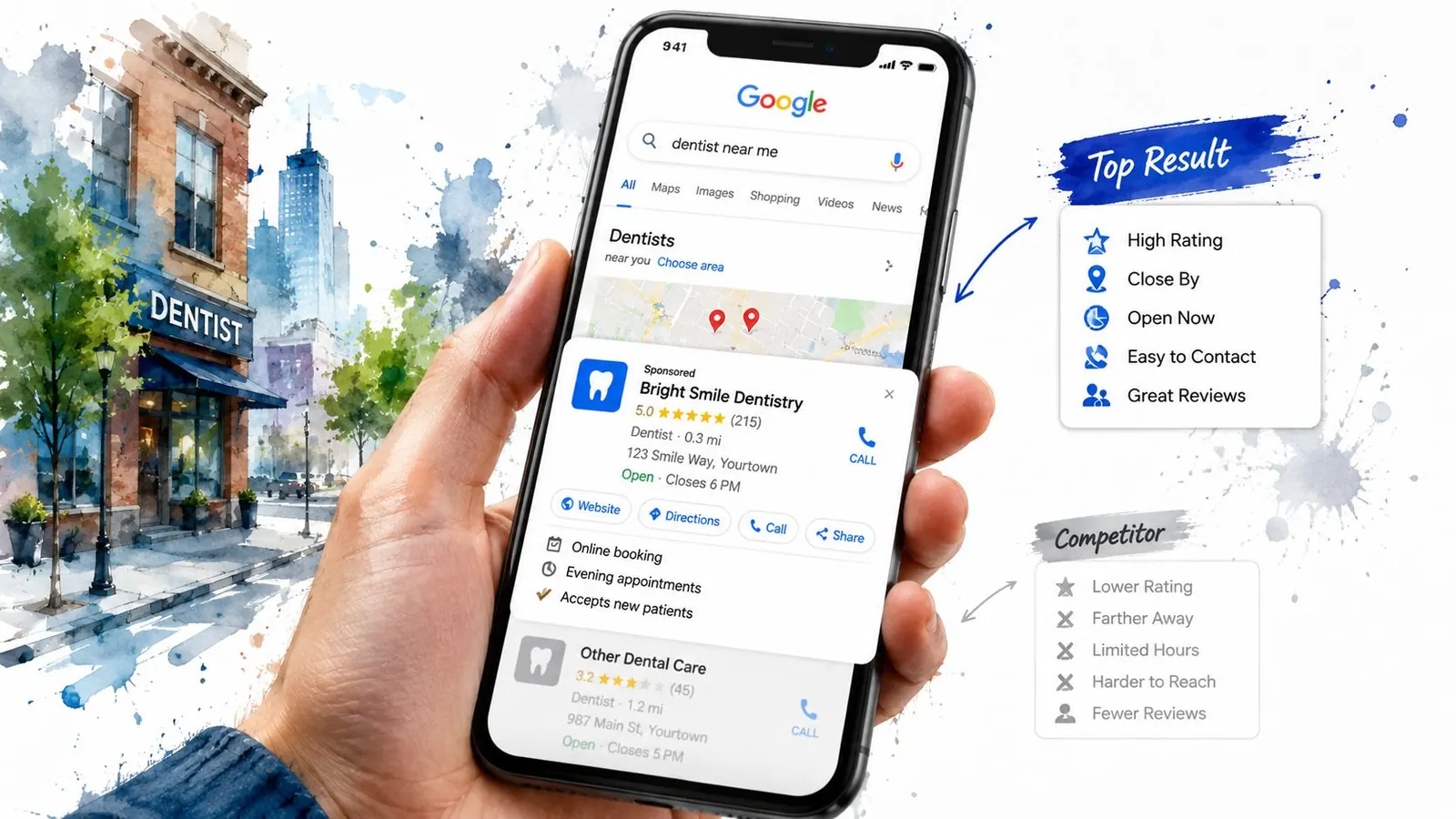
A patient searches on their phone. They see a map, a few practice names, reviews, hours, and buttons to call or get directions. That small screen often decides the outcome before your homepage ever gets a chance.
That's why a neglected profile costs more than visibility. It costs trust at the exact moment someone is ready to choose. Businesses with completely filled-out Google Business Profiles are 70% more likely to receive a visitor and 50% more likely to be perceived as trustworthy by potential customers. For a dentist or medspa, those aren't abstract metrics. They translate into consults, treatment starts, and booked appointments.
The patient decision often happens before the website visit
When someone looks for a provider nearby, they're usually trying to answer a short list of questions fast:
- Are you close enough
- Do you look credible
- Do you offer the service they need
- Are you open
- Is there any reason to trust you over the other listing beside you
Your profile answers all of those in one place. If your hours are wrong, your photos are dated, or your services are vague, the patient doesn't send feedback. They move on.
Practical rule: If your Google Business Profile feels incomplete, rushed, or stale, patients assume the real-world experience may feel that way too.
There's also a bigger local SEO point here. Google wants to show businesses that are relevant, accurate, and useful to searchers. A profile that accurately reflects the practice, with current information and visible activity, gives Google more confidence in recommending you.
Why this matters so much for dentists and medspas
Healthcare-adjacent decisions are trust-heavy. People aren't picking a place for a casual errand. They're choosing who will handle a toothache, cosmetic treatment, or a first appointment they may already feel nervous about.
That's why the strongest profiles don't read like generic listings. They feel like a clean, current snapshot of the practice.
If you want another local-business perspective on what makes a profile convert, FixyFlow's repair shop SEO advice is useful because it shows the same principle in a different industry: clear information, visible proof of quality, and consistent activity beat vague optimization every time.
Laying the Groundwork Your Foundational Profile Setup
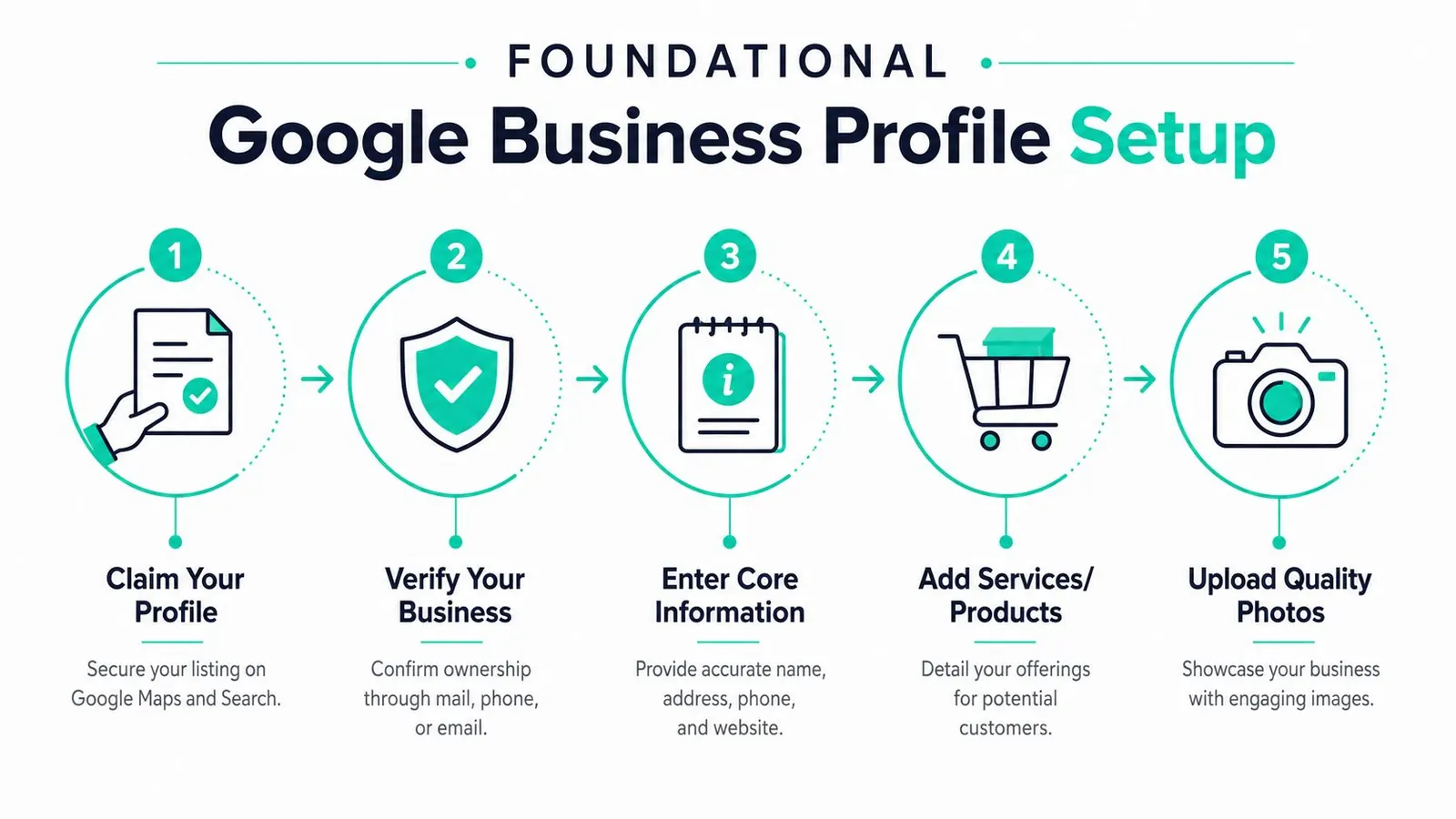
A strong profile starts with discipline, not creativity. Before you think about posts, reviews, or photos, make sure the practice details are exact and defensible.
Start with ownership and accuracy
First, claim the profile if you haven't already. If a listing already exists, request access and verify ownership. If none exists, create one directly through Google and complete the verification step Google offers for your business type.
Then lock in your core information:
-
Business name
Use your real-world practice name exactly as patients see it on signage, legal documents, and your website. Don't add extra keywords to the business name just because they sound helpful. -
Address and phone number
Enter the precise address and the phone number your front desk answers. This should match your website and other directory listings. -
Website and hours
Use the best destination for new patients, usually your main site or a location page. Keep regular and holiday hours current.
A profile can't earn trust if it creates friction. Wrong hours and mismatched contact details are friction.
For multi-location practices, consistency matters even more. The corporate group may share branding, but each location still needs accurate local details. A dental group with one office using a suite number and another office omitting it can create confusion for both patients and Google.
Choose categories with restraint
Category selection is one of the clearest signals you give Google. Google Business Profile allows exactly 1 primary category and up to 9 subcategories, while Google's guidelines say to use as few categories as necessary to describe the core business without stuffing them as keywords.
That means your choices should describe what the practice is, not every treatment you wish to rank for.
A simple way to think about it:
| Practice type | Better primary category | Better supporting categories |
|---|---|---|
| General dental office | Dentist | Cosmetic Dentist, Emergency Dental Service |
| Medspa focused on injectables and skin | Medical Spa | Skin Care Clinic, Laser Hair Removal Service |
| Ophthalmology office | Ophthalmologist | LASIK Surgeon, Eye Care Center |
The trade-off is straightforward. Too few categories can underspecify what you do. Too many makes the profile look stuffed and unfocused. Most practices should choose the clearest primary category first, then add only the supporting categories that reflect real services.
Set a realistic service area
If your business serves patients beyond your street address, define your service area carefully. Google Business Profile guidance discussed in industry training says service areas should stay within a 2-hour travel radius of the physical location.
That matters for practical reasons as much as SEO. If a medspa in one suburb lists far-flung cities it doesn't realistically serve, the profile may attract poor-fit inquiries. Local visibility works best when the geography matches how patients travel.
A foundational setup checklist looks like this:
- Claim and verify your listing before making major edits
- Match NAP details with your website and existing citations
- Choose one true primary category that reflects the core practice
- Add only necessary subcategories that support real service lines
- Set a believable service area based on actual patient reach
Enhancing Your Profile to Build Trust and Attract Patients
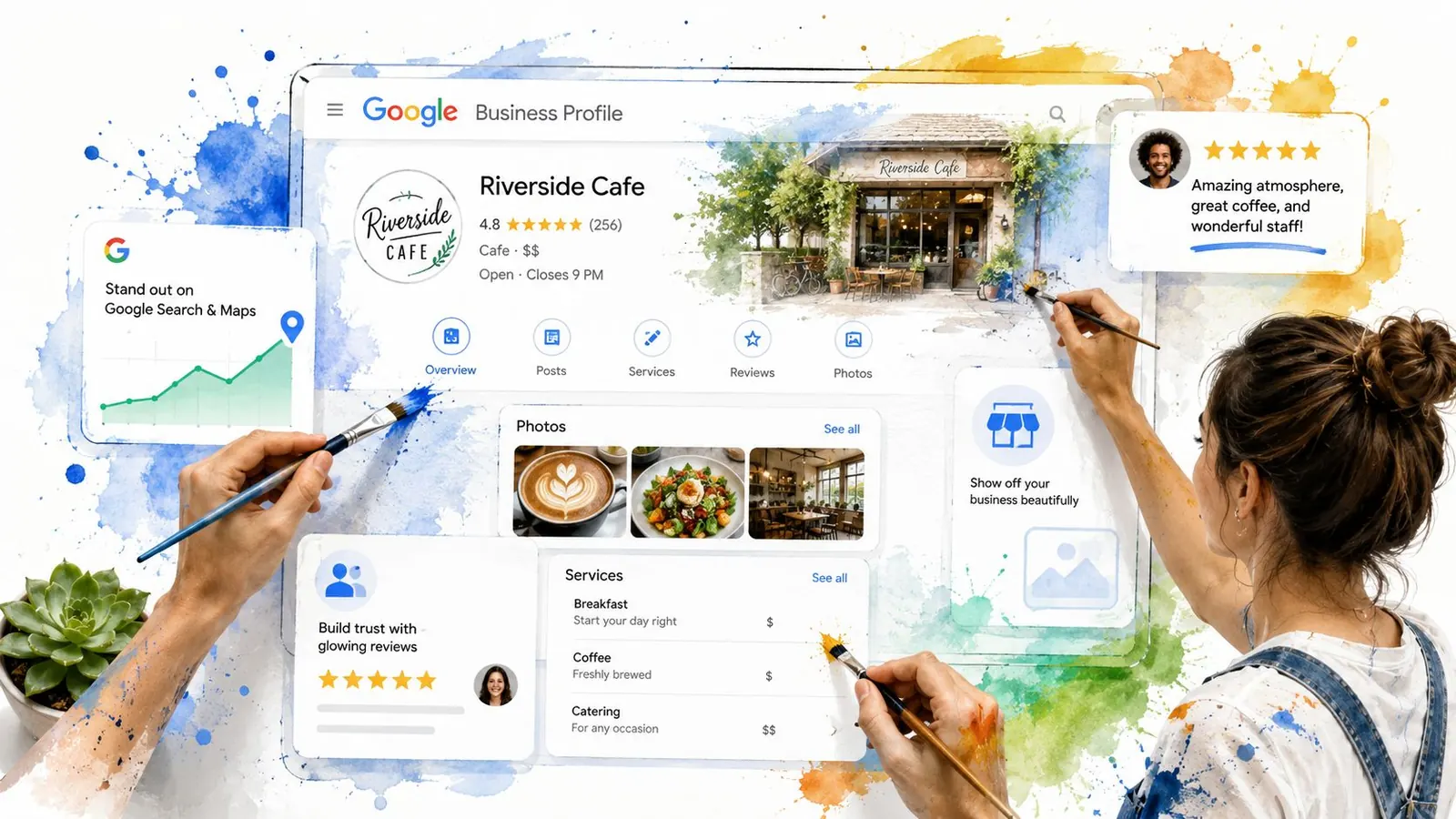
A complete profile gets you in the game. An appealing profile helps patients choose you.
Write a description that sounds like your practice
Google gives you room to explain who you are. Use it well. The strongest descriptions are clear, local, and grounded in patient concerns.
For a dental office, a weak version sounds like this: “We offer a full range of dental services for all your family needs.” That says almost nothing.
A stronger version sounds more like: a family-focused dental practice serving a specific city, offering preventive, cosmetic, and restorative care, with attention to anxious patients, same-day urgent issues, and a calm office experience.
The difference is specificity. Patients want to know what kind of care you provide, who you serve, and what makes the visit feel different.
Google's description field allows a full 750 characters, and practitioners often get better results by placing the most important language early. Keep the opening lines focused on your core services, your location, and the traits patients care about most.
Turn the Services section into a decision tool
Often, profiles fall flat. Owners list services like a menu dump, then wonder why the profile feels thin.
For the Services section, experts recommend prioritizing “profit drivers” and “unique differentiators” within the 250-character limit, because poorly structured lists with inconsistent formatting can reduce visibility. In practice, that means your services should be organized, parallel, and patient-readable.
Compare these two approaches:
| Weak service list | Better service list |
|---|---|
| Veneers | Porcelain Veneers for smile redesign and natural-looking cosmetic improvement |
| Botox | Botox treatments for softening expression lines in a medical setting |
| Emergency dental thing | Emergency Dental Care for tooth pain, broken teeth, and urgent same-day needs |
The better version does two things. It tells Google what the service is, and it tells the patient why it matters.
A fictional example helps. If we were writing for a medspa, we wouldn't just list “Facials,” “Fillers,” and “Laser.” We'd structure them consistently and highlight the differentiator: physician oversight, customized plans, or treatment for specific concerns like texture, pigment, or visible aging.
For broader marketing ideas that support this kind of positioning, the articles on Leaping Lemur Media's blog are a useful reference point because they focus on making practice marketing sound like an authentic business rather than a template.
Use photos to remove uncertainty
Patients scan visuals fast. They want to know whether the office looks clean, current, and welcoming. They want to see your team. They want to know whether a cosmetic practice feels polished but not intimidating.
A photo plan for a dentist or medspa should usually include:
- Exterior shots so patients recognize the building
- Interior photos that show reception, treatment rooms, and cleanliness
- Team images that make the practice feel approachable
- Brand moments like technology, amenities, or treatment spaces
- Patient-safe proof only if you have proper permissions and a strong reason to include it
Your photos should answer the nervous patient's silent question: “Will I feel comfortable walking in there?”
Reviews support that same trust-building job. If your profile has good visuals but little review engagement, it can still feel unfinished. A practical companion read is Oviond's review strategy, especially if your practice needs a simple system for asking consistently and responding without sounding robotic.
The Art of Active Management A Sustainable Optimization Routine
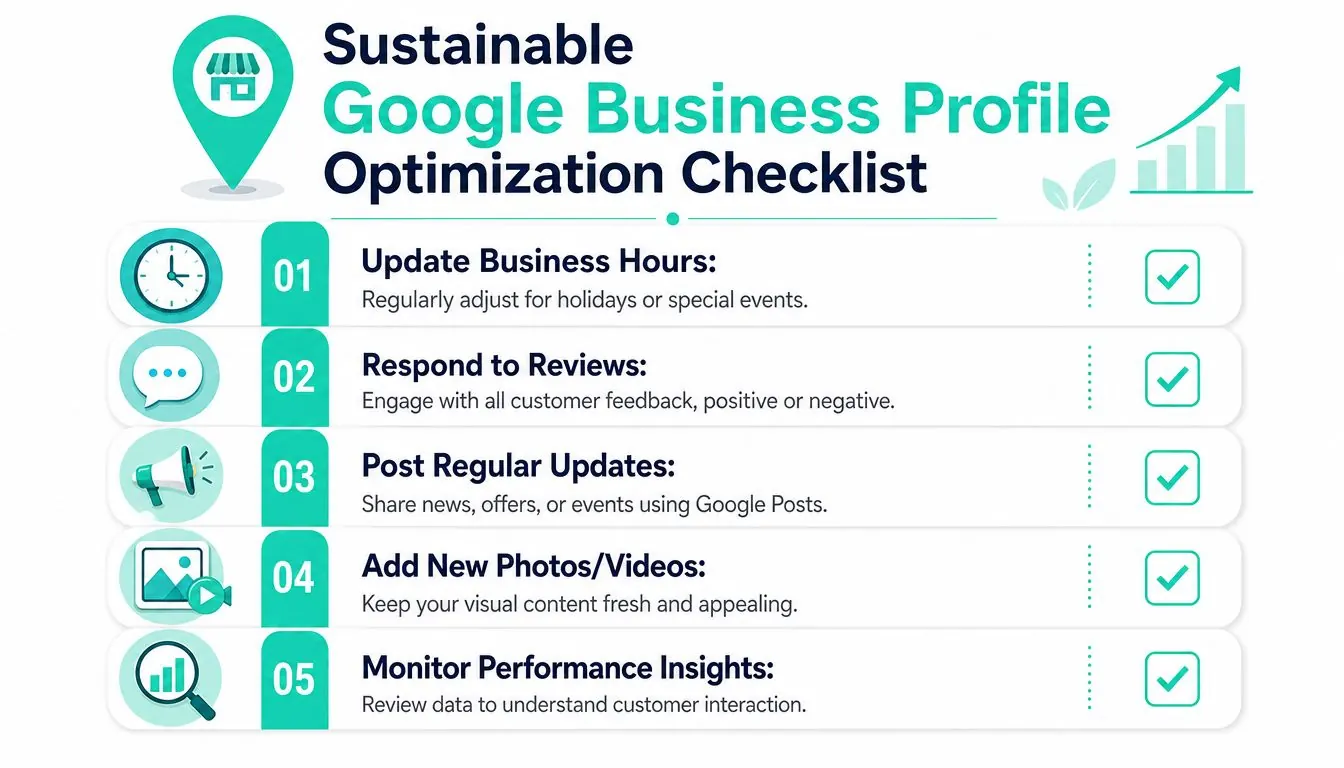
Most practice owners don't need another long checklist. They need a routine they'll follow. That's where active management wins.
Regularly updating a Google Business Profile drives a 5x increase in profile views compared to static listings. That's the clearest argument against the “set it and forget it” approach. If your profile sits unchanged while a nearby competitor adds updates, responds to reviews, and uploads fresh photos, Google has a strong reason to treat their listing as more current.
The 15 minute weekly refresh
The most sustainable system for a busy dentist or medspa owner is a short weekly cadence. Not a monthly scramble. Not a quarterly cleanup. Just a repeatable touchpoint.
Break it into three parts.
Minute 1 to 5: review responses
Reply to every recent review. Keep the tone warm, brief, and compliant with privacy standards. Thank happy patients without sounding canned. For unhappy reviews, acknowledge the concern and move the conversation offline.
Minute 6 to 10: one update
Publish a Google Post or add a fresh photo set. This can be as simple as updated office hours, a team milestone, an educational tip, or a short note about a seasonal service.
Minute 11 to 15: profile hygiene
Check hours, scan Q&A, confirm no suggested edits need correction, and make sure your featured details still reflect current services.
That's enough to keep the profile alive.
What to post when you have no time
A lot of owners stall here because they think every post needs a campaign behind it. It doesn't.
Good recurring post ideas for healthcare practices include:
- Seasonal relevance like whitening before weddings, sunscreen reminders, or end-of-year benefit usage
- Practice news such as a new provider, expanded hours, or a new treatment launch
- Education on common patient questions, recovery expectations, or what to bring to a first visit
- Community connection including local events, charity involvement, or staff recognition
The trade-off is between polish and consistency. A decent post published weekly usually does more for profile freshness than an ambitious content plan that never gets executed.
Keep the profile current enough that a patient can tell you're open, attentive, and active in the community.
For practices that want hands-on help integrating profile management into a wider local SEO workflow, Leaping Lemur Media's services include Google Business Profile work alongside broader search strategy. That matters when the profile, website, reviews, and local pages all need to support the same positioning.
Reviews and QandA are where trust compounds
Reviews are public proof that people have been there before the next patient arrives. Q&A is where you remove hesitation before someone has to call.
A neglected Q&A section creates risk because anyone can ask or answer. A managed Q&A section becomes useful pre-visit guidance. Seed it with the practical questions your front desk hears all the time:
- Do you accept new patients
- Do you offer same-day emergency appointments
- Is parking available
- Do you provide consultations before treatment
- What should I expect at my first visit
That kind of activity signals care and completeness. It also helps your staff, because fewer patients need to call for basic clarifications.
If your team can protect one habit, protect consistency. The practices that get value from learning how to optimize Google Business Profile aren't always the ones doing the most. They're the ones doing the important things every single week.
Measuring What Matters How to Track Your Local Impact
Most owners look at their profile, see that it exists, and assume the work is either “fine” or “not fine” based on gut feel. That's too fuzzy. You need a way to tell whether visibility is spreading into the neighborhoods and search terms that matter.
What to watch inside Performance
Google Business Profile's Performance data gives you a practical read on how people discover and interact with your listing. The important move isn't staring at every graph. It's connecting those signals to patient intent.
Experts recommend tracking local performance with geo-grid tools, comparing monthly views on Search versus Maps, and analyzing the specific search queries that trigger visibility through approaches described in this local ranking workflow.
Use that guidance to focus on three questions:
| Metric area | What it tells you | What to do with it |
|---|---|---|
| Search queries | How patients describe what they want | Adjust service wording, website copy, and post topics |
| Search vs Maps views | Where visibility is happening | Check whether your profile is stronger in direct discovery or map intent |
| Actions taken | Whether people are moving from viewing to contacting | Look for trends after updates, review activity, or photo improvements |
If you're a medspa and you keep appearing for broad branded searches but not for treatment-specific searches, that's a clue your services and description may be too generic. If a dental office gets map visibility but weak patient actions, the issue may be conversion elements such as photos, reviews, or incomplete service details.
Why geo grid tracking changes the conversation
Standard profile data tells you that you showed up. Geo-grid tracking tells you where. That's a major difference.
A city isn't one ranking position. You may appear strongly near the office but fade a few neighborhoods away where high-value patients live and work. A geo-grid tool such as Local Falcon helps visualize that spread across a map so you can stop guessing.
This also sharpens your broader marketing decisions. If your visibility is weak in specific pockets, that may influence how you prioritize location pages, local content, or paid campaigns.
For owners who want a simple framework to connect profile activity with business outcomes, measure marketing ROI from Call Loop is worth reading. It helps shift the conversation from “Did we do marketing?” to “Did our efforts lead to better patient-generating actions?”
Common Mistakes and Your Path Forward
The biggest Google Business Profile mistakes usually come from rushing, over-optimizing, or losing momentum.
What hurts more than owners realize
Only 11% of local businesses achieve a fully optimized Google Business Profile. That creates a real opening for practices that stay organized and consistent. It also explains why so many profiles underperform without the owner realizing how many small details were left unfinished.
The most common errors are predictable:
- Keyword stuffing the business name instead of using the official practice name
- Leaving fields half-complete because the basics seemed “good enough”
- Ignoring reviews or only responding when a complaint appears
- Uploading random visuals instead of useful, trust-building photos
- Treating the profile like a setup task instead of an active patient acquisition channel
What steady growth actually looks like
A good profile feels accurate, current, and local. It reflects how your practice really shows up in the community. It gives a nervous first-time patient enough confidence to call.
That's the path forward. Complete the profile carefully. Write like a real practice, not a keyword list. Keep a short weekly rhythm. Track what people search, where you appear, and what actions follow.
If you want a partner to audit the profile, clean up local inconsistencies, and build a manageable plan around it, you can reach out through Leaping Lemur Media's contact page.
If your practice needs help turning Google visibility into more qualified patient inquiries, Leaping Lemur Media works with local businesses that want marketing built around clarity, consistency, and authentic community presence.