
A patient needs care late at night. They search for a nearby provider, compare map results and star ratings, read a few reviews, and check whether they can book without making a phone call. If your office has outdated hours, an unclear website, or no obvious appointment path, that patient may choose another practice before speaking with your team.
That's why marketing for a doctor's office isn't just advertising. It's the work of being findable, trusted, and easy to book at the moment someone needs care. Pew Research Center's early research on online health behavior found that 52 million American adults, representing 55% of adults with internet access, had used the web for medical or health information in 2000, and that online research was already influencing doctor visits and questions asked during appointments. The Pew Research Center report helps explain why useful patient information belongs at the center of your marketing.
The ideas below move from free local visibility to referrals, community presence, and paid growth. Each one includes practical implementation steps, useful KPIs, a small-budget option, a premium option, and HIPAA-safe guardrails.
Table of Contents
- 1. Google Business Profile Optimization
- 2. Local SEO and Patient-Focused Website Content
- 3. Online Reviews and Reputation Management
- 4. Email Marketing and Patient Newsletters
- 5. Social Media Community Engagement
- 6. Patient Education Content and Video Marketing
- 7. Referral Marketing and Physician Networking
- 8. Paid Search and Local Advertising
- 9. Community Events, Health Fairs, and Local Sponsorships
- 10. Online Booking and Patient Experience Marketing
- 10-Point Medical Practice Marketing Comparison
- Pick Two Ideas and Build Your 90-Day Plan
1. Google Business Profile Optimization
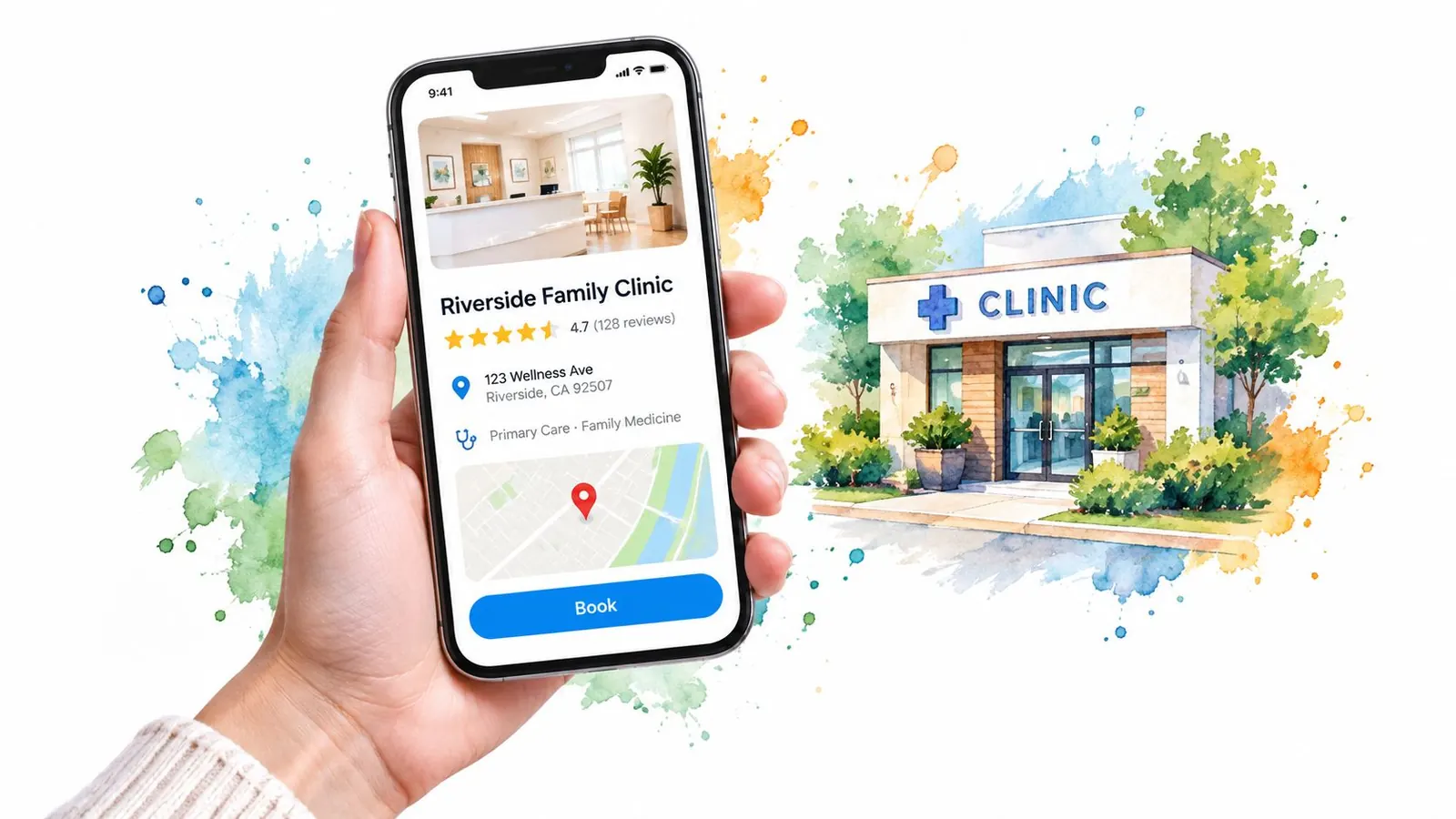
Your Google Business Profile is often the first impression a prospective patient gets. It appears in map results, local search, and the information panel connected to your practice name. A patient may call, request directions, read reviews, or begin booking without visiting your website.
Start by claiming and verifying the profile, then complete every relevant field. Use the most accurate primary category, add appropriate secondary categories, list services clearly, and keep your name, address, phone number, hours, insurance information, and booking link current. Add recent exterior, interior, team, and equipment photos regularly. Update holiday hours and temporary closures before patients encounter them in search.
A family practice might list pediatrics, sports physicals, and immunizations as separate services. A dental office could show its team, treatment rooms, and community activities. These details answer practical questions before a patient calls.
Measure visibility and action
Track profile views, phone calls, direction requests, website visits, booking clicks, and completed appointments. Google Business Profile Posts can share office news, seasonal reminders, and appropriate promotions, each with one clear action.
- Small-budget option: Claim the profile, complete the fields, add quality photos, and review the listing every month.
- Premium option: Use a local SEO service to manage multiple locations, monitor profile changes, and connect calls and bookings to source data.
- HIPAA-safe guardrail: Never mention a patient's diagnosis, appointment, or treatment in a public profile response.
For practices serving dental patients, dental marketing support from Leaping Lemur Media can connect local visibility with a clearer booking journey.
Practical rule: Treat every profile field as part of the patient experience, not as a form to complete once and forget.
2. Local SEO and Patient-Focused Website Content
A patient searches “pediatric dentist near me” and reaches a page that lists services but says nothing about insurance, preparation, or booking. That visitor may leave before calling. Local SEO earns attention by answering practical questions at the moment they arise.
Start with the pages that support real decisions. Give each major service its own page, then create location pages only where the practice serves patients. A medspa page can explain who the treatment suits, what consultation involves, preparation, recovery, and common questions. An eye-care location page can provide the address, accessibility details, clinician credentials, hours, and booking route. Keep the writing specific to that service and location so it helps patients rather than padding the site.
Use a visible phone number and booking button on mobile. Test page speed in Google PageSpeed Insights, fix slow elements, and check the booking process on an actual phone. Keep the practice name, address, and phone number consistent across the website, Google Business Profile, and directories. That consistency supports local visibility and prevents avoidable confusion.

Review non-branded search traffic, service-page engagement, phone clicks, booking starts, booking abandonment, and completed appointments. A page can attract visitors and still waste budget if patients cannot find the next action.
With a small budget, improve the five highest-priority service pages first. Add clear insurance, preparation, and appointment information, then review results monthly. A premium approach may include a technical SEO audit, location-page strategy, conversion testing, and ongoing content production. HIPAA-safe setup matters at either level: review forms and analytics before sending information to advertising or analytics platforms, and avoid transmitting protected health information without appropriate privacy review.
For optometrists, optometry marketing resources from Leaping Lemur Media offer practical direction for service-focused local visibility. Dental practices can see how Digital Skyrocket helps dentists with search strategy.
3. Online Reviews and Reputation Management
A patient checks your reviews after seeing your practice in search. One recent complaint about waiting, unclear billing, or poor communication can outweigh several older compliments. Reputation work therefore belongs in both marketing and daily service improvement.
In a nationally representative U.S. survey published in 2014, online physician ratings were somewhat or very important to 59% of respondents. Among people who had checked ratings during the previous year, 35% selected a physician because of good ratings, while 37% avoided one because of bad ratings. The JAMA study also found that recommendations from family and friends had greater influence than physician ratings. Reviews support personal trust rather than replace it.
Build requests into the workflow after a completed visit or another appropriate interaction. Give patients a direct review link and invite honest feedback. Do not request only positive reviews, offer rewards for favorable ratings, or publish reviews for experiences that never occurred.
Give staff a response process
Assign one person to check review platforms and route service concerns internally. A short, respectful response is usually enough. Thank the reviewer for the feedback, avoid discussing the case publicly, and invite them to contact the office through a private channel. Staff should know when to escalate concerns about safety, privacy, billing, or repeated delays.
- Small-budget option: Create a review-request step, a response guide, and a monthly log of recurring complaints.
- Premium option: Use reputation software to monitor several platforms, identify trends, and assign service issues to managers.
- HIPAA-safe guardrail: Never confirm that a reviewer is a patient or discuss treatment, diagnosis, appointments, or billing in a public reply.
Track review volume, average rating, recency, response time, profile actions, calls, and appointments connected to reputation traffic. Use those measures to test whether review activity brings qualified enquiries, while treating recurring complaints as instructions for improving the patient experience.
4. Email Marketing and Patient Newsletters
A patient who leaves the office today may need a reminder, preparation tip, or follow-up prompt weeks later. Email keeps that communication available without relying on search or social media. Use it for general education, office updates, recalls, seasonal reminders, and suitable promotions.
Ask for email consent at check-in, on your website, or during another appropriate interaction. State what subscribers will receive, such as plain-language health information, office news, or preparation guidance. Keep the promise specific and easy to understand.
Build the list around relevance. An orthodontic subscriber should not receive unrelated dental-cleaning reminders, while a medspa client can receive information about services they requested. Keep messages general. Appointment preparation advice is appropriate, but a diagnosis or treatment detail belongs in a secure, patient-specific channel.
Give each send one clear next step. It might be reading a guide, calling the office, submitting a general booking request, or learning about an event. Shorter emails are easier to act on, and every message should include an unsubscribe link. Process opt-out requests promptly.
- Small-budget option: Send one useful monthly newsletter through an approved email platform, using a few practical audience segments.
- Premium option: Set up automated recall, rebooking, and education journeys with consent controls and performance reporting.
- HIPAA-safe guardrail: Check whether each message is treatment-related or promotional. HHS defines marketing as communication that encourages someone to purchase or use a product or service. Promotional use of protected health information generally requires written authorization. HHS authorization guidance explains the distinction and exceptions.
Track deliverability, unsubscribes, clicks, booking starts, and completed appointments. Compare results by audience and message type, rather than relying on opens alone. Email earns its place when it helps patients take a useful next step.
5. Social Media Community Engagement
A patient who sees a familiar staff member or a useful local update is more likely to understand what your practice offers. A family practice might answer common questions in short videos. A dental office could highlight a school sponsorship, while an eye-care team introduces staff and explains what a first visit feels like.
Choose one primary platform your team can maintain. Build a monthly batch around four or five content types: practical education, staff stories, community involvement, office updates, and occasional behind-the-scenes posts. A consistent voice usually serves a practice better than chasing every trend. Review comments and messages during assigned work hours so social media supports the front desk instead of interrupting it.
Privacy needs a clear workflow. Get written photo and video releases from staff and patients before publishing identifiable content, and check backgrounds for patients who did not consent. Keep clinical questions out of public replies. Invite the person to contact the office through an appropriate private channel, and state that social media is not an emergency service.
Use these measures to judge whether the channel earns staff time: profile visits, local engagement, direct inquiries, website clicks, booking clicks, and message response time. A high follower count has little value if local people do not take a relevant next step.
- Small-budget option: Publish a manageable mix of educational, people-focused, and community posts on one platform.
- Premium option: Hire a content strategist, videographer, and community manager for a coordinated campaign across selected channels.
- HIPAA-safe guardrail: Do not publish patient stories, images, comments, or before-and-after material without documented permission and a privacy review.
Set a response target of one business day when possible. If the team cannot maintain it, reduce the number of platforms rather than leaving accounts unattended.
6. Patient Education Content and Video Marketing
A patient may search your service, watch a video, and decide whether to call before ever visiting the office. Useful education answers that early uncertainty and explains services, preparation, expectations, and next steps in plain language.
Build the library from questions your front desk hears repeatedly. Turn each answer into the format that fits the topic: a short article, concise video, infographic, or downloadable guide. A plastic surgery practice can show what happens during a consultation without promising an outcome. A dentist can explain procedure preparation, while an eye-care practice can describe what a full exam involves.
Use video to show the office and let a clinician explain the process in a calm, familiar voice. Short vertical clips suit social platforms. Longer lessons belong on YouTube or the practice website. Captions, clear titles, and one visible next step make each piece easier to use.
Teach accurately and protect patient trust
Ask a qualified provider to review clinical content before publication. Cite reputable sources where appropriate, revisit evergreen pages, and describe likely outcomes carefully. The FTC says testimonials must reflect honest experiences, and one individual result can imply a broader claim about typical results. The FTC endorsement guidance applies especially to before-and-after material and patient stories.
Measure organic search visits, video engagement, guide downloads, consultation requests, and appointments influenced by educational pages. Review these measures by topic so the team can expand useful formats and stop producing content that earns attention without inquiries.
- Small-budget option: Record provider answers on a smartphone with good lighting, captions, and a simple editing process.
- Premium option: Produce a branded video library with professional filming, scripting, accessibility, and distribution.
- HIPAA-safe guardrail: Obtain specific written consent for identifiable patient stories. Do not use a testimonial to imply typical results without adequate support and context.
7. Referral Marketing and Physician Networking
A primary-care office sends a patient to your physical therapy clinic because the fit is clear, the handoff is easy, and your team responds promptly. Referral relationships grow when you make those three conditions reliable.
Start with a short list of nearby primary-care offices, specialists, dentists, chiropractors, attorneys, wellness businesses, and other relevant partners. Choose practices whose patients may need your services. A brief introduction works better when it includes a useful resource, such as a patient handout or a clear explanation of which cases you handle.
Match the outreach to your specialty. A physical therapy clinic might host an educational lunch for local primary-care teams. A medspa could coordinate a public education event with dermatology or women's health providers. Keep the activity useful to the community and within professional and ethical rules.
Make the handoff easy. Provide a one-page referral form, a direct phone line, or a dedicated fax process. State what information your team needs, who receives the referral, and how quickly the office can expect confirmation. Thank referring professionals with a note, call, or other gesture permitted by applicable rules. A shared referral log can show which relationships produce completed visits rather than generating names.
- Small-budget option: Start with ten carefully chosen relationships and schedule regular personal follow-up.
- Premium option: Build a formal outreach program with educational events, referral tracking, and a relationship manager.
- HIPAA-safe guardrail: Share patient information only through permitted channels and with the necessary authorization or legal basis. Do not discuss a patient's care casually with a referral source.
Track referral source, referral-to-appointment conversion, completed visits, repeat referrals, and time to referral response. Review the log regularly so referrals do not disappear into an untracked inbox.
8. Paid Search and Local Advertising
Paid advertising can put a practice in front of people who are actively searching, but it can also waste money quickly when targeting, landing pages, and conversion tracking aren't aligned.
Google Ads is suited to high-intent searches such as an urgent dental need or a same-day care request. Social advertising can introduce a new service, promote an event, or build awareness in a defined local area. Neither channel fixes an unclear offer or a difficult booking process.
Start with a small test. Use service-specific landing pages, geographic targeting, call tracking, and booking conversion measurement. Review search-term reports regularly and add negative keywords when ads attract irrelevant searches. A campaign that generates clicks but no completed appointments needs diagnosis, not an automatic budget increase.
Buy measurement before scale
- Small-budget option: Test one service, one location, and one conversion action with a tightly defined audience.
- Premium option: Use an experienced healthcare advertising team for campaign structure, landing pages, call tracking, creative testing, and reporting.
- HIPAA-safe guardrail: Don't install tracking pixels on pages that display protected health information without a documented privacy review and appropriate safeguards. Avoid unsupported claims such as “best” or “guaranteed results.”
Track qualified calls, booking starts, completed appointments, cost per appointment, search terms, and appointment quality. Impressions and clicks can look healthy while the practice receives little useful business.
9. Community Events, Health Fairs, and Local Sponsorships
A practice becomes more recognizable when people encounter its team in settings that aren't built around a sales pitch. Community events can support trust, word of mouth, and patient education while giving your team a chance to listen to local concerns.
Choose events that match your services and the people you want to serve. A dental practice might support a school event and provide age-appropriate oral-health materials. An eye clinic could work with a senior center on a vision education program. A family practice might participate in a local wellness fair.
Set up a simple way to measure follow-up. Use a dedicated landing page, sign-up form, or event-specific code. Track attendance, inquiries, and completed appointments without collecting more personal information than you need.
Turn participation into an ongoing relationship
Get consent before photographing people or publishing event content. Share a recap on your website, Google Business Profile, and social channels, focusing on the community rather than on aggressive promotion. Partnering with another local organization can spread costs and broaden participation.
- Small-budget option: Sponsor or attend one relevant local event with a modest educational presence.
- Premium option: Build a yearly community partnership program with coordinated events, content, and follow-up.
- HIPAA-safe guardrail: Confirm that screenings, giveaways, sign-ups, and follow-up offers comply with state licensing, medical ethics, and advertising rules.
Measure attendance, consented contacts, follow-up inquiries, bookings, referral mentions, and community partner participation. A successful event may produce trust before it produces appointments.
10. Online Booking and Patient Experience Marketing
A booking button is only useful if patients can complete the process. Audit the journey from Google search to confirmation message. Can someone understand which appointment type to choose? Do they know what information to prepare? Can they reschedule without calling? Is there a phone option for people who need help?
Press Ganey reports that 59% of consumers use online search to find a new primary-care provider, and its consumer-experience research identifies the quality and completeness of a physician's online profile as a leading selection factor. Press Ganey's consumer experience research also identifies digital scheduling and rescheduling as valued capabilities.
Access needs more than a portal. Recent patient-access research found that 80% of patients want to schedule appointments anytime from home or a mobile device, while 55% of providers said patients are unsure how to use self-scheduling. A UK Healthwatch survey adds an important caution: 63% of respondents normally booked GP appointments online, but only 47% preferred online booking, while 58% preferred the phone and 18% preferred in-person appointments. Healthwatch's appointment-access research shows why convenience must include human alternatives.

Market the experience you can actually deliver
Keep the booking button visible on your homepage, profile, and social accounts. Make the flow as short as possible, offer text and email reminders with easy rescheduling, and ask patients what creates friction. Don't advertise instant convenience if your team takes days to confirm requests.
- Small-budget option: Improve the homepage call to action, test the mobile booking flow, and add clear phone assistance.
- Premium option: Connect online booking, reminders, forms, call tracking, patient feedback, and reporting across locations.
- HIPAA-safe guardrail: Use vendors and workflows that have been reviewed for privacy and security. Keep promotional communications separate from care-related reminders and appointment information.
For medspas, medspa marketing support from Leaping Lemur Media can connect service visibility with consultation booking and patient-centered messaging.
Track booking starts, completed appointments, abandonment, calls, rescheduling, no-shows, and patient-experience feedback. The best marketing promise is one your office can keep.
10-Point Medical Practice Marketing Comparison
| Strategy | 🔄 Implementation Complexity | ⚡ Resource Requirements | 📊 Expected Outcomes | Ideal Use Cases | ⭐ Key Advantages / 💡 Quick Tip |
|---|---|---|---|---|---|
| Google Business Profile Optimization | Low–Medium, claim, verify, and ongoing updates | Low, staff time for updates, photos, minor management tools | High local visibility, more calls/bookings from search | Any local practice needing immediate map-pack presence | Free to maintain; drives direct bookings. Tip: verify profile and update services/photos monthly. |
| Local SEO & Patient-Focused Website Content | High, technical SEO + content strategy | Medium–High, developers, copywriters, schema work | Sustained organic traffic and stronger conversion over months | Practices building a trust hub and SEO foundation | Long-term, compounding value. Tip: create separate pages per service/location. |
| Online Reviews & Reputation Management | Medium, workflow, monitoring, compliant responses | Low–Medium, review platforms, CRM or reputation tool, staff time | Increased trust, higher conversion; can improve local rankings | Competitive markets where ratings drive patient choice | High ROI when consistent. Tip: request reviews after positive visits and comply with HIPAA. |
| Email Marketing & Patient Newsletters | Medium, list management, automation, compliance | Low–Medium, email platform, content creation, segmentation | Better retention, recall bookings, high ROI | Practices focused on retention and re-engagement | Owned channel with automation benefits. Tip: segment lists and include one clear CTA. |
| Social Media Community Engagement | Medium, content cadence and moderation | Low–Medium, content creator time, basic tools | Improved brand awareness and community trust (harder to measure directly) | Practices aiming to humanize providers and engage locally | Humanizes practice affordably. Tip: get written photo/video releases and post consistently. |
| Patient Education Content & Video Marketing | High, content planning, production, clinical review | Medium–High, filming, editing, clinical oversight | Greater authority, reduced anxiety, reusable assets, SEO gains | Practices wanting to pre-educate patients and reduce no-shows | Builds trust and long-term discovery. Tip: start with the top 10 patient questions. |
| Referral Marketing & Physician Networking | High, relationship building and follow-up | Low–Medium, staff time, events, simple collateral | High-quality, trust-based patient flow; predictable referrals over time | Specialists and practices relying on professional referrals | Difficult to replicate; strong lifetime value. Tip: prioritize top 10 referral sources and simplify referral forms. |
| Paid Search & Local Advertising (Google/Meta) | Medium, campaign setup and continuous optimization | Medium–High, ad spend + management expertise | Immediate visibility and measurable bookings; fast fills for slow periods | Practices needing quick patient volume or new-service promotion | Fast, controllable results. Tip: start small, use call tracking, and add negative keywords. |
| Community Events, Health Fairs & Sponsorships | Medium, event planning and community coordination | Medium, staff time, event costs, promotional materials | Builds goodwill, word-of-mouth, and local content; ROI may be indirect | Practices focused on local presence and community trust | Creates authentic local connections. Tip: track sign-ups with a unique form/landing page. |
| Online Booking & Patient Experience Marketing | Medium, integrations and UX design | Medium, scheduling software, EMR integration, setup time | More bookings (including after-hours), fewer no-shows, better retention | Practices wanting frictionless scheduling and improved patient experience | Directly improves conversion and satisfaction. Tip: keep booking flow ≤3 steps and display booking everywhere (site, GBP, social). |
Pick Two Ideas and Build Your 90-Day Plan
You don't need to launch all ten ideas at once. Most independent practices should begin with the two foundations that improve nearly every other channel: Google Business Profile optimization and review management. They cost little compared with paid campaigns, improve the information patients see before they call, and give you a clearer baseline for future growth.
Choose one KPI for each idea. For Google Business Profile, track calls, booking clicks, direction requests, or completed appointments attributed to the profile. For reviews, track new review volume, rating trends, response time, and whether profile actions lead to appointments. Keep the measurement simple enough that your team will maintain it.
A practical 90-day plan can follow this sequence:
- Days 1 to 30: Claim or audit the Google Business Profile, correct hours and services, add current photos, check every booking link, and document a review-request and response process.
- Days 31 to 60: Improve the highest-value service and location pages, add answers to common patient questions, and review calls, profile activity, and booking friction.
- Days 61 to 90: Add one growth channel that matches your capacity. That might be an email newsletter, a referral program, educational video, a community event, or a tightly targeted paid-search test.
Review results monthly. If patients click but don't book, improve the landing page or access process before buying more traffic. If reviews mention the same operational problem, assign an owner and fix the experience. Marketing can expose a practice weakness, but that feedback is useful when someone acts on it.
Only add a premium option after the basic process is consistent. A polished dashboard won't repair incorrect hours, unanswered reviews, or a booking form that fails on mobile. Likewise, paid advertising shouldn't become the first solution when patients can't understand your services or reach your team.
Keep every tactic HIPAA-compliant. HHS requirements affect how practices use protected health information in promotional communications, while FTC guidance affects testimonials, endorsements, and outcome claims. When in doubt, ask your compliance advisor to review the workflow before launch.
Most importantly, treat marketing as an ongoing relationship with your community. Patients aren't only evaluating your credentials. They're deciding whether your office is clear, responsive, respectful, accessible, and ready to help. A simple content calendar can make that consistency easier, especially when you're planning a month of social media content.
Leaping Lemur Media helps practices clarify their positioning, improve local visibility, create patient-focused content, and connect marketing activity to consultations and bookings. Visit Leaping Lemur Media to explore a practical, community-rooted approach to growing your practice.