The U.S. medical spa industry was valued at about $21.4 billion in 2026, and the number of U.S. med spa locations rose from 8,899 in 2022 to 10,488 in 2023, according to medical spa industry growth data. That expansion changes the marketing problem. You're not just trying to attract people interested in aesthetics. You're competing with more practices for the same local patients, and those patients can compare credentials, reviews, treatment pages, prices, and booking experiences before they ever speak with your team.
Effective medical spa digital marketing therefore has to do more than generate leads. It must capture high-intent demand, convert it through treatment-specific pages, build trust with credible proof, and protect the practice from HIPAA, FTC, and TCPA exposure. The practices that grow sustainably treat marketing as part of operations, not as a stream of disconnected posts and promotions.
Table of Contents
- The New Reality of Medical Spa Growth
- Designing Treatment-Specific Conversion Funnels
- Allocating Paid Media Budgets for Maximum Bookings
- Turning Online Reviews Into Your Primary Acquisition Channel
- Navigating HIPAA and FTC Compliance in Campaigns
- Building Trust Through User-Generated Content and Frictionless Booking
- Structuring Your Marketing Budget and Campaign Roadmap
- Marketing That Feels Like You On Purpose
The New Reality of Medical Spa Growth
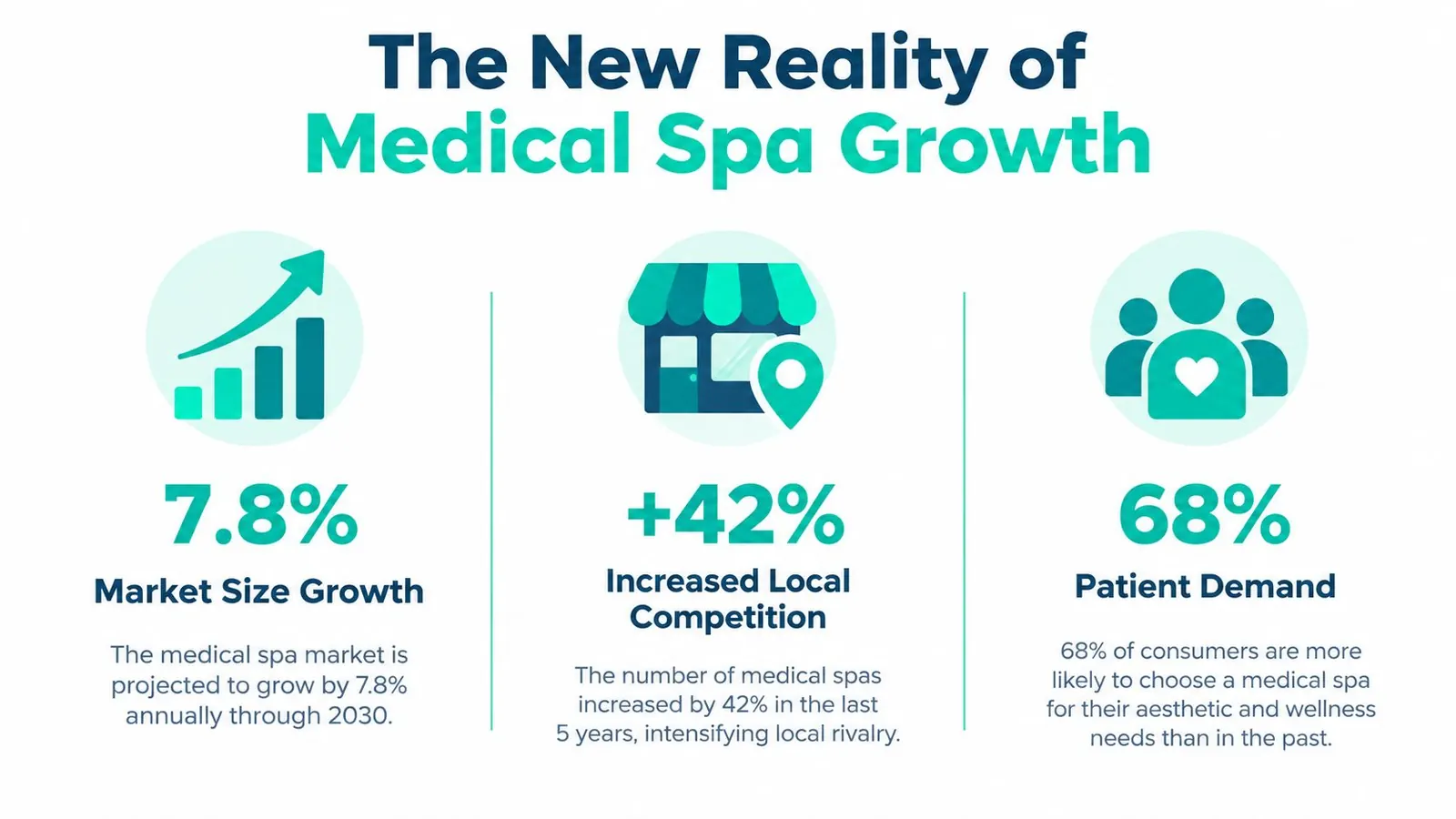
A projected 15.9% CAGR for the global medical spa market signals sustained demand, but growth does not guarantee a full schedule. In a crowded local market, a new injector or laser clinic can open within two miles and compete for the same map-pack visibility. The practice that earns the booking is usually the one that makes treatment choice, provider credibility, consultation expectations, and scheduling clear before a patient calls. (industry market data)
Word-of-mouth remains valuable, but it cannot carry every acquisition channel. An active Instagram account may demonstrate that the practice is operating without answering the questions that affect conversion. Patients want to know who performs the treatment, whether the provider has relevant credentials, what results are realistic, and how quickly they can speak with the team.
Visibility now depends on patient confidence
Search visibility brings treatment-aware patients to the practice. Trust signals determine whether they continue. Clear provider credentials, treatment education, realistic expectations, credible reviews, and an easy booking path reduce uncertainty without making promises the practice cannot support.
That standard also applies to local listings. A Google Business Profile organized only around “Medical Spa” gives patients little direction. Treatment categories such as Botox, laser hair removal, and dermal fillers should connect to accurate service information, provider details, and the appropriate consultation path. Each treatment attracts different intent and may require different evidence before a patient books.
Practical rule: Treat every major treatment as its own acquisition pathway, not as one item buried inside a general service menu.
Published med spa benchmarks place typical website conversion rates at 3% to 5%, with high-performing sites reaching 6% to 10% (website conversion benchmarks). These figures are directional, not promises. They do show why a slow page, vague call to action, or confusing booking process deserves the same scrutiny as an underperforming ad.
The operating model should connect each treatment to a compliant funnel. A Botox page can answer provider, consultation, and follow-up questions. A laser hair removal page can explain candidacy, treatment planning, and scheduling. Forms and follow-up messages must still protect patient information and respect consent requirements under HIPAA and TCPA.
Owners can use the Leaping Lemur Media journal for marketing guidance while reviewing these systems. The goal is profitable, defensible acquisition: treatment-specific visibility, credible proof, and a clear next step that earns consent rather than creating compliance exposure.
Designing Treatment-Specific Conversion Funnels
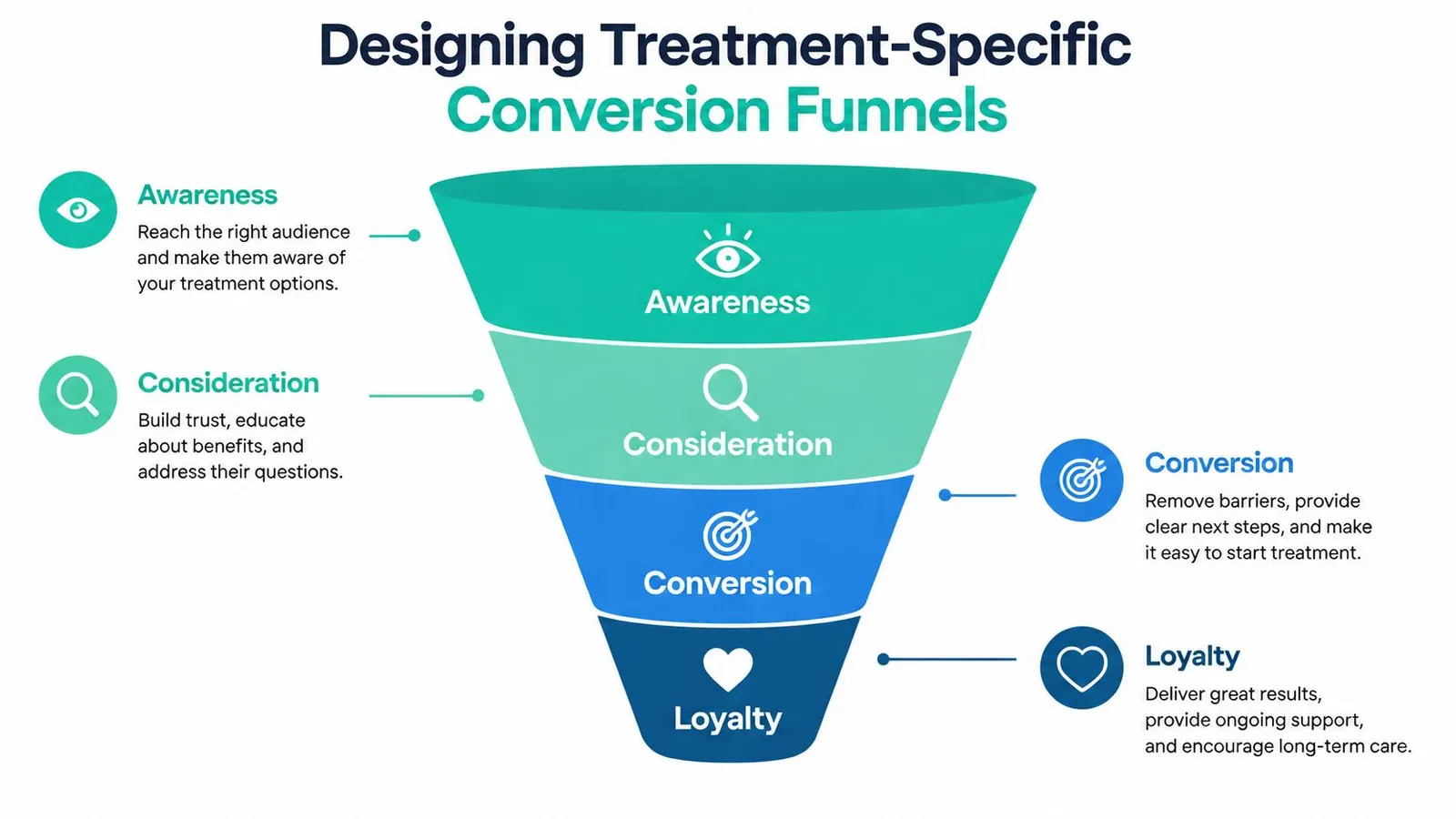
A generic “Services” page forces the patient to do too much work. Someone searching for lip filler shouldn't land on a page that lists injectables, lasers, facials, body contouring, and skincare without giving them a clear route to the treatment they already have in mind.
Dedicated landing pages solve that message mismatch. Published benchmarks report generic service pages converting at about 1% to 2%, treatment-specific pages at roughly 4% to 8%, and optimized pages at 12% to 21% (med spa landing page benchmarks). The same source reports that optimized treatment pages can reduce cost per acquisition by roughly 30% to 70% compared with generic pages. These aren't guarantees, but they give you a useful diagnostic: if paid traffic lands on a broad menu, the page may be wasting demand you already paid to capture.
Build the page around one decision
A strong treatment page should make the next action obvious while answering the patient's main concerns. Start with the exact treatment and location in the page title, headline, and supporting copy. Keep the language aligned with the ad or search phrase that brought the visitor there.
Then add the information that reduces uncertainty:
- Treatment explanation: Describe what the service is designed to address, who may be a candidate, and what a consultation covers.
- Provider credentials: Identify the injector or clinician, relevant qualifications, and the medical oversight structure.
- Expectation setting: Explain that outcomes vary and avoid promises that imply guaranteed or permanent results.
- Pricing clarity: If pricing depends on consultation findings, say so plainly. If you publish starting prices or packages, make the conditions easy to understand.
- Proof with permission: Use reviews, educational videos, and approved patient content without suggesting that one person's outcome is typical for everyone.
- One primary CTA: Use a clear action such as “Book a consultation” or “Request an appointment,” and repeat it where the patient naturally reaches a decision point.
A one-click booking CTA doesn't necessarily mean the patient completes the entire process in one tap. It means the page should move them directly into a booking flow instead of making them hunt for a phone number, open a separate service menu, or submit an unnecessarily long form.
Remove friction after the click
Test the entire path, not just the landing page. A page can look polished and still lose bookings if the calendar doesn't show availability, the form asks for unnecessary information, or the confirmation message fails to explain what happens next.
Track calls, form submissions, booked consultations, and attended appointments separately. A lead isn't the final outcome. Your team needs to know which campaign generated a real appointment and which source produced contacts that never progressed.
A high-converting funnel doesn't end at the form. It ends when the practice can identify, confirm, and properly follow up with the booked patient.
Use separate pages for major treatments and connect each page to relevant educational content, reviews, provider information, and booking. That structure gives search engines clearer context and gives patients a shorter path from intent to action.
Allocating Paid Media Budgets for Maximum Bookings
Paid media decisions should follow intent, not popularity. Google Search usually reaches people who are actively looking for a treatment or provider. Meta can create awareness, introduce your clinicians, demonstrate your style, and bring previous visitors back into consideration. Both channels can contribute, but they shouldn't be judged by the same standard.
Google Search leads reportedly book appointments at about 40% to 60%, compared with 25% to 40% for Meta leads, according to medical spa Google Ads benchmarks. Search clicks often cost more, but higher downstream booking intent can justify that expense when the landing page, tracking, and follow-up process are sound.
| Channel | Booking Rate | Best Use Case |
|---|---|---|
| Google Search | About 40% to 60% | Capturing active treatment and provider intent |
| Meta | About 25% to 40% | Awareness, education, retargeting, and creative testing |
Start with demand capture
A practice with limited budget should generally begin with tightly themed search campaigns around core treatments and local intent. Send each ad group to a matching treatment page, exclude irrelevant searches, and use call tracking so phone bookings don't disappear from the data.
Don't optimize for the cheapest lead. A low-cost form submission has little value if the person isn't eligible, can't be reached, or never schedules. Judge campaigns by booked consultations, attendance, treatment revenue, and the quality of the resulting patient relationship.
Meta works best when the creative earns attention without making risky personal-attribute claims. Provider-led education, treatment explanations, frequently asked questions, and compliant retargeting can support the decision without relying on exaggerated outcomes or discount-heavy messaging.
Instrument the complete journey
Your reporting should connect four stages:
- Lead source, including search term, ad, campaign, or social creative.
- Contact outcome, including answered calls, completed forms, and qualified inquiries.
- Booking outcome, including scheduled and attended consultations.
- Revenue outcome, recorded according to your practice's own systems and privacy requirements.
Review those stages together before moving budget. If Search produces fewer leads but more attended consultations, it may deserve additional investment. If Meta generates engagement but weak booking activity, improve the offer, audience, creative, or follow-up before assuming the channel is useless.
Turning Online Reviews Into Your Primary Acquisition Channel
Reviews aren't just a customer service metric. They can be the first meaningful interaction a prospective patient has with your practice. Independent consumer research cited by medical spa advertising guidance reports that 71% of patients use online reviews as their first step in finding a new provider, and 43% would go outside their insurance network for a provider with better reviews.
That behavior changes the order of operations. A patient may discover you through a search ad, but reviews often determine whether they shortlist you. They may see a treatment page, but the language in patient feedback can answer the emotional questions that clinical copy can't fully resolve: Was the staff attentive? Did the provider listen? Did the experience feel professional?
Create a consistent review workflow
The front desk should have a defined process for asking for feedback, but the request must remain compliant and authentic. Build the workflow around the patient experience rather than around a desired rating.
- Choose the moment carefully: Ask after a completed interaction when the patient has had a reasonable opportunity to evaluate the experience.
- Use neutral language: Invite an honest review instead of requesting a positive review.
- Make the path simple: Send the patient directly to the appropriate review profile through a clear link.
- Protect private information: Don't include treatment details or sensitive health information in the request.
- Monitor every channel: Assign ownership for reading, escalating, and responding to reviews.
Responses should never confirm private facts about a patient. A warm, general response can acknowledge appreciation, while a complaint may require an invitation to continue the conversation privately without discussing care in public.
Turn feedback into operational insight
A review system should inform more than reputation. Look for repeated comments about wait times, consultation clarity, staff communication, provider attentiveness, and booking convenience. Those patterns can reveal changes that improve both patient experience and future marketing.
A practice comparing platforms can use this guide to evaluate the best reputation management software 2026, especially if staff need centralized monitoring, response workflows, or reporting. The software won't create trust by itself. It can make consistent execution easier.
Patient-generated content can strengthen advertising and website credibility, but permissions and disclosures matter. Use only content the patient has knowingly authorized for the specific marketing purpose, and don't edit feedback in a way that changes its meaning.
Navigating HIPAA and FTC Compliance in Campaigns
Before-and-after photos are not free advertising inventory. A patient's face, name, treatment story, testimonial, contact information connected to care, or intake details can create privacy and marketing obligations. Website tracking on booking flows may also involve sensitive information, which means your analytics setup deserves the same scrutiny as your ad copy.
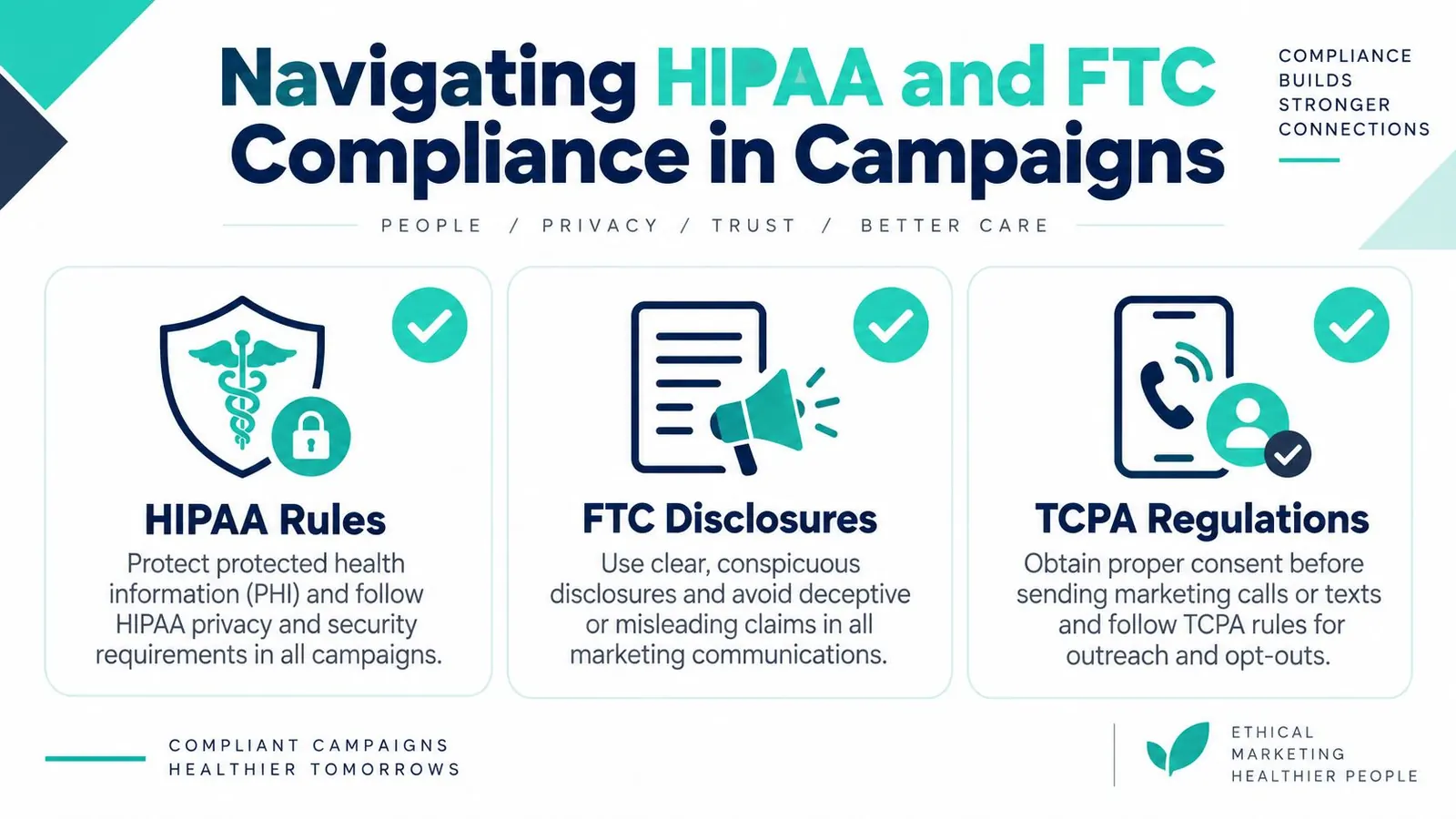
Under HIPAA, covered entities and business associates generally need a valid authorization before using or disclosing protected health information for marketing. The HIPAA and FTC medical spa marketing guidance also explains that patient photos, testimonials, and identifiable treatment content require an appropriate authorization framework, while FTC duties can apply when companies collect, use, or share consumer health information outside HIPAA's exact structure.
Separate permission from performance
A signed release should state how the content will be used, where it may appear, and whether the practice can use identifying information. General treatment consent isn't automatically the same as marketing authorization. Keep the records organized so your team can confirm permission before publishing a photo, testimonial, video, or retargeting audience.
FTC obligations add another layer. Marketing claims must be truthful and supported, disclosures must be clear, and testimonials can't imply results that patients generally shouldn't expect. Avoid guarantees, permanence claims, misleading transformations, and language that pressures people through fear or shame.
Promotional texting requires separate express written consent under TCPA rules, as described in HIPAA-safe med spa marketing guidance. Appointment reminders and promotional messages shouldn't be treated as the same permission. Your consent language, message purpose, opt-out process, and vendor agreements should match the communication you plan to send.
Compliance belongs inside the campaign brief, not in the cleanup process after an ad is rejected or a patient complains.
Audit the technology layer
Review pixels, analytics tools, online forms, scheduling platforms, CRM integrations, email systems, and SMS providers. Ask what information each tool receives, whether the vendor can sign the required agreement, how data is retained, and whether the tracking configuration is appropriate for the page.
An AI HIPAA compliance checklist can help teams organize questions when evaluating AI tools, but it shouldn't replace legal or compliance counsel. The safest workflow routes claims, consent language, audience construction, and patient content through qualified review before launch.
High-converting marketing doesn't require careless targeting or unauthorized proof. It requires precise segmentation, educational messaging, permission-based follow-up, and a booking experience that respects the patient.
Building Trust Through User-Generated Content and Frictionless Booking
Elective treatments require more than awareness. Patients want to see how your practice communicates, whether your team feels approachable, and whether the experience looks consistent with the promise in your advertising. Polished branding can establish a baseline, but authentic patient experiences often make the decision feel more credible.
Independent consumer research reports that 84% of consumers trust a brand more when marketing includes user-generated content, such as authentic testimonials and unscripted treatment videos (consumer trust and booking research). The same source reports that clinics with online scheduling can generate up to 27% more bookings. The useful lesson is not to chase a specific lift. It's to connect proof with an immediate, low-friction next step.

Put proof where decisions happen
A testimonial buried on an Instagram profile has to work much harder than one placed beside a relevant booking CTA. Add treatment-specific reviews to the matching landing page, subject to authorization and platform requirements. Pair them with provider credentials, realistic expectations, and an explanation of what a consultation includes.
Unscripted clips can show personality and answer practical questions. A provider explaining candidacy, downtime, or treatment planning may create more confidence than a heavily produced advertisement. Patient clips can add another perspective, but the practice must obtain appropriate authorization and avoid presenting individual results as a promise.
For teams developing this content, guidance on turning customer clips into ads offers a useful creative framework. Adapt any paid use to the practice's privacy, disclosure, and platform requirements.
Make booking the natural continuation
The booking path should preserve the momentum created by the content. Keep the relevant treatment selected when possible, reduce unnecessary fields, show the next available options clearly, and send an immediate confirmation with preparation instructions or expectations.
Don't force every interested patient to call during office hours. Phone access still matters for questions and complex consultations, but online scheduling captures intent from people who prefer to act privately or outside the front desk's working window.
Track whether the patient came from a review, video, landing page, or social post, but avoid collecting more health information than the workflow requires. Trust grows when the marketing feels human and the conversion process feels respectful.
Structuring Your Marketing Budget and Campaign Roadmap
A useful budget plan separates acquisition, conversion infrastructure, and retention. The American Med Spa Association summary reports that 52% of med spa practices spend under $2,500 per month on marketing, while 53% have not adopted AI and only 7% effectively use TikTok (marketing investment gap report). The point isn't that every practice needs a large technology stack. It's that underinvestment often appears as disconnected execution, weak follow-up, and no reliable measurement.
A practical allocation model
For a mid-sized practice launching a new campaign, allocate the available monthly marketing budget by job rather than by platform:
- Search acquisition: Fund high-intent Google Search campaigns for priority treatments and local searches.
- Landing pages and conversion work: Reserve money for treatment pages, booking improvements, call tracking, and testing.
- Reputation and content: Support review workflows, provider education, approved patient content, and local search assets.
- Retention: Build email and SMS sequences for reactivation, post-treatment communication, and appointment reminders, using consent-clean systems.
- Measurement and compliance: Include reporting, privacy review, authorization management, and creative approval in the operating plan.
The exact split should reflect capacity. Don't increase ad spend when the schedule, phones, or consultation process can't handle additional demand. A full calendar with weak retention may call for lifecycle work, while an empty calendar with strong patient experience may justify more acquisition testing.
A 90-day operating sequence
Days 1 through 30: Audit tracking, Google Business Profile information, reviews, consent language, booking flow, and the highest-value treatment pages. Fix broken paths before launching traffic.
Days 31 through 60: Launch tightly focused search campaigns, publish treatment-specific education, establish a neutral review request workflow, and create a small library of provider-led content.
Days 61 through 90: Compare booked and attended consultations by source, improve weak pages, refine ad queries, and introduce retention sequences for eligible patients. Expand only after the first campaigns produce dependable operational data.
Track impressions and clicks, but prioritize qualified inquiries, booked consultations, attendance, treatment-specific conversion, response time, rebooking, and revenue attribution. For help connecting SEO, local search, paid acquisition, and conversion work, review Leaping Lemur Media's services.
Marketing That Feels Like You On Purpose
The strongest medical spa brands don't sound interchangeable. They know whether their practice is calm and clinical, warm and relationship-driven, results-focused, education-led, or built around a particular community. That positioning affects the services they feature, the questions they answer, the providers they show, and the patients who recognize themselves in the message.
A practice that talks only about discounts trains people to compare price. A practice that explains treatment decisions, introduces its clinicians, answers uncomfortable questions, and shows how it cares for patients gives people more meaningful reasons to choose it. The difference appears in the details: the tone of the confirmation email, the way the front desk responds to a review, the language on a consultation page, and the topics a provider is willing to explain on camera.
Build from the inside out
Start by interviewing the people who deliver the experience. Ask what patients misunderstand, what they value after treatment, and why they return. Then compare those answers with the language patients use in reviews and consultations.
Use the overlap to shape your marketing:
- Positioning: State who the practice serves and what kind of experience it provides.
- Content: Answer real treatment questions in the provider's natural voice.
- Proof: Highlight authorized reviews and patient experiences that reflect the actual care model.
- Community presence: Support local relationships and conversations that reinforce trust beyond paid reach.
- Measurement: Evaluate whether the right patients are booking and returning, not just whether traffic is rising.
An agency partnership should feel different from a production order. You need a team that can listen, challenge vague positioning, protect compliance, and turn clinical expertise into clear communication. Leaping Lemur Media describes that approach through its community-rooted marketing philosophy, centered on partnership, authentic voice, and meaningful connection.
Marketing that feels like you isn't casual or improvised. It's intentional. It gives patients a clear reason to remember your practice, enough evidence to trust it, and a simple way to begin.
Leaping Lemur Media helps practices build medical spa digital marketing systems around treatment-specific SEO, conversion-focused websites, compliant content, and measurable patient acquisition. Visit Leaping Lemur Media to discuss a strategy that reflects your practice, improves the path to booking, and supports long-term patient relationships.
Own a med spa? See our med spa marketing services.