10 Actionable Dental Marketing Ideas for Growth in 2026
LE
lemur July 9, 202625 min read
Marketing That Feels as Good as Your Patient Care
You're an exceptional clinician, dedicated to providing the best care for your community. Yet, you look at your schedule and see gaps that shouldn't be there. The problem often isn't your service. It's marketing that feels generic, loud, or disconnected from who you are.
The strongest dental marketing ideas don't rely on gimmicks. They make your practice easier to trust, easier to find, and easier to choose. That means showing real patient outcomes, staying visible in local search, following up consistently, and giving happy patients a simple path to refer others.
This guide is different. We'll explore 10 powerful dental marketing ideas designed not just to fill your calendar, but to attract the right patients by building authentic connections. It's time for marketing that reflects the quality and integrity of your practice. If you're looking at the bigger healthcare environment while shaping your approach, SourceLoop's healthcare offerings are one example of how specialized service businesses are thinking more intentionally about growth.
1. Authentic Patient Storytelling and Testimonials
A five-star review helps. A real story closes the gap between curiosity and confidence.
When a nervous new patient lands on your website, they aren't only evaluating credentials. They're asking whether you understand people like them. That's why testimonials work best when they sound like lived experience, not polished ad copy. A general dentist can feature a patient who finally came in after years of anxiety. An orthodontic office can show a teen, a college student, and an adult professional, each with a different reason for starting treatment.
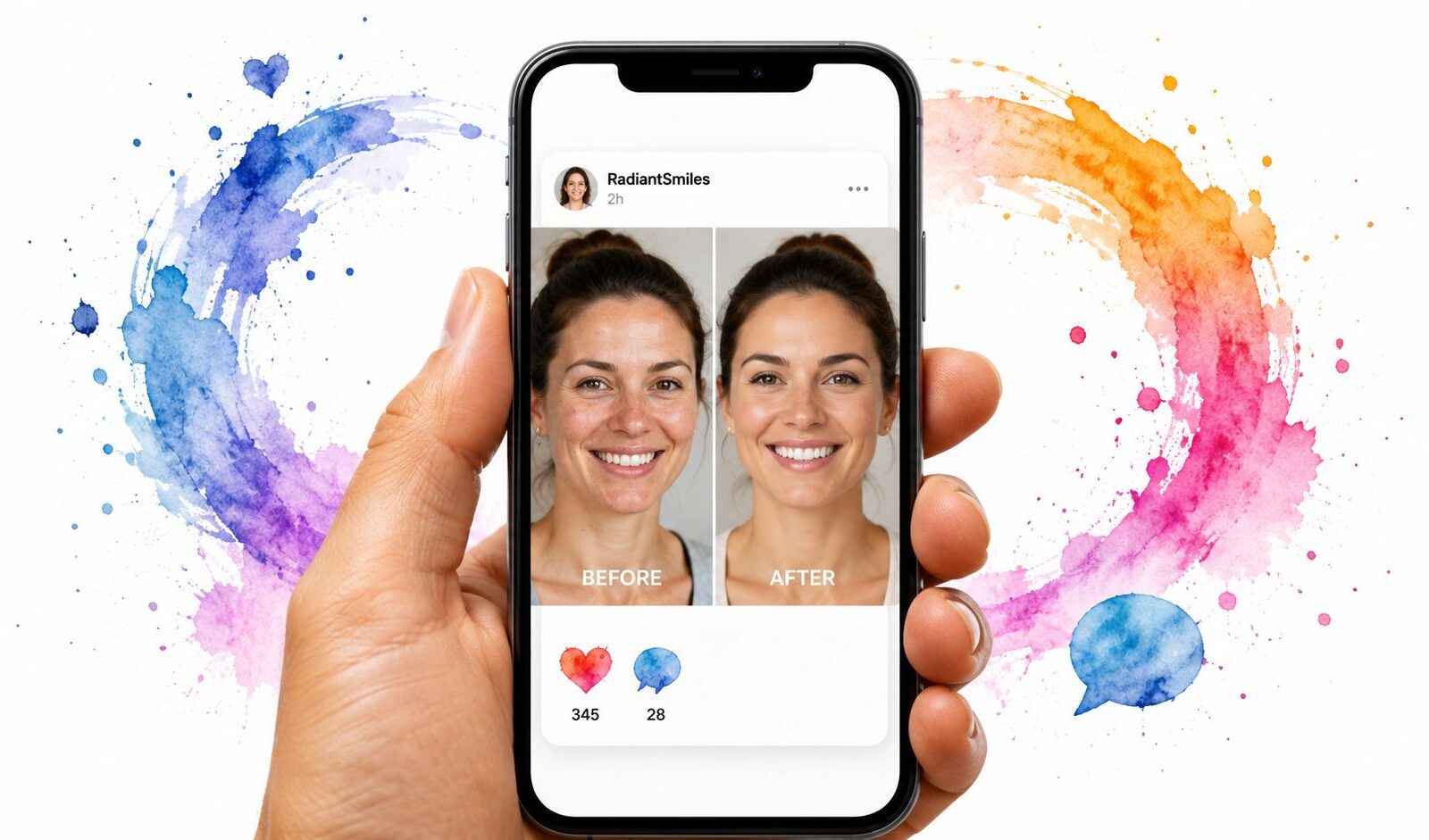
Use this image where patient confidence is the message:
Quick Win
Ask your front desk and treatment coordinator to identify one happy patient each week for a testimonial request. Do it right after a positive moment, such as same-day crown relief, an Invisalign reveal, or a cosmetic case completion. Keep the prompt simple: What were you worried about before you came in, and how do you feel now?
If you want your brand voice to feel more human and intentional, review how Leaping Lemur Media approaches partnership and positioning. That mindset fits testimonial work well because the best stories sound like your practice, not like a script.
Long-Term Strategy
Build a testimonial library by treatment type, patient concern, and age group. Record short videos in a quiet operatory or consultation room. Then turn one story into several assets: a homepage testimonial, an Instagram Reel, a before-and-after caption, a waiting room slide, and an email feature.
Practical rule: Ask about the emotional outcome, not only the clinical result.
Metrics to Track
Testimonial volume: Count how many written and video testimonials your team collects each month.
Content reuse: Track how often one testimonial gets repurposed across website, email, social, and paid ads.
Consultation influence: Ask new patients whether a patient story or review helped them book.
2. Community-Focused Content Marketing Strategy
A parent finds your practice after soccer practice, opens your blog on a phone, and searches for one clear answer before deciding whether to call. If the page sounds generic, they leave. If it answers the exact question in plain language and reflects life in your community, you earn trust before the first conversation.
Community-focused content works because it mirrors the questions, concerns, and routines of the people you want to treat. Write for the families, professionals, and long-time residents around your office. Cover the issues they bring up at check-in, in consults, and on phone calls. That is how a content plan turns into a patient acquisition system instead of a pile of blog posts.
Quick Win
Start with ten questions your team hears every week and sort them into three buckets: urgent concerns, high-value treatments, and local family questions. Then publish one piece for each format that fits the topic best. Use a short article for common concerns, a quick video for process questions, and an FAQ page for recurring objections.
Keep the wording specific to how patients ask. “How often should kids in Austin get cleanings?” is stronger than a broad page about preventive dentistry because it reflects local intent and real search behavior.
Build your content around three to five pillars and keep each one tied to a practice goal. A general practice might focus on family care, restorative dentistry, cosmetic cases, emergency visits, and dental anxiety. An implant-focused office might center its content on candidacy, timelines, recovery, cost questions, and before-and-after expectations.
Then create a publishing rhythm your team can sustain. One strong article and one short video per month will outperform a burst of random posts followed by silence. Update older pages every quarter. Refresh the copy, improve the photos, answer new objections, and connect related pages with internal links so patients can move from question to treatment without friction.
Patients do not need more content. They need clearer answers from a local practice that feels familiar and trustworthy.
Metrics to Track
Content-to-consult connection: Track which articles and videos lead to appointment requests, contact form submissions, or tracked calls.
Topic coverage: Maintain a live list of patient questions and mark which ones have a blog post, FAQ, video, or service page.
Local engagement quality: Review time on page, scroll depth, and clicks to book from visitors in your target service area.
3. Strategic Local SEO and Google Business Profile Optimization
Local visibility isn't a side project. It's one of the first places patients decide whether you're worth contacting.
A complete Google Business Profile gives people fast proof that you're active, legitimate, and convenient. Photos, accurate hours, services, review responses, and current posts all shape that first impression. If a nearby family searches “dentist near me” on a phone, your profile often matters before your homepage does.
Quick Win
Audit your Google Business Profile this week. Confirm your hours, phone number, categories, services, appointment link, and photo quality. Replace outdated exterior shots and add images that show your team, operatories, front desk, and signage. Then make sure your website experience matches that profile on mobile.
Create a repeatable local SEO system. Publish location-aware service pages, keep your name, address, and phone information consistent across directories, and respond to every review with a calm, personalized reply. Add Google Business Profile updates regularly with team photos, seasonal reminders, and service spotlights.
Many practices also overlook the importance of review timing here. Review collection and local SEO support each other. The more consistently happy patients leave public feedback, the stronger your local trust signals become over time.
Metrics to Track
Profile actions: Watch calls, direction requests, and website clicks from your Google Business Profile dashboard.
Search visibility: Track where your practice appears for service-plus-location searches in your target areas.
Mobile conversion: Measure how many mobile visitors call, text, or request an appointment after landing on local pages.
4. Email Marketing and Patient Relationship Nurturing
A patient leaves your office intending to schedule treatment, replace a retainer, or book the next hygiene visit. Then life gets busy, your practice goes quiet, and momentum disappears. Email fixes that gap when it is built around the patient journey instead of monthly promotions.
The right email program keeps your practice present between visits. It also gives patients the timing, clarity, and reassurance they need to act. A family practice might send seasonal prevention reminders and recall prompts. An orthodontic office can send progress check-ins, retainer care guidance, and missed-appointment follow-up. A cosmetic practice should follow consultations with treatment education, financing details, and one clear call to schedule.
Quick Win
Segment your list before you send another campaign.
Start with five groups: active hygiene patients, overdue recall patients, treatment-planned but unscheduled patients, cosmetic interest leads, and post-op patients. Then write one useful email for each group. That single change will improve relevance faster than redesigning your template or sending more often.
As noted earlier, referral-driven growth still leads for many dental practices. Email supports that strength best when it reinforces trust, answers questions, and brings patients back into conversation.
Long-Term Strategy
Build automated sequences around real patient decisions.
A stalled treatment sequence should answer common objections, explain next steps, and make it easy to book. A hygiene reactivation sequence should combine a reminder, a practical health benefit, and a direct scheduling link. New patient inquiries need more than an instant form confirmation. They need a short follow-up series that introduces your office, sets expectations, and prompts the first appointment before interest fades.
Set this up as a system, not a collection of one-off campaigns. Every major patient path should have a matching sequence: new patient inquiry, unscheduled treatment, overdue hygiene, post-op follow-up, and re-care for inactive patients. That is what turns email from a reminder tool into a relationship channel that produces consistent revenue.
A six-month reactivation campaign works especially well for patients who delayed care. It keeps your team visible without training patients to wait for discounts.
Metrics to Track
Segment performance: Compare open rates, clicks, replies, and booked appointments by audience segment.
Reactivation outcomes: Track how many overdue hygiene patients and unscheduled treatment patients return after each sequence.
List health: Monitor unsubscribes, spam complaints, and bounce rates so irrelevant messaging does not erode sender performance.
Revenue influence: Measure how much scheduled production can be tied back to recall, treatment follow-up, and reactivation emails.
5. Strategic Social Media Presence and Community Engagement
A patient finds your practice on Instagram at 9:30 p.m. They are not looking for a polished brand campaign. They want quick proof that your team is credible, approachable, and active in the community.
That is the job of social media for a dental practice. It should reduce hesitation and make the first appointment feel easier to book.
Your best posts usually have one of three jobs. They answer a question, show the people behind the practice, or prove that real patients trust you. A general dentist might post a short video explaining what a first visit feels like for a nervous patient. An orthodontist might show the timeline of a consultation. A cosmetic dentist might explain why bonding made more sense than veneers for a specific case.
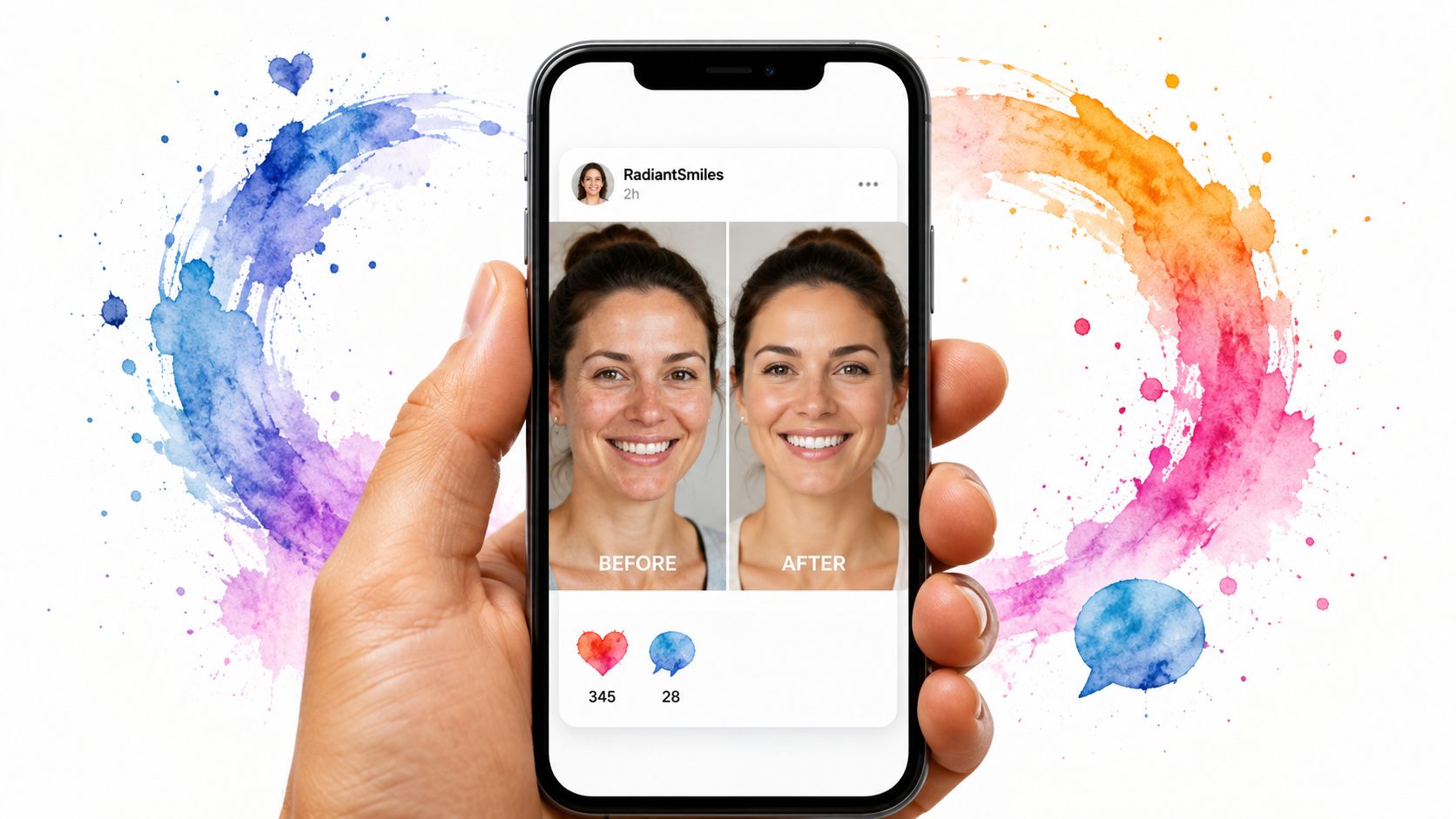
Use visual proof when transformation is part of the story:
Quick Win
Pick one primary platform and one support platform. Then set a weekly publishing rhythm your team can maintain: one educational video, one culture post, one patient story with written consent, and one community update.
Keep the bar practical. A clear phone video from a hygienist will usually outperform a generic graphic because it feels personal and specific. Patients want to know who they will meet, how your office communicates, and whether they will feel comfortable there.
Long-Term Strategy
Build recurring content series instead of reinventing the calendar every week. That is how social becomes a system rather than a scramble. Strong examples include “Monday Myth Check,” “What Our Hygienists Wish Patients Knew,” “Braces Parent Q&A,” and “Smile Makeover Planning.”
Community engagement matters just as much as posting. Feature local events your team supports. Highlight school partnerships, charity drives, sponsorships, and neighborhood involvement. Then respond to comments and direct messages quickly. Social media works best when it feels like a conversation, not a broadcast channel.
Show the people behind the practice. That often persuades patients more than another photo of equipment or an office wall quote.
Metrics to Track
Response speed: Track how quickly your team replies to comments and direct messages.
Saves and shares: Watch which educational posts people save or send to someone else. Those actions often signal real interest.
Content-to-consult impact: Ask every new patient which platform influenced them, then compare booked appointments by channel.
Community engagement quality: Measure comments, tagged mentions, and local shares, not just raw follower count.
6. Referral and Loyalty Program Development
A patient leaves your office smiling, tells your team how easy the visit felt, and promises to send their spouse. Then nothing happens because your practice never gave them a clear next step.
Referral growth needs a system. Loyalty does too. If you want this channel to produce steady new patients instead of occasional surprises, build it like a repeatable playbook. That means one immediate action your team can take today, one longer-term structure that strengthens retention and referrals over time, and a few metrics you review every month.
Quick Win
Start with timing. Ask for referrals right after a positive moment, not weeks later when the visit is already forgotten.
Give your team two short scripts. One for the front desk. One for providers. Keep both conversational and specific. Example: “We are accepting new patients right now. If you have a friend or family member who would feel comfortable here, please share our information.”
Then make sharing easy. Offer a small referral card, a text link, or a QR code at checkout. Pick one method and train the team to use it every time. Consistency matters more than creativity here.
Add one thank-you action your staff can complete without fail. A handwritten note works well because it feels personal and rare.
Long-Term Strategy
Build a referral and loyalty program around recognition, convenience, and patient experience. Do not build it around discounts alone. Price-based offers can attract one-time behavior. Appreciation-based systems strengthen trust and bring in patients who already expect a good fit.
The strongest programs are simple. They include a standard referral ask after strong appointments, a documented thank-you process, and a loyalty element that rewards continued engagement with the practice. That loyalty piece might be priority scheduling, a small patient appreciation gift, early access to events, or membership-style benefits for uninsured patients. The point is to reinforce the relationship, not train patients to wait for the next promotion.
Automation helps, but only after the message is right. Set up referral reminders in post-visit texts or emails after high-satisfaction appointments, and make sure your team knows exactly when those messages go out. As noted earlier, practices that treat referrals as a structured process tend to see stronger, more dependable word-of-mouth growth.
Metrics to Track
Referral source tracking: Record who referred each new patient and which channel prompted the referral.
Referral ask completion: Measure how often your team makes the ask after eligible visits.
Share method usage: Track whether patients use the referral card, text link, or QR code you provide.
Thank-you follow-through: Confirm that notes, calls, or appreciation gestures happen on schedule.
Referral-to-booking rate: Compare how many referred prospects schedule and show up.
A good referral program should feel easy for patients and automatic for your team. If it depends on memory, it will break. If it lives in your workflow, it will grow.
7. Partnership Marketing with Complementary Local Businesses
Some of the best dental marketing ideas don't begin online. They begin across town with another business your ideal patient already trusts.
A pediatric dentist can build a real relationship with local pediatricians, speech therapists, and family wellness centers. A cosmetic practice can connect with medspas, dermatology clinics, photographers, and bridal vendors. An emergency dentist can coordinate with urgent care offices so patients who need help after hours know where to turn.
Quick Win
Make a short list of five local businesses or professionals who serve the same audience but don't compete with you. Then reach out personally. Invite the owner, office manager, or lead provider to coffee or a quick office visit. Skip the pitch deck. Focus on whether there's a genuine fit.
Long-Term Strategy
Turn the best relationships into structured collaborations. Host a joint event. Exchange educational materials. Feature each other in email newsletters. Create a shared referral process so patients move smoothly between businesses instead of getting a vague verbal recommendation.
This works especially well when the collaboration solves a real problem. A family dentist and pediatrician can co-host a back-to-school oral health session. A cosmetic dentist and local photographer can create a “camera-ready smile” campaign aimed at professionals updating headshots or couples planning weddings.
Local partnerships work when both sides help the patient first and promote the business second.
Metrics to Track
Partner-generated leads: Note every patient who comes from a specific business or provider relationship.
Joint campaign results: Track event attendance, consultation requests, and follow-up bookings tied to a partnership.
Relationship activity: Review how often your team connects with each partner and whether the relationship is still active.
8. Targeted Paid Advertising with Intentional Audience Segmentation
A patient searches “emergency dentist near me” at 7:10 a.m. Another compares Invisalign options after dinner. A third has been thinking about implants for six months and finally clicks an ad on Saturday. Those are three different decisions. Your ads should treat them that way.
Paid advertising works when you match the message to intent. Service type matters. Urgency matters. Patient context matters. A parent looking for braces, an adult replacing a missing tooth, and someone in active pain should each see different copy, different offers, and different landing pages.
Quick Win
Pick one high-intent service and build around it. Emergency dentistry, implants, Invisalign, and cosmetic consultations are strong starting points because the patient usually knows what they want.
Create a landing page for that single service. Send paid traffic there, not to your homepage. Write the ad in the same language the patient uses when searching. “Tooth pain today” and “same-day emergency exam” will pull better than broad practice-level wording because they match the problem the patient wants solved right now.
Keep the page focused. One service. One primary call to action. One clear next step.
Long-Term Strategy
Build paid campaigns as a segmented system, not a collection of disconnected ads. Start with search campaigns for high-intent treatments. Then add remarketing, audience-specific creative, and follow-up workflows that fit the decision cycle for each service.
Implant prospects often need more education and more follow-up. Emergency patients need speed and immediate scheduling. Cosmetic patients respond to visual proof, financing clarity, and before-and-after credibility. Treat each path differently. That is how you improve conversion rates without raising spend.
Your follow-up process decides whether ad dollars turn into production. Fast response times, clear handoffs, and consistent lead tracking matter as much as the ad itself. If your front desk misses calls, replies slowly to form fills, or handles every lead the same way, your campaign performance will stall even if targeting is strong.
Cost per booked appointment: Measure scheduled visits, not just clicks, calls, or form submissions.
Landing page conversion rate: Track which service pages produce consultations and which ones leak traffic.
Lead response time: Review how quickly your team answers calls, texts, and web leads from each campaign.
Conversion by audience segment: Compare results by service line, urgency, age group, or patient type so you know where to increase budget and where to cut it.
9. Educational Webinars and Virtual Events
Virtual education works when your practice solves confusion people already have.
Patients often postpone treatment because they don't understand the process, timeline, or options. A webinar gives you room to explain clearly without the pressure of a one-on-one consult. An implant practice can walk through replacement choices. An orthodontic office can address treatment timing for parents. A general dentist can host a session on dental anxiety and what comfort options are available.
Quick Win
Pick one topic your team answers repeatedly and host a simple 30 to 45 minute online session. Promote it through email, social, your website, and chairside invites. Keep the format straightforward: short presentation, common questions, and a clear invitation to book a consultation if the topic applies to them.
You don't need studio production. A quiet room, decent lighting, and a confident presenter are enough.
Long-Term Strategy
Turn webinars into a reusable education system. Record each session. Break it into clips for Instagram Reels, YouTube Shorts, and FAQ content on your service pages. Add a follow-up sequence for attendees and another for no-shows so your effort keeps working after the live event ends.
This channel is especially strong for treatments that involve hesitation. If a patient needs time to process implants, Invisalign, sedation options, or cosmetic work, a virtual session can reduce uncertainty without forcing an immediate decision.
Metrics to Track
Registration quality: Count how many registrants fit the patient type for the topic presented.
Attendance and follow-up: Track who attended, who asked questions, and who booked next steps afterward.
Content reuse value: Measure how many future social posts, emails, and website assets come from each event.
10. Reputation Management and Online Review Strategy
A patient finds your practice, likes your website, then checks your Google reviews before calling. That is often the first consultation. A thin review profile, old feedback, or unanswered complaints can stall the decision before your front desk ever gets a chance.
Reputation management deserves a system, not occasional attention. Reviews shape first impressions, influence local search visibility, and help hesitant patients feel confident enough to book.
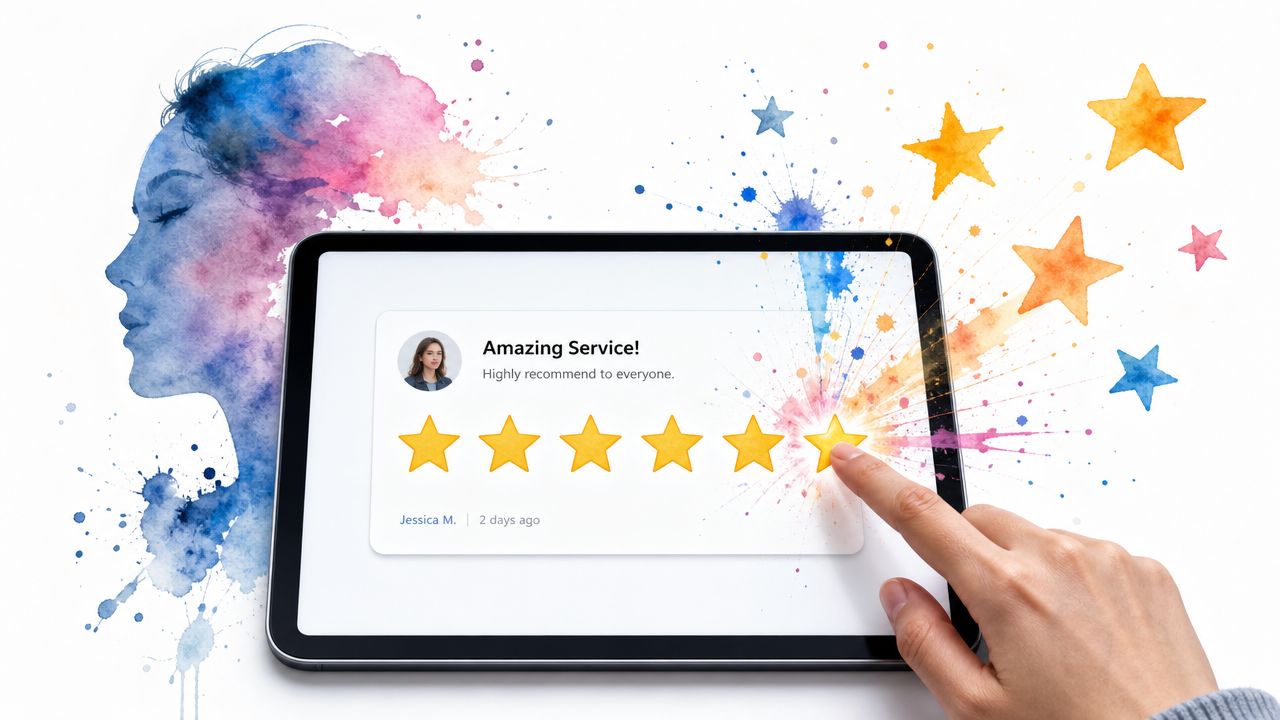
Use this visual near your review request workflow, website trust pages, or reputation discussions:
Quick Win
Create one review request process and use it every day. Ask soon after a positive visit, while the experience is still fresh. Send the request by text or email within hours, not days. Keep the message short, personal, and easy to complete.
Then close the loop. Respond to every review, especially the routine five-star ones many practices ignore. A calm, professional reply shows future patients that your team pays attention and takes patient experience seriously.
Long-Term Strategy
Build reviews into the patient journey from check-in to follow-up. Train the team on who asks, when they ask, and which appointments are the strongest review opportunities. Give one person clear ownership of monitoring new reviews, routing service issues internally, and spotting patterns that need operational fixes.
The framework's significance is key. Your quick win gets more recent reviews. Your long-term strategy turns review management into a growth engine. It strengthens trust, improves visibility, and gives your team a steady stream of feedback you can use.
Treat negative reviews carefully. Respond promptly, stay HIPAA-safe, acknowledge the concern, and move the conversation offline. Never argue. Future patients are judging your professionalism as much as the complaint itself.
Metrics to Track
Review volume and recency: Measure how many new reviews you earn each month and how current your profile looks.
Request-to-review rate: Track how many patients receive a request and how many complete it.
Response time and consistency: Monitor whether every review gets a timely, professional reply.
Operational themes: Categorize complaints and praise to find recurring issues in scheduling, wait times, billing, or chairside experience.
Booking influence: Ask new patients whether reviews affected their decision to contact your office.
Dental Marketing Ideas: 10-Point Comparison
Strategy
🔄 Implementation Complexity
⚡ Resource & Speed
📊 Expected Outcomes
💡 Ideal Use Cases
⭐ Key Advantages
Authentic Patient Storytelling and Testimonials
High, consent, coordination, production
High resources & time; slow to scale
Strong trust and conversion uplift over time
Differentiation for cosmetic/orthodontic/high-consideration cases
Emotional authenticity, SEO boost, shareable social proof
Community-Focused Content Marketing
Medium, ongoing editorial process
Moderate effort; results in 3–6 months
Improved authority, steady organic traffic growth
Local practices focused on education and prevention
Long-term SEO-driven authority and patient education
Strategic Local SEO & Google Business Profile Optimization
Medium, technical setup + maintenance
Moderate effort; relatively quick local visibility
High-intent local leads and improved click-throughs
Any local practice needing immediate search presence
Cost-effective local visibility and measurable traffic
Email Marketing & Patient Relationship Nurturing
Medium, segmentation and automation setup
Low ongoing cost; fast ROI with automation
Increased retention, reduced no-shows, higher LTV
Practices with existing patient lists and recurring care
Highest ROI channel; personalized lifecycle nurturing
Strategic Social Media Presence & Community Engagement
Medium–High, content cadence and moderation
Moderate time; variable organic speed (faster with ads)
Improved trust, search rankings, and patient choice
All practices, especially competitive local markets
Directly influences choice, builds credibility and SEO
Your Next Step From Ideas to Intentional Action
Effective dental marketing isn't about doing everything at once. It's about doing the right things with intention.
The practices that grow steadily usually make a few smart decisions early. They get clear on who they want to serve. They tighten the patient experience so referrals happen naturally. They build trust signals that are visible before the first phone call. Then they support that trust with consistency across reviews, email, local search, social content, and follow-up.
That matters because most owners don't have a marketing problem in the broad sense. They have a focus problem. Too many disconnected tactics create noise. One month it's postcards. Next month it's boosted posts. Then a website refresh sits unfinished while the front desk manually chases leads and nobody asks for reviews in a consistent way. The result is effort without momentum.
A better approach is simpler. Pick one idea from this list that can improve trust immediately. Then pick one idea that can compound over time. For many practices, that means starting with reviews and referral process, then building content and local search support around those foundations. For others, it means fixing follow-up before spending another dollar on ads. The order matters less than the discipline.
If you're deciding where to start, use three filters:
Fastest path to trust: Which tactic helps a new patient feel confident in your practice right now?
Biggest operational fit: Which tactic can your current team execute every week?
Best long-term asset: Which tactic keeps working after the initial push, like reviews, local pages, email sequences, or reusable video content?
The strongest dental marketing ideas also protect your positioning. That's why referral-first growth is often healthier than discount-heavy growth. Once patients associate your brand with price cuts, it becomes harder to lead with quality, comfort, expertise, and experience. When they associate your brand with consistent care, clear communication, and positive stories from people like them, your marketing becomes more durable.
You don't need to become a full-time marketer to make this work. You need a system. One script for testimonial requests. One process for review asks. One monthly content rhythm. One follow-up sequence for unscheduled treatment. One clear owner for each task. That level of structure is enough to change how your pipeline feels within a reasonable time frame.
Keep the tone of your marketing close to the tone of your practice. If your office is warm, your content should sound warm. If your team is calm and education-focused, your email and social copy should reflect that. If your practice is premium, your visuals, messaging, and follow-up should feel thoughtful and polished from the first click to the first visit. Patients notice alignment, even if they don't describe it that way.
If you want outside help building that alignment, Leaping Lemur Media is one option to consider for dental-focused marketing support. The right partner should help you clarify your positioning, strengthen visibility, and turn good care into a growth system patients can clearly see.
Start with one or two ideas from this list that match your values and your community. Execute them well. Stay consistent long enough to learn what your patients respond to. That's how you stop chasing random tactics and start building a practice that grows on purpose.
If you want a marketing partner that helps your practice sound like you, feel like you, and connect with the patients you want to serve, explore Leaping Lemur Media.