Grow Your Practice: Local Search Optimization 2026
LLJuly 19, 202618 min read
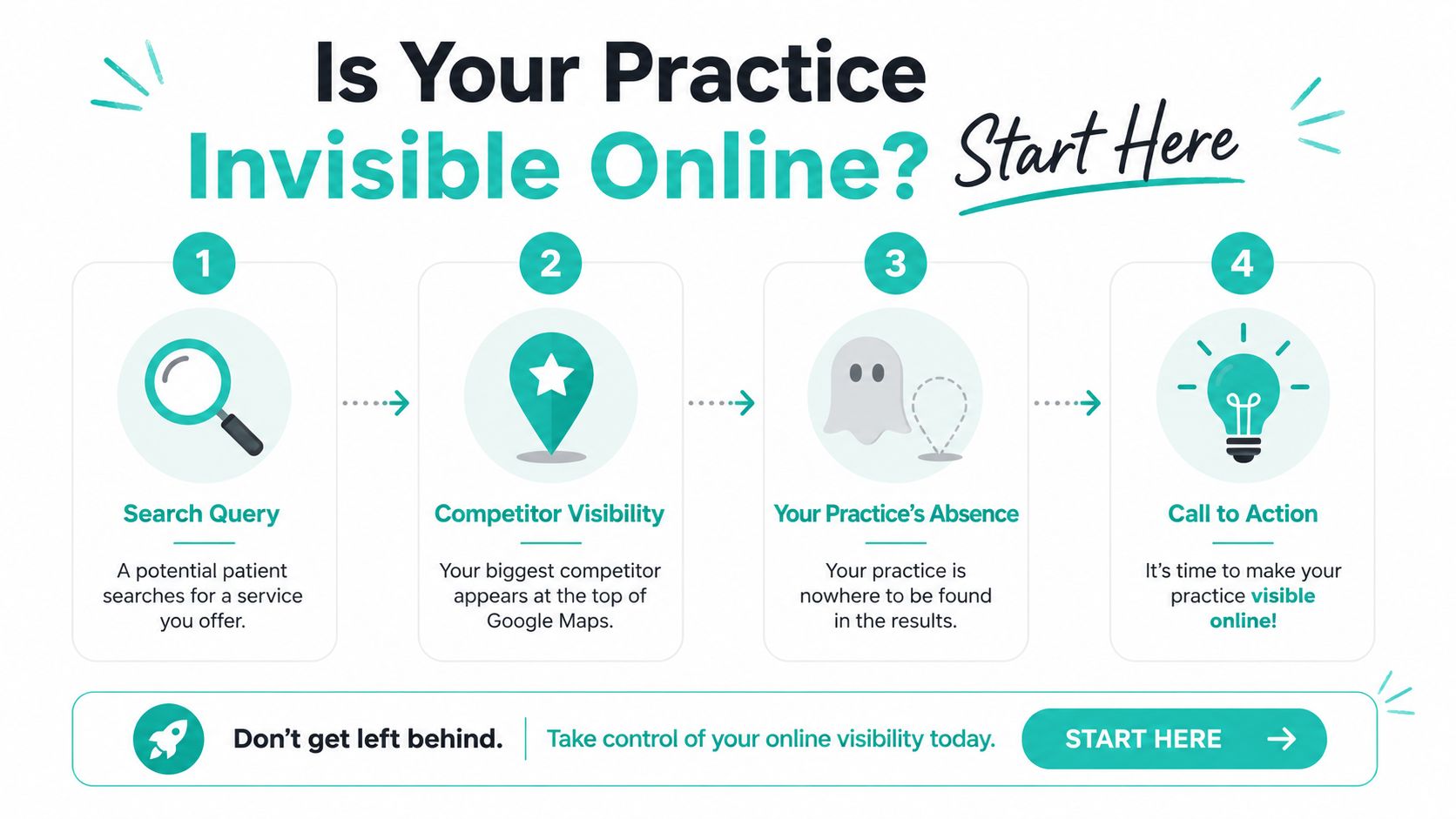
A patient searches “dentist near me,” “medspa for lip filler,” or “estate planning lawyer downtown.” Your competitor shows up in Google Maps with recent reviews, accurate hours, sharp photos, and a clear call button. Your practice either appears lower down or doesn't show up at all.
That gap usually isn't about who does the better work. It's about who has built stronger local search optimization signals across Google Business Profile, their website, reviews, and community presence. For service practices, that gap matters because the person searching is rarely browsing casually. They're trying to choose.
A projected 2026 estimate says local search intent has surged to encompass 50% of all Google searches, and 18% of local searches on a mobile phone lead to a sale within 24 hours, according to Amra & Elma's local SEO statistics roundup. For dentists, medspas, and lawyers, that means local visibility isn't a side project. It's part of patient and client acquisition.
When a practice owner says, “We should be ranking better,” I start with the same question. What does Google show right now when someone nearby searches for your core service?
If you're a dentist, search your city plus “dentist,” “emergency dentist,” and your highest-value treatment. If you run a medspa, check branded treatments, injectables, facials, and “near me” searches. If you're a law firm, search by practice area and city, not just your firm name.
Run a quick visibility check
Use this short audit before you spend money on anything else:
Search your main services locally: Look at the map results first. If a cosmetic dentist ranks for “Invisalign” but not “family dentist,” that usually points to a category or service alignment issue.
Review your Google Business Profile presence: Make sure your business name, address, hours, phone number, and website are all present and current.
Check your website homepage and contact page: Your location should be obvious within seconds. Visitors shouldn't have to hunt for your city, office address, or booking path.
Compare your listing with two local competitors: Notice their photos, review quality, categories, and whether their office feels more “real” online than yours.
Search your practice name plus phone number: If old listings, old addresses, or duplicate profiles appear, clean-up work belongs near the top of the to-do list.
Practical rule: Don't start with content if your basic location signals are messy. Clean business data beats more blog posts every time.
The point of this audit isn't perfection. It's diagnosis. A practice can have a beautiful site and still lose local visibility because Google sees conflicting information, a neglected profile, or weak local relevance.
Build a shortlist before you fix anything
Most practices uncover the same handful of problems:
Problem
What it looks like
Why it hurts
Missing or weak profile
No verified profile, sparse details, old hours
Google has less confidence in the listing
Inconsistent NAP
Address or phone differs across listings
Search engines and users see conflicting business data
Thin local website signals
Site talks about services but barely mentions location
Google can't connect the practice strongly to its service area
Weak trust signals
Few reviews, generic photos, no recent updates
Users hesitate, and rankings often follow
No local proof
No neighborhood references, local pages, or community evidence
The practice feels generic instead of rooted
For a single-location dentist, the fastest wins usually come from profile cleanup, stronger photos, and clearer service-to-location alignment. For a medspa, visual trust matters even more because searchers judge professionalism before they click. For a lawyer, practice-area clarity and office legitimacy become critical. People want reassurance that you are established, reachable, and nearby.
Write down what's broken. Keep the list short. Fix the items that affect visibility and trust first.
Your Digital Front Door Mastering Google Business Profile
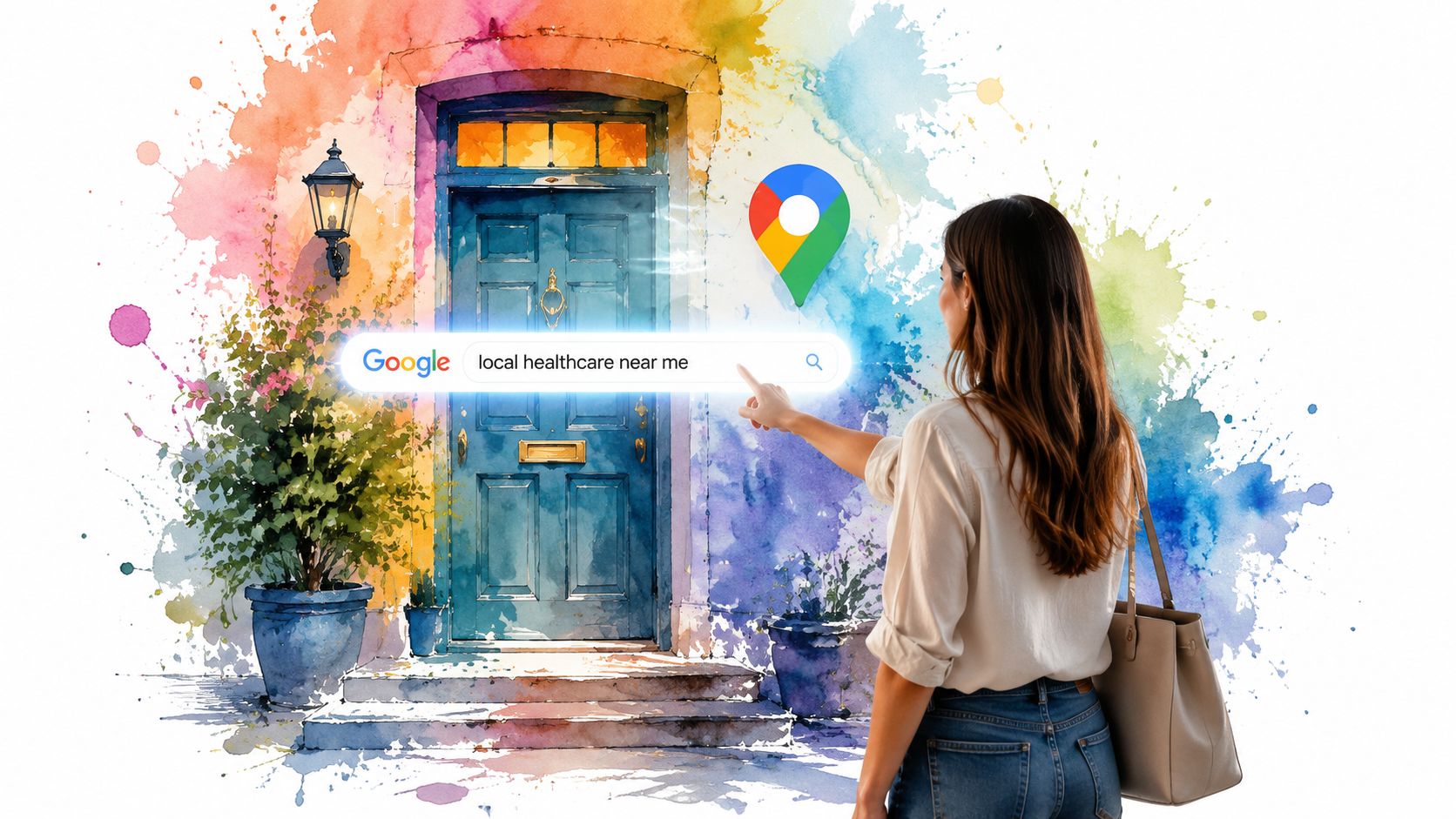
Your Google Business Profile often does the selling before your website gets a chance. A patient can call, request directions, read reviews, skim services, and decide whether your office feels trustworthy without ever clicking through.
That's why this is usually the first place I'd invest time. Google Business Profile signals carry exactly 32% of the total local ranking weight, according to ClickRank's local SEO ranking factors page. That makes it the single biggest local ranking lever in the stack.
Treat your profile like a real front desk
A strong profile feels maintained. It answers practical questions quickly and reduces uncertainty.
Start with the core fields. Your business name, address, phone number, hours, website URL, categories, attributes, services, products, and photos need to be complete and accurate. Moz's local SEO guide identifies those critical fields and notes that fully optimized profiles have a 27% higher probability of appearing in the local Top 3 than incomplete ones.
For a dental office, category choices matter more than many owners realize. “Dentist” may be the obvious primary category, but secondary categories should support how patients search. A cosmetic-focused office, an orthodontic practice, and a pediatric office shouldn't all look identical in Google's eyes.
What strong profiles do differently
Weak profiles usually fail in predictable ways. They use bland descriptions, generic stock images, and outdated hours. Strong profiles give Google and the searcher a clean, specific picture of the practice.
Here's what to prioritize:
Accurate NAP first: Your exact business details should match your website and major listings. Even small inconsistencies create avoidable friction.
Categories with intent behind them: Choose the category that best reflects the service you most want to rank for. Secondary categories should support, not dilute.
Photos that prove the location is real: Show the exterior, reception area, treatment rooms, team, signage, and the service environment. A medspa should feel polished but still local. A law office should feel established and approachable.
Services and products filled out carefully: Don't dump keyword lists. Add services patients recognize and that align with what the practice offers.
Fresh activity: Moz's guide also notes a weekly posting cadence with Q&A engagement and responding to reviews quickly correlates with stronger click-through performance, and profiles that respond to reviews within a day correlate with a 34% increase in click-through rates from local results in that source.
A neglected profile sends the same signal as an empty waiting room. People notice the silence.
One important trade-off: don't optimize for appearance at the expense of accuracy. I've seen practices overstuff categories, over-polish descriptions, or upload beautiful but generic imagery that could belong to any clinic in any city. That usually weakens trust.
Moz also warns that inconsistent NAP affects 42% of small businesses, and location-generic marketing photos can reduce user trust and lower conversion rates in that guide's analysis. For local search optimization, realism beats polish when you have to choose between them.
If you only have time for one recurring task, maintain your profile every week. Add recent photos. Review your services. Answer questions. Make sure the practice looks active, current, and clearly tied to the community it serves.
Optimizing Your Website for Local Signals
A good Google Business Profile gets you into the conversation. Your website proves you belong there.
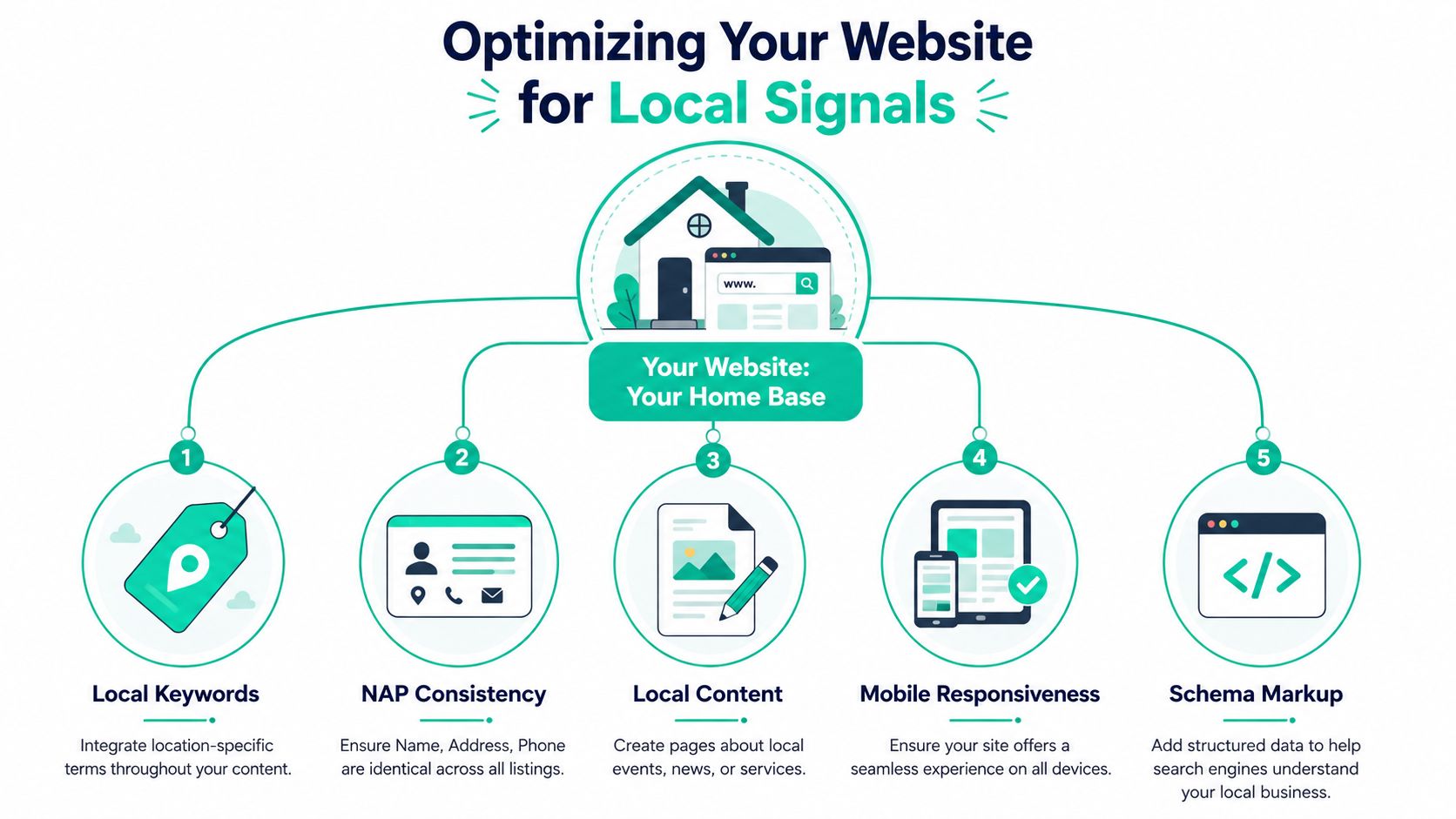
For local search optimization, your site has to confirm three things quickly. What you do. Where you do it. Why someone in that area should trust you. If any of those points are fuzzy, Google has less to work with and visitors have more reasons to leave.
Your developer needs a local brief not vague requests
Many owners tell a web developer to “make the site more SEO friendly.” That's too loose. Ask for specific local improvements.
The technical priority I'd put near the top is LocalBusiness schema markup. According to Rankdots' local SEO best practices, implementing LocalBusiness schema can improve visibility in AI-generated summaries and local packs by 18–25%, and businesses that skip it miss up to 31% of local traffic from mobile users.
Ask your developer for these concrete items:
Add LocalBusiness schema in JSON-LD: Include business name, address, telephone, opening hours, and geo details.
Validate it with Google's Rich Results Test: Don't assume it works because it was added.
Use clean HTML for address details: Avoid burying key business information inside images.
Check for duplicate schema: Conflicting markup across pages can create confusion.
For non-technical owners, schema is structured context. It helps search engines read your business details without guessing.
Location pages should feel lived in
Many multi-location practices get sloppy by launching city pages with the same service copy swapped around for place names. That may fill a sitemap, but it doesn't build authority.
A better location page includes:
Real office details: Address, parking notes, nearby intersections, building entrance info.
Local service language: “Pediatric dentist in North Raleigh” works better than a generic page that only says “quality dental care.”
Community proof: Mention neighborhoods served, local events attended, referral relationships, or common local client needs.
Specific practitioner context: If a lawyer speaks at a local chamber event or a medspa owner supports a neighborhood fundraiser, that belongs on the relevant page.
Clear next step: Call, book, request consultation, or get directions.
Ask your developer for local pages that help a person choose you, not pages that only try to rank.
Mobile performance also matters because local searches happen during movement. A parent searching from the school pickup line or a patient looking for urgent care on a phone won't wait for clunky pages, hard-to-tap buttons, or giant image files. Fast, simple, mobile-friendly layouts consistently support better local outcomes.
For a law firm, that means visible call buttons and office details near the top. For a medspa, it means service pages that load fast without sacrificing visual quality. For a dentist, it means insurance, emergency information, and booking paths should be easy to find on a phone.
Your site doesn't need to be complicated. It needs to remove doubt fast.
Building Community Trust with Reviews and Citations
Reviews used to be treated like a reputation box to check. Get more stars. Reply when you can. Move on.
That's too shallow for current local search optimization. Review content now helps validate where you are, what kind of clients you serve, and whether your practice has real neighborhood relevance. A 2025 study referenced in this discussion of AI-driven local review signals found that AI search engines prioritize reviews containing explicit location data, and fewer than 15% of local businesses instruct customers to include those location specifics.
Reviews now do more than prove you are liked
That changes how practices should ask.
Don't script patient language. Don't offer fake prompts that sound robotic. Do make it easier for happy patients to mention real-world context naturally.
Here are stronger prompts than “Please leave us a review”:
For a dentist: “If it feels accurate, mention the treatment you came in for and what made our office convenient for your family.”
For a medspa: “If you'd like, note the service you booked and what stood out about the visit, such as the office atmosphere or location.”
For a lawyer: “If appropriate, mention the type of matter we helped with and what made the office easy to work with.”
A location-aware review might mention the office being near a local school, hospital, courthouse, shopping district, or neighborhood landmark. That kind of language does two jobs at once. It builds trust with people reading the review and reinforces proximity context for search systems.
A review that says “Great staff” is nice. A review that says “Easy parking near downtown and they handled my dental emergency quickly” is far more useful.
If your front desk misses calls or takes too long to respond, your review generation effort also suffers. That's one reason operational fixes matter to local visibility. Resources on fixing phone woes and capturing bookings can help practices tighten that handoff between interest and actual appointment flow.
Citations are trust maintenance
Citations are your business details across directories, maps, and listing platforms. They aren't glamorous, but they're part of the trust layer. If your medspa moved suites, your law firm changed phone numbers, or your dental office still has old holiday hours floating around online, clean that up.
A simple citation process works:
Confirm your exact business name, address, phone number, and website format.
Update your website first.
Correct your major listings.
Remove or merge duplicates where possible.
Recheck after any move, rebrand, or phone system change.
For practices that want a closer look at who's behind the strategic side of this kind of work, the team at Leaping Lemur Media puts a strong emphasis on community-rooted marketing. That mindset fits local search especially well because local authority is rarely built by shortcuts.
Creating Content That Your Local Community Cares About
Most service practices don't have a traffic problem first. They have a relevance problem.
A generic article on “Benefits of Teeth Whitening” may be accurate, but it doesn't prove local authority. It could sit on any dental site in any city. Local search optimization rewards content that sounds connected to the place you serve and the people who live there.
Generic service content rarely earns local authority
Consider the difference between these two angles for a medspa:
“What to Know About Lip Filler”
“Planning Lip Filler Before a Downtown Wedding Weekend”
The first is a service explainer. The second reflects local behavior, timing, and context. It feels closer to real life.
The same idea works for other practices:
A dentist publishes a guide on school-year mouthguard questions for families in nearby neighborhoods.
An estate planning lawyer writes about what local business owners should organize before meeting with counsel.
An eye doctor shares practical advice for allergy season and outdoor events common in the area.
That's the type of content people share with neighbors, save for later, or mention in community groups.
Multi-location practices need local proof not templates
Many brands frequently lose ground. A 2026 analysis cited by ZenSciences on improving local search optimization found that 42% of multi-location practices suffer ranking drops due to thin, duplicated content across city pages.
I've seen this happen with dental groups and law firms especially. The structure looks tidy. Every city has a page. Every page says almost the same thing. The result is a site that feels manufactured rather than embedded in a place.
A stronger local page sounds like it could only belong to that office.
For example, a family dental page for one suburb might mention after-school appointment demand, the shopping center patients use as a landmark, and nearby schools the practice serves. Another office page in a more urban district might highlight walkability, parking instructions, and cosmetic demand from young professionals.
A law firm with multiple offices can do the same thing by referencing local court access, neighborhood business communities, or the type of clients that office commonly serves. A medspa can anchor each page in local routines, event seasons, and partnership relationships.
Here's a practical test. Remove the city name from the page. If the rest could still apply anywhere, it isn't local enough.
If you want examples of thoughtful editorial strategy in practice marketing, Leaping Lemur Media's journal is worth browsing. The strongest practice content doesn't just explain services. It reflects the way a real community thinks, asks, and chooses.
Beyond Your Website Earning Local Links and Authority
Local links are often explained like a technical SEO chore. Build backlinks. Raise authority. Move on.
That framing misses the point for service practices. The most durable local authority comes from visible participation in the community. Search engines pick up the digital traces of that participation, but the root cause is real involvement.
Offline participation creates online authority
A dental practice sponsors a youth sports team. A medspa hosts a skincare education night with another local business. A law firm supports a neighborhood nonprofit fundraiser. Those actions can lead to event pages, partner mentions, local news coverage, association listings, and referral relationships.
Those mentions do more than pass link equity. They reinforce that your business is part of the area it claims to serve.
The safest local link strategy is to become easier to mention for honest reasons.
That's why I prefer relationship building over cold outreach to random sites. A chamber of commerce profile, a local school sponsorship page, a neighborhood blog mention, or a community event recap usually fits your brand better than low-value directory clutter.
What local authority building looks like in practice
A practical local authority plan might include:
Educational events: Dentists can host oral health Q&As. Lawyers can run workshops for small business owners. Medspas can offer skincare sessions tied to seasonal concerns.
Complementary partnerships: Think pediatrician plus pediatric dentist, wedding planner plus medspa, accountant plus business attorney.
Local media moments: New office openings, staff additions, scholarships, volunteer days, and community initiatives can all become mention-worthy if handled well.
Resource creation: Publish something useful for local families, professionals, or business owners, then share it with groups and organizations who would find it relevant.
Some owners ask whether announcements and media outreach still help. The answer depends on whether there's real news and whether the coverage lands on relevant sites. If you're weighing that channel, this explainer on do press releases still work for SEO gives a grounded view of when they can support visibility.
If you're evaluating outside help for strategy, execution, or practice growth support, Leaping Lemur Media's services show the kind of community-aware work that tends to align with strong local authority. The underlying principle is simple. Visibility grows faster when your marketing reflects real local presence instead of trying to imitate it.
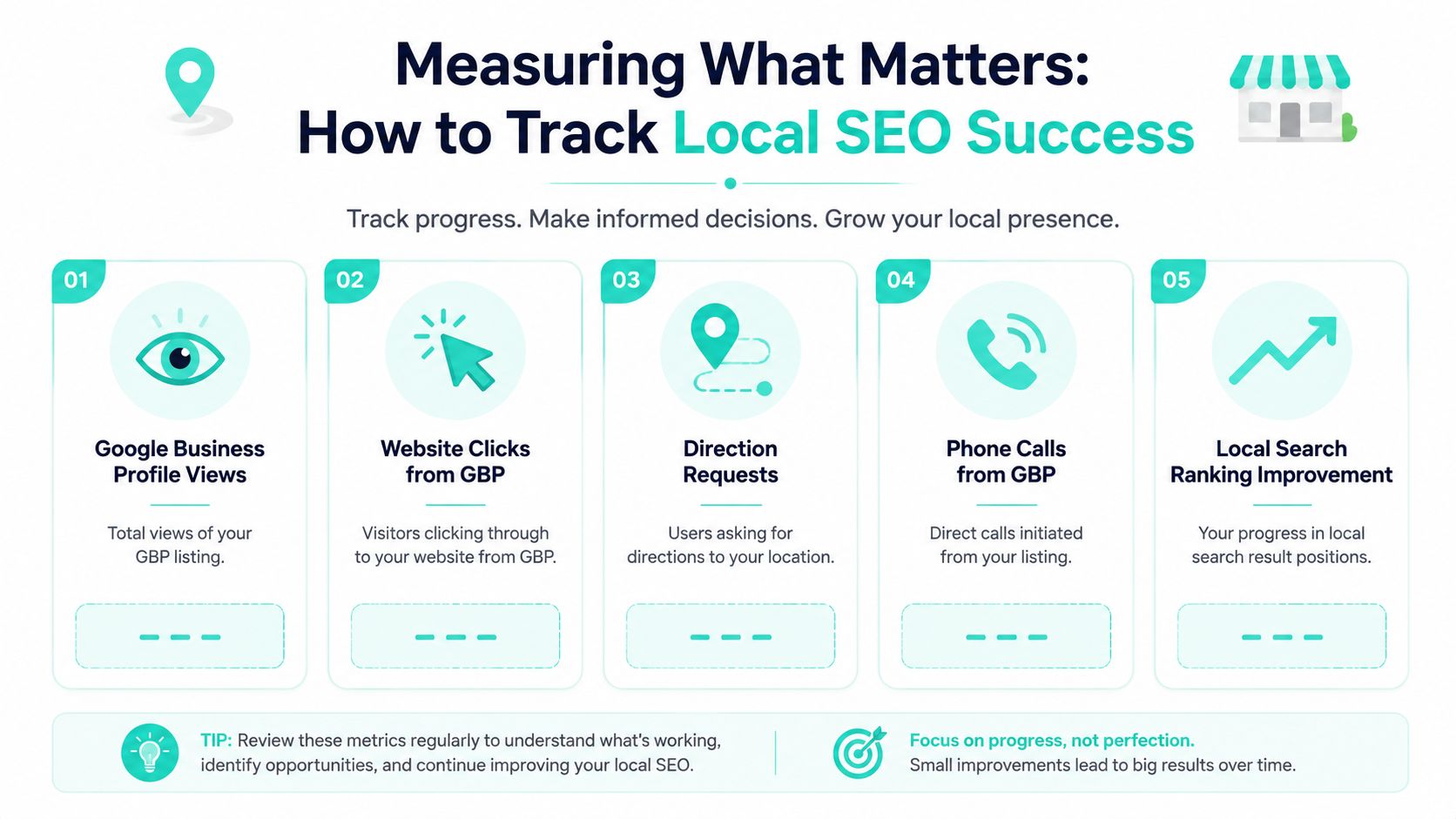
Measuring What Matters How to Track Local SEO Success
Local search optimization gets messy when practices track too much. Rankings in one tool. Traffic in another. Form fills somewhere else. Then nobody knows what changed or why.
Keep the scoreboard small. For most dentists, medspas, and lawyers, a few local metrics tell the story clearly enough to guide decisions.
The metrics worth checking every month
Start with your Google Business Profile insights and your own intake records.
Focus on:
Profile views: Are more people seeing your listing in Search and Maps?
Website clicks from the profile: This helps show whether your listing is earning enough trust to push people to learn more.
Direction requests: Strong for offices where in-person visits matter, especially dentists and medspas.
Phone calls from the profile: One of the clearest intent signals for lawyers and urgent dental searches.
Local ranking movement for priority terms: Track a short list, not dozens. Choose your most valuable services and main locations.
The mobile side deserves extra attention. According to Digital Applied's 2026 local SEO statistics, mobile devices drive 64% of all local search activity. That makes mobile-specific performance and user behavior essential to monitor.
How to read progress without overcomplicating it
A few patterns matter more than raw dashboard activity:
Metric trend
What it may mean
What to check next
Views rise but calls stay flat
Visibility improved, trust or offer clarity may be weak
Photos, reviews, primary category, call-to-action
Calls rise but bookings lag
Marketing is working, intake may be leaking
Front desk response, missed-call follow-up, scheduling friction
Directions rise sharply
Your local relevance is improving
Verify hours, signage photos, parking info
Rankings improve on desktop but not mobile
Mobile experience may be lagging
Page speed, tap targets, mobile layouts
One location climbs while another stalls
Local signals are uneven
Unique page content, reviews, profile activity by office
A ranking report by itself won't tell you enough. A dental office might rank better but still disappoint if calls go unanswered. A medspa might get profile views but lose bookings if the service pages feel generic. A law firm may see calls increase after profile updates even before website traffic moves much.
Use that data to make operational choices, not just marketing changes.
Track monthly. Keep notes. Compare against what you changed in the prior month. If you updated categories, added fresh office photos, cleaned citations, published new local pages, or improved mobile load performance, annotate that. Over time, patterns become easier to trust.
The goal isn't a prettier report. It's better visibility for the right searches, followed by more calls, better inquiries, and cleaner conversion paths from local discovery to appointment or consultation.
If your practice is ready for local search optimization that reflects your reputation, voice, and place in the community, Leaping Lemur Media is worth a look. They focus on marketing that feels aligned with who you are and how you serve, which is exactly what strong local visibility needs to last.